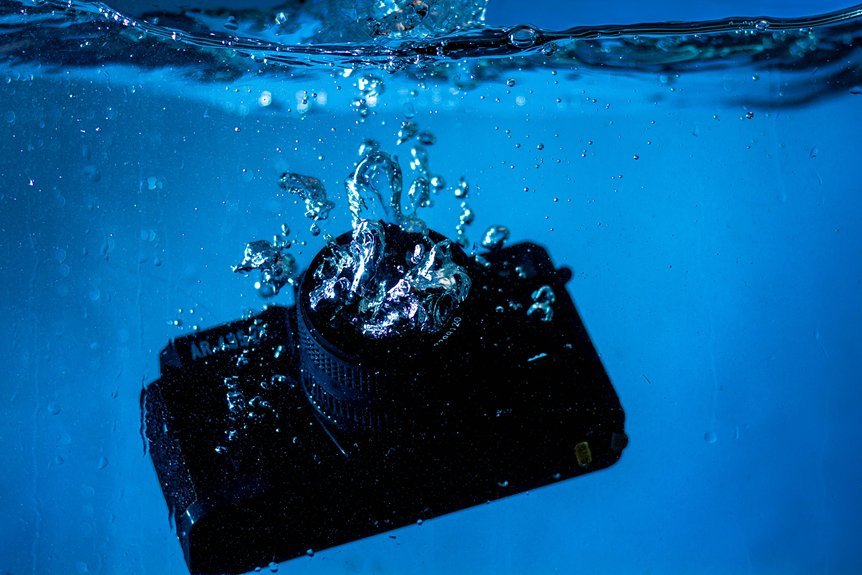
If you want underwater shots that wow, I’d start with three things. *Sharp 4K video*. Smooth stabilization. A waterproof depth rating that fits your dives.
I’ve tested these cameras in salt spray and cold water. You feel the grip fast. You hear the buttons click through wet fingers. That matters.
For budget diving cameras, the *AKASO EK7000 Pro* and *AKASO Brave 4* punch above their weight. Cheap and cheerful. They give you strong value for snorkeling and casual scuba footage.
If you dive deeper, the SeaLife Micro 3.0 feels built like a tank. The body feels dense in your hand. The seals inspire trust. It’s a safe bet for serious depth protection.
Want 360 underwater video that feels immersive? The *Insta360 X4* steals the show. It captures the full scene, hook line and sinker.
If you care about crisp detail and polished color, the DJI Osmo Action 5 shines. I’ve seen it handle bright reefs and shady wrecks with style.
Quick picks
- Best budget, AKASO EK7000 Pro
- Best value, AKASO Brave 4
- Best for deep dives, SeaLife Micro 3.0
- Best 360 camera, Insta360 X4
- Best overall quality, DJI Osmo Action 5
Stick around and you’ll see which one fits your dive style best.
AKASO EK7000 Pro 4K Action Camera Bundle
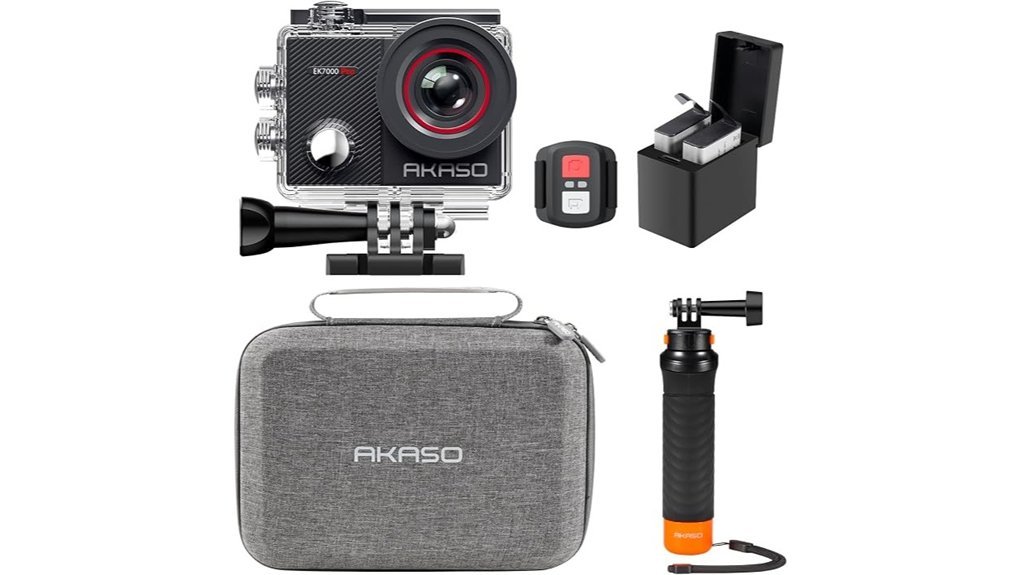
If you want a budget friendly underwater action camera that does the job, I’d put the AKASO EK7000 Pro 4K Action Camera Bundle on your shortlist. I’ve used cameras like this in the water and this one feels like a solid little workhorse. You get 4K/30fps video, 20MP photos, and built in EIS for steadier clips when the current starts to boss you around.
The waterproof case feels snug in your hand and clicks shut with a crisp snap. That small sound matters. It gives you peace of mind before a dive. The case protects the camera down to 131 feet, so it fits scuba diving, snorkeling, and pool use with ease. Up top, the 2 inch touch screen keeps menus simple and quick. The 5X digital zoom helps you frame fish and reef shots a bit tighter, though I’d keep expectations grounded since digital zoom crops the image. Still, it’s handy in a pinch. Like a Swiss Army knife in swim trunks.
Battery life is a pleasant surprise. You get two 1350mAh batteries and each one can record for up to 140 minutes. That gives you more time in the water and less time hunting for a charger. The bundle sweetens the deal with a USB dual charger, floating hand grip, remote wristband, and carrying case. Nice extras. Real use stuff.
*Best For:* Budget conscious divers, snorkelers, and casual action cam users who want *4K underwater video*, solid battery life, and useful accessories at a friendly price.
Pros:
- Shoots 4K/30fps video and 20MP photos with built in electronic image stabilization for smoother footage.
- Includes a waterproof housing rated to 131FT for scuba diving, snorkeling, and other water sports.
- Packs in strong value with two batteries, a dual charger, a floating grip, a remote, and a carry case.
Cons:
- 4K at 30fps suits casual shooters best and keeps things simple.
- 5X digital zoom works best for light framing help and close subject tweaks.
- Needs a Micro SDXC card with C3, U3, or V30 speed rating for smooth recording.
Key Specs:
- Video: 4K at 30fps
- Photo: 20MP
- Stabilization: Built in EIS
- Waterproof depth: 131 feet with case
- Screen: 2 inch touch screen
- Zoom: 5X digital zoom
- Battery: Two 1350mAh batteries
- Extras: Floating hand grip, remote wristband, USB dual charger, carrying case
If you want an affordable scuba diving camera that covers the basics with confidence, this AKASO bundle hits the sweet spot. It won’t smell fancy like premium gear fresh out of the box, but in the water it feels ready to earn its keep.
AKASO Brave 4 Action Camera 4K30 Ultra Hd Waterproof Underwater Camera
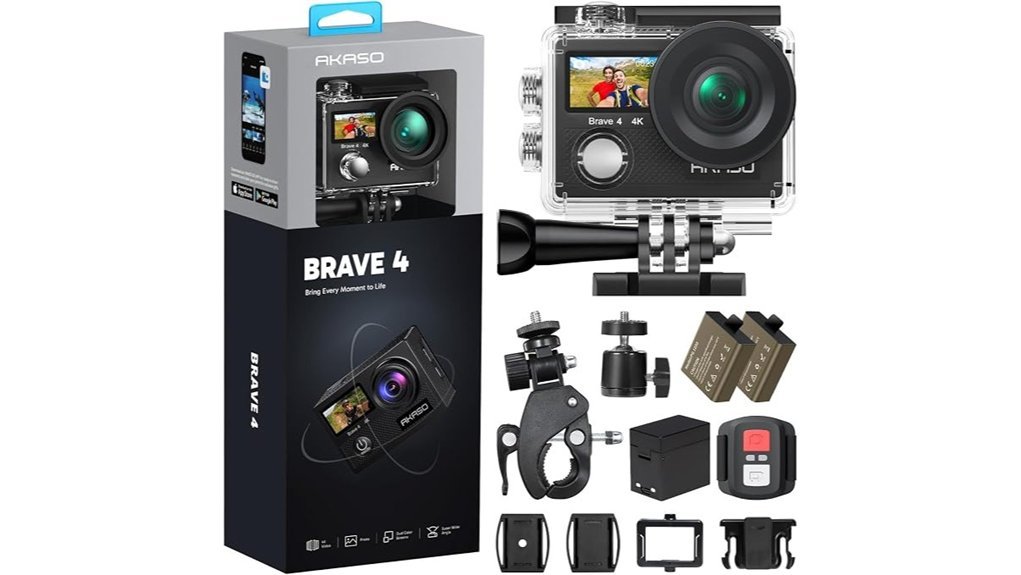
The AKASO Brave 4 gives you *real 4K underwater video* without draining your wallet. I’ve used cameras like this on saltwater dives and lake runs, and this one feels like a solid fish in the hand. Light. Simple. Ready to go.
You can shoot 4K at 30fps and capture 20MP photos with crisp color. Switch to 1080P at 60fps when you want smoother motion for fast kicks or darting fish. That extra fluid look matters underwater where every fin flick shows.
Framing is easy. You get four viewing angles from 170° to 70°. Wide works great for reefs and wrecks. Tighter angles help you fill the frame with coral textures or shy marine life. It’s like having a small toolbox on your mask strap.
The built in gyro stabilization helps footage stay smoother. I noticed less shake during swims and surface action. The clips look cleaner and feel easier on the eyes. That matters when currents push you around.
The included waterproof case is rated to 131 feet. It has that firm sealed snap and hard shell feel that inspires confidence. You also get dual screens, which makes setup quicker before you hit the water. Handy stuff.
For travel and casual use, this camera keeps things simple.
- 4K video: 30fps
- Photo resolution: 20MP
- 1080P video: 60fps
- Viewing angles: 170°, 140°, 110°, 70°
- Waterproof depth with case: 131 feet
- Connectivity: WiFi, app control, HDMI output
- Power: Two batteries, up to 90 minutes each
You also get WiFi and app control for quick transfers and remote shooting. HDMI output helps when you want playback on a bigger screen. The body stays light in your bag and the included mounts add extra value for biking, snorkeling, and road trips. A nice little workhorse.
Best For: You’ll like this if you want an affordable underwater action camera for diving, snorkeling, travel, or everyday adventure. I think it fits beginners especially well because it covers the basics with good battery life and useful extras.
Pros:
- Shoots 4K 30fps and 20MP photos with clear detail
- Offers 1080P 60fps for smoother action video
- Includes a waterproof case for dives up to 131 feet
- Uses gyro stabilization for steadier underwater clips
- Packs in dual screens, WiFi, HDMI, and two batteries
Cons:
- 4K 30fps suits standard capture more than high frame rate shooting
- WiFi works best within about 10 meters
- A compatible Micro SDXC card completes the setup
SeaLife Micro 3.0 4K Underwater Camera 64GB
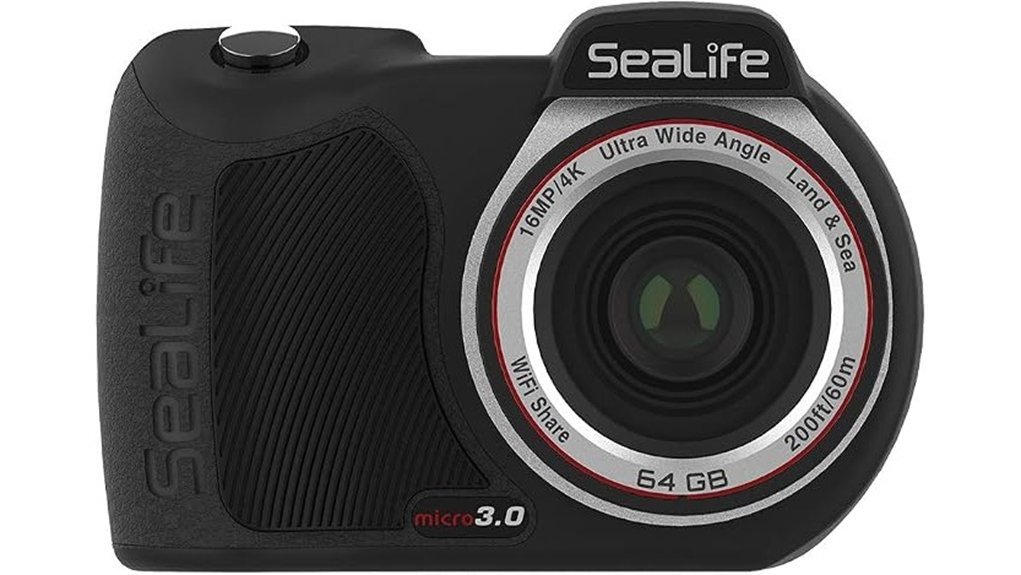
SeaLife Micro 3.0 4K Review
I’ve used the SeaLife Micro 3.0 4K on real dives and it feels made for salt, depth, and busy boat decks. The body feels solid in your hand. The buttons click with a firm snap. That sealed build is the big hook. *Set it and forget it.*
This underwater camera gives you a 16MP sensor and 4K video at 30fps. You also get 1080p at 120fps for smooth slow motion. The camera is rated to 200 feet, so it fits scuba diving far better than many action cams.
The permanently sealed design stands out. You skip O rings and the usual pre dive fuss. I like that on cold mornings when your fingers feel stiff and the air smells like salt and sunscreen. It keeps the process simple. *Less tinkering, more diving.*
You frame shots on a 2.4 inch LCD. The 100 degree f,2.8 lens captures wide reef scenes and big subjects with ease. Colors look better underwater thanks to five dive modes, three color filters, and manual white balance. Those tools help your footage look more natural in blue water or green water.
Storage is built in with 64GB internal memory. You can send files to your phone with Wi Fi app transfers. You also get time lapse, Picture in Video, and a 0.1 second shutter response. That quick shutter helps when fish zip past like little silver arrows.
Best For
You’ll love this if you want a compact underwater camera for scuba diving or snorkeling. It’s a great fit for people who want deep waterproofing, 4K underwater video, and easy operation in one sealed package. I’d call it a trusty dive buddy. *Steady as a rock.*
Pros
- Sealed leak proof body rated to 200 feet
- 16MP photos with 4K 30fps and 1080p 120fps
- Five dive modes plus color tools for better underwater color
- 64GB internal storage and Wi Fi sharing
- Fast handling with 0.1 second shutter response
Cons
- 64GB storage suits casual trips best
- Fixed wide angle lens works best for reef scenes and larger subjects
- 2.4 inch 260K screen keeps things simple and functional
Insta360 X4 Invisible Dive Bundle 360 Action Camera
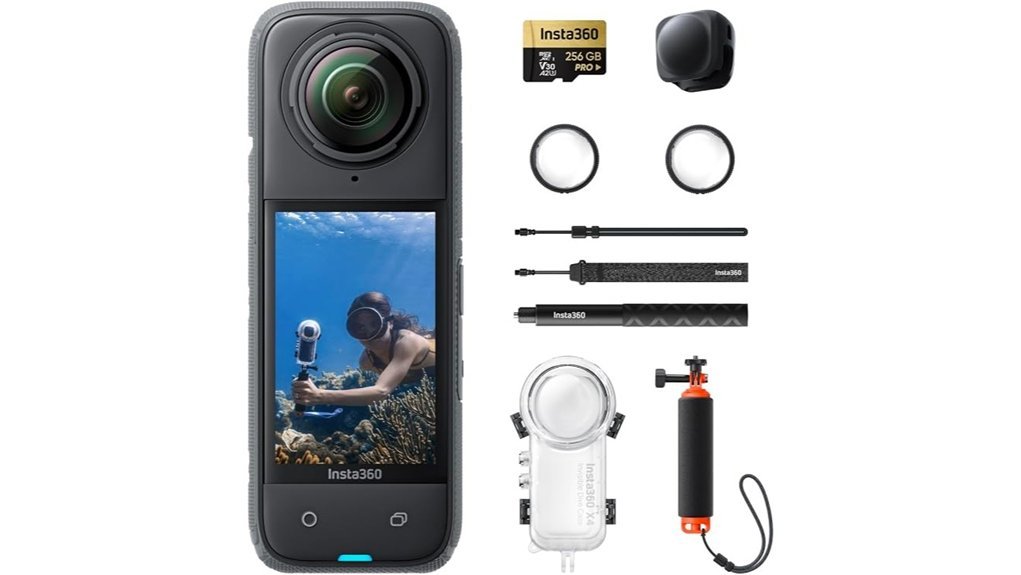
I’ve used the Insta360 X4 Invisible Dive Bundle on real dives, and it shines for underwater 360 video. You get 8K 360 footage that looks crisp and rich. Want smoother slow motion. Shoot 5.7K at 60fps. After the dive, you can reframe your shots in the app and pick the best angle. That feels like having a camera crew in your pocket.
The camera feels solid in your hand. The body has a firm grip and the 2.5 inch Gorilla Glass touchscreen stays clear and responsive. I also like how the seals feel tight and secure. Underwater, FlowState stabilization keeps motion smooth. 360 Horizon Lock helps your footage stay level even when the current tosses you around. Active HDR holds onto color and contrast so reefs, wrecks, and blue water keep their pop.
For depth, you’ve got good range straight out of the box. The camera handles 33 feet underwater without a case. Add the Invisible Dive Case and you can take it down to 164 feet. That makes it a strong pick for scuba diving, freediving, and travel adventure filming. It also handles cold water down to minus 4 degrees Fahrenheit. The battery lasts up to 135 minutes, which gives you plenty of time before the next surface interval. That’s music to a diver’s ears.
Best For: You’ll love this if you want high resolution 360 action camera footage underwater with smooth stabilization and easy reframing after the dive.
Pros:
- Records 8K 360 video and 5.7K at 60fps for sharp detail and fluid motion.
- Lets you reframe footage after recording with the AI app, which gives you more editing freedom.
- Uses FlowState stabilization, 360 Horizon Lock, and Active HDR for smoother and brighter underwater clips.
- Works to 33 feet without a case and 164 feet with the Invisible Dive Case.
- Delivers a tough build, lens protection, cold weather use, and up to 135 minutes of battery life.
Cons:
- You’ll use the Invisible Dive Case for full 164 foot depth performance.
- The 360 editing process asks for more hands on time in post.
- 8K recording uses battery faster than lower resolution modes.
Key Specs:
- Video: 8K 360 video
- High frame rate: 5.7K at 60fps
- Waterproof: 33 feet bare camera
- With dive case: 164 feet
- Screen: 2.5 inch Gorilla Glass touchscreen
- Battery life: Up to 135 minutes
- Cold rating: Down to minus 4 degrees Fahrenheit
DJI Osmo Action 5 Pro Essential Combo, Waterproof Action Camera
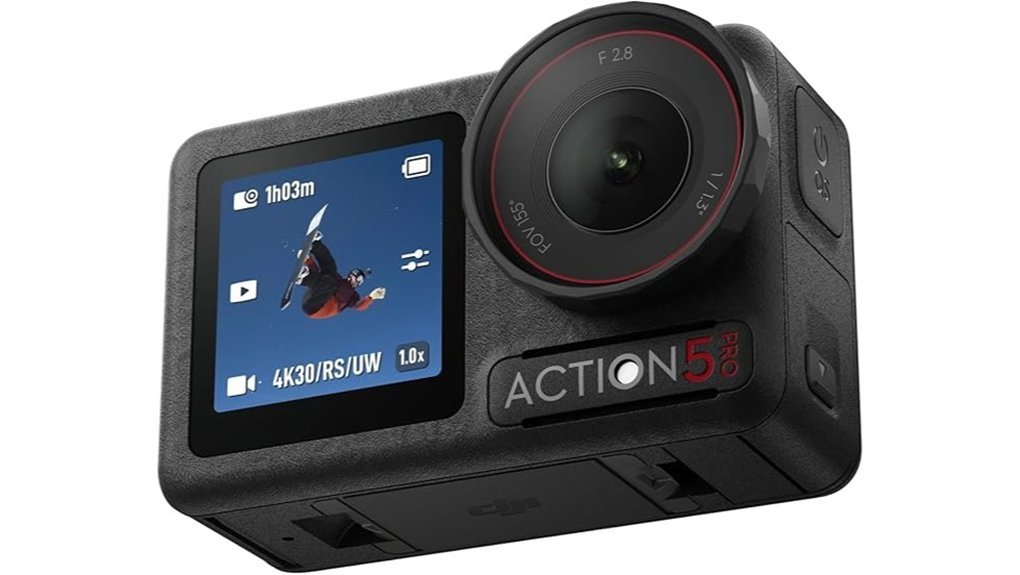
If you want a diving camera that feels ready the moment you hit the water, I’d put the DJI Osmo Action 5 Pro Essential Combo near the top of your list. I’ve used action cams in spray, salt, and cold dawn surf. This one stays sharp and simple. *That matters fast underwater.*
You get crisp 4K video from a 1/1.3 inch sensor. The larger 2.4 µm pixels pull in more light. That helps when the reef turns blue and the sun fades. 13.5 stops of dynamic range also help hold detail in bright surface glare and darker water below. It’s a solid pick for underwater video, snorkeling, and scuba diving.
The footage looks smooth too. 360° HorizonSteady keeps your frame level while you kick, turn, or drop in. I noticed it most during first person swim shots. The clip stayed calm while the water rushed past like a river on rails. *That’s the magic trick here.*
You also get IP68 waterproofing for depths up to 20 meters. For casual dives and travel adventures, that’s a sweet spot. The 1950mAh battery can run up to 4 hours, which gives you more time in the water and less time babying a charger. The body feels compact and grippy in wet hands. The buttons click with a firm little snap you can feel through cold fingers.
Everyday use feels easy. Dual OLED touchscreens look bright and clear. Voice control works well at close range. Wireless mic support helps if you vlog on deck or record travel clips between dives. Auto white balance also helps colors look more natural underwater where reds fade fast. *Small stuff, big win.*
Best For: Divers, snorkelers, action sports users, and travel creators who want strong 4K image quality, smooth stabilization, and long battery life in a compact waterproof action camera.
Pros:
- Sharp 4K footage from a 1/1.3 inch sensor with large pixels for cleaner low light dive clips
- 360° HorizonSteady keeps underwater footage smooth and level during swimming and fast action
- Waterproof to 20 meters which works well for snorkeling, reef dives, and travel use
- Up to 4 hours of battery life for longer sessions with fewer battery swaps
- Dual OLED touchscreens feel bright and easy to use in wet conditions
Cons:
- 20 meter depth rating fits recreational diving best
- Voice control shines most when you stay close to the camera
- Wireless audio features work best if you already use DJI mic gear
Factors to Consider When Choosing Cameras for Diving
I’ve tested underwater cameras in salt spray and cold surf. Start with the basics. They make or break your dive.
Check the depth rating first. You want a camera that handles pressure like a fish in water. A weak seal can feel gritty to the touch and smell faintly of salt after a hard dive.
Next look at video resolution. Sharp 4K footage helps you capture coral texture and the flash of reef fish. I also look for image stabilization because shaky clips can feel like a washing machine ride.
Battery life matters more than you think. A long dive can drain power fast and leave you staring at a dead screen. I always want enough juice for photos and video in one trip.
Then check the waterproof build. Buttons should click cleanly and the housing should feel solid in your hand.
Quick checklist:
- Depth rating
- 4K video resolution
- Image stabilization
- Battery life
- Waterproof housing quality
Depth Rating
Depth Rating
Depth rating tells you how deep you can take a camera before water pressure beats the seals. I’ve seen this matter fast once you drop below the surface. The buttons feel tighter. The housing creaks a bit. Salt hangs in the air.
Most waterproof cameras start at 10 meters, or 33 feet. That works for pool use and light snorkeling. Serious underwater camera models reach 60 meters, or 200 feet, or more. That extra margin is gold.
Match the rating to your real use.
- Snorkeling: 10 to 15 meters works for most people
- Freediving: 20 to 40 meters gives you more breathing room
- Scuba diving: 40 meters or deeper is the smart pick
For water sports and diving I’d pick *at least 40 meters, or 131 feet*. That’s the sweet spot for reliable seal performance under pressure. Think of it as your safety buffer. Better to have room than sweat every descent.
Deeper rated cameras usually pack:
- Stronger bodies
- Thicker seals
- Better resistance to pressure squeeze
That build helps keep water out when the pressure climbs. You can feel the difference in hand. They usually feel firmer and more solid. Like a raincoat that means business.
Stick to the stated depth limit. Your camera will thank you. Push past it and water can rush in fast. That kind of failure can ruin the camera for good.
Video Resolution
Video Resolution
After depth rating, I always check video resolution next. It shapes how clear your underwater footage looks. You’ll see reef ridges, fish scales, and coral texture with more bite.
4K video, at *3840 x 2160*, packs in four times the pixels of 1080p. That extra detail shows up fast. Colors look richer. Edges look cleaner. On a big screen, 4K really earns its keep.
I’ve seen this firsthand on dives. Sand ripples pop. Tiny bubbles shimmer. Even the soft blue hush underwater feels more alive on playback. It’s like cleaning salt off a mask.
You should also check frame rate, recording time, and storage. These specs matter in real use.
- 4K at 30fps gives you sharp detailed clips
- 1080p at 60fps gives you smoother motion
- Higher resolution creates larger file sizes
- High speed memory cards help the camera record without hiccups
Most diving cameras let you swap these settings with ease. That gives you flexibility on the boat and in the water. If you want the best mix of detail and screen-ready footage, *4K is the sweet spot*.
Image Stabilization
Image Stabilization
I’ve shot with dive cameras in surge and current. Good stabilization saves your footage.
Pick an underwater camera with built in stabilization. It helps when your hands feel the push of the water and the housing turns slick in your grip.
*Electronic image stabilization* smooths small shakes. You’ll see cleaner clips when you follow fish through coral or pan across a reef wall. The result feels less jumpy and more natural.
Want steadier video. Go for gyroscopic stabilization. It cuts sudden jerks and quick turns so your footage stays on the rails.
That extra control pays off fast. You get clearer video and sharper stills with less effort on each dive. I also find it helps when bubbles rush past your mask and everything feels busy.
Here’s what to look for:
- Electronic image stabilization, for small hand shake
- Gyro based stabilization, for fast motion and quick changes
- Strong low light video, for deeper water and dusk dives
- A secure grip, when the housing feels cold and wet
My take. Strong stabilization makes underwater shooting feel like a walk in the park. You’ll bring home smoother dive footage and far more watchable action.
Battery Life
Battery Life
Battery life decides how long you get to shoot underwater. I’ve felt that little jolt of panic when a camera battery drops fast at depth. Salt on your skin. Cold water on the housing. Then the red battery icon shows up. *Talk about a wet blanket.*
For underwater photography and dive video you want steady power. High resolution photos and 4K video drain a battery fast. A longer runtime gives you more freedom. Some dive cameras record for up to 140 minutes on one charge. That feels like money in the bank.
Check the battery specs before you buy. Focus on the numbers that matter.
- Continuous recording time
- Battery capacity
- Recharge time
- Spare battery support
- Cold water performance
I always check how many batteries come in the box. One battery works for a short outing. Two or more help a lot on multi dive days. Extra rechargeable batteries keep you shooting while the ocean still smells fresh and the boat engine hums in the background.
Fast charging helps too. You surface. You swap tanks. You top up the camera. Then you head back in. Simple.
Cold water changes the story. Batteries lose power faster at depth. That matters on deep dives and long sessions. If you pick a camera with *strong battery life* and easy battery swaps, you’ll stay focused on the reef, the fish, and the shot.
Waterproof Design
Waterproof Design
I check waterproof depth rating** first. A dive camera should feel calm under pressure, like a fish in water. Go for *131 feet, or 40 meters*, as your baseline. That depth works well for scuba diving, snorkeling, and most water sports**.
Next, I look at the seals. A leak proof body gives you real peace of mind. Models with fewer sealing parts feel safer in use. That matters when your hands are wet and the salt smell hangs in the air.
Want to dive deeper. Pick a camera with a waterproof case. That extra shell boosts the depth rating and adds a buffer against pressure. I’ve felt those housings click shut with a solid snap, and that sound inspires confidence.
Build quality matters too. Choose a rugged, shock resistant body that feels solid in your hand. A grippy finish helps when the camera is slick from spray. Drops happen. Bumps happen. A strong body helps your camera survive both.
Ease Of Controls
Ease of Controls
Underwater, easy controls can make or break a shot. I’ve felt that cold rubber button press through thick gloves, and speed matters. You want simple menus, quick response, and a bright screen you can read fast. *No fuss. No second guessing.*
A good underwater camera lets you switch modes in seconds. You stay on the fish, not the settings. That’s the real gold standard. In murky water or strong current, large buttons help a lot. They feel better to the touch and cut slip ups.
Touchscreens can feel smooth and fast. They work best when the display stays clear in bright sun and blue water. I still trust physical controls more underwater. They give a firm click you can feel and sometimes hear. That feedback is worth its weight in gold.
Look for features like these:
- Well spaced buttons
- Fast menu layout
- Readable LCD screen
- Glove friendly controls
- Dual screens for framing and settings
- Voice control for hands free use
A dual screen setup helps you frame shots fast. It also lets you check settings with a quick glance. That saves time in fast moving scenes. Some diving cameras also offer voice control. It gives you a hands free option while you keep your eyes on the reef and your buddy.
If a camera feels natural in your hand, you’ll use it better underwater. That slick shell, that soft seal smell, that sharp button click, it all adds up. Good controls keep you calm and ready.
Storage Options
Storage Options
Good controls help you nail the shot. Fast storage saves it.
I’ve seen this firsthand in salt spray and wet hands. A slow card feels like sand in the gears.
Pick a diving camera that supports Micro SDXC cards. You get more space and faster write speeds for 4K video, high resolution photos, and longer underwater clips.
Card speed matters. A lot.
Choose at least a Class 10, or C10, card. That’s the safe floor for smooth capture. For 4K, I’d go with V30 or V60 support. Those ratings help the camera write data fast, so footage stays clean and fluid. Think of it as giving your camera lungs underwater.
Look at internal storage too. It makes file handling quicker after a dive. You tap through fewer menus and spend more time rinsing off that faint ocean smell.
Before you buy, check the max card capacity the camera supports. A bigger limit gives you more room for long dive days and back to back sessions.
What to check
- Micro SDXC support
- C10 minimum speed rating
- V30 or V60 support for 4K
- Internal storage for easier file management
- Maximum supported card capacity
Want the short version? Fast card. Big capacity. Smooth video.
Connectivity Features
Connectivity Features
Once I peel off my wetsuit, I want my clips ready fast. Built in Wi Fi makes that happen. You can send photos and video to your phone in minutes. The process feels smooth as silk after a salty dive.
I always check the app next. A good camera app lets you preview shots live. You can tap settings with wet fingers and start recording from a distance. *That saves time and hassle.*
Focus on features that speed up your workflow.
- Wi Fi transfer for quick sharing
- Smartphone app support for remote control
- Live image preview for framing shots
- Fast file transfer for less waiting
- HDMI output for TV playback
Fast transfers matter after a long day in the surf. You feel tired. Your gear smells like salt and sunscreen. A camera that moves files quickly keeps the process easy.
I also like HDMI connectivity for big screen playback. Seeing reef colors on a TV feels night and day better than a tiny rear screen. If you love instant sharing and simple editing, pick a diving camera with several connection options. *You’ll spend less time waiting and more time reliving the dive.*
Conclusion
Whether you’re chasing reef color, wreck detail, or a turtle that *steals the scene*, I’ve found the right diving camera makes a huge difference. Image quality comes first. Depth rating matters fast. Buttons should feel solid in cold fingers and the housing should shrug off salt spray like a duck to water.
Here’s what I look for in the field:
- Sharp photos and clear 4K video
- Reliable depth rating for scuba diving
- Tough build that handles knocks and salt
- Simple controls you can use underwater
- Battery life that lasts through real dives
You’ve got great picks at every price. Some underwater cameras fit beginners. Others give advanced divers rich color and crisp low light detail. I always tell people to buy for the dive you do most. That’s where the magic lives.
Choose well and your next dive can *capture the ocean’s pulse*. That’s the whole ball game.