
You want cool air in a tight RV bedroom. I’ve tested fans on humid nights and dry desert stops. The right pick feels like a soft breeze on your face. It hums low and fades into the dark.
Pick a compact fan that saves space and power. Go for a USB ceiling fan, a wall unit with oscillation, or a clip on model with a battery. Aim for under 45 dB. That sound level feels like a quiet whisper. You sleep through it.
Control matters. I like multiple speeds for heat swings. A timer helps you drift off without a cold wake up. A remote keeps you in bed. Adjustable angles push air right where you need it. Think of airflow like a steady tide, it keeps moving and you stay cool.
Here’s what I check every time:
- Noise under 45 dB for calm sleep
- Power draw that fits your RV setup
- Mount style for tight walls or low ceilings
- Battery or USB for flexible use
- Speed settings for fine control
Stick with these basics and you’ll find a fan that fits your space and sleep style.
Silent USB Ceiling Fan with Remote, 4-Speed
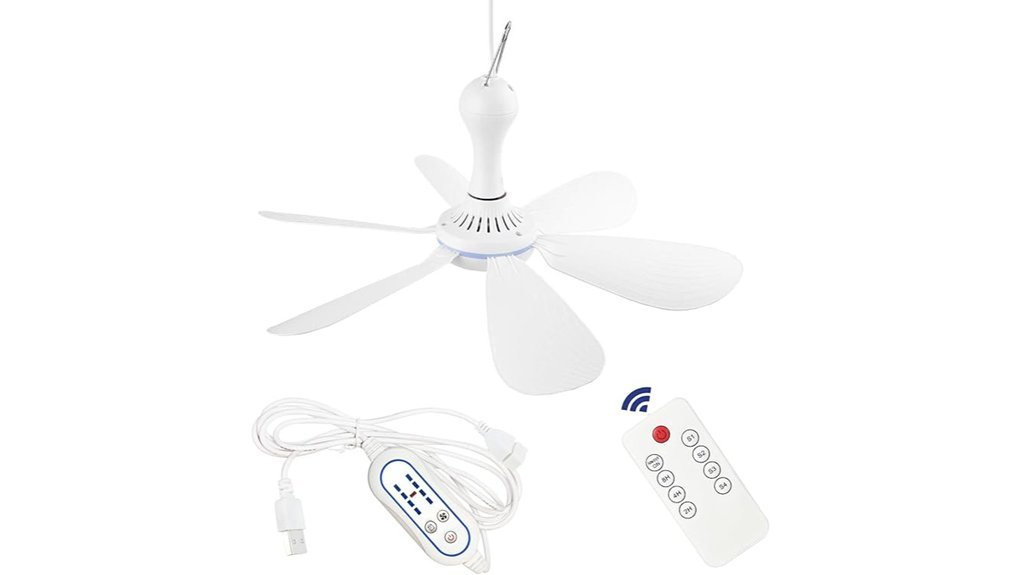
If you want quiet airflow in a compact RV bedroom, I’ve run this fan through real nights. It feels like a soft whisper over your skin. Setup takes seconds. Plug the 6.8 foot USB cord into a power bank or wall charger. Done. At 0.66 pounds it feels feather light in your hand. Six blades spin steady and smooth. You get four speeds from gentle to breezy. The 45 decibel sound stays low and calm. I sleep through it like a log. The remote sits by your pillow for quick taps. No fumbling in the dark. It keeps air moving on hot still nights with low draw.
Best For: RV sleepers and campers who want quiet airflow in tight spaces.
Pros:
- USB power keeps energy use low and simple
- Quiet 45 dB sound supports restful sleep
- Light build makes mounting easy and quick
- Remote control gives easy bedside changes
Cons:
- Requires a constant USB power source for use
- Airflow suits small areas for focused cooling
- Works as a simple fan without smart home links
Why it works in an RV:
Small rooms trap warm air. This fan stirs it like a spoon in soup. You feel a light cool touch on your face. No loud hum. No heat from motors. It fits the rhythm of road life and keeps things easy.
Comoistar Wall Mounted Oscillating Fan with Remote
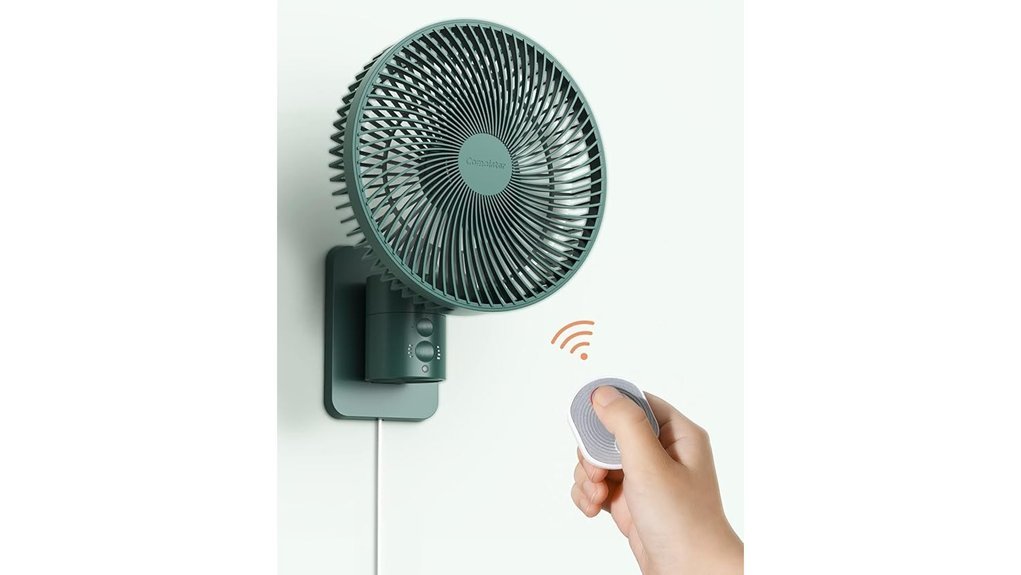
A compact wall mounted fan that frees up tight RV space. I installed the Comoistar 8.5 inch unit in minutes. It feels light at 1020 grams and sits secure on the wall. The JIWAN motor pushes 1900 CFM of airflow. You feel a steady breeze on your skin. It hums at 45 dB and sounds like a soft whisper at night.
Air moves like a calm tide. You get 90° oscillation plus a 120° tilt. I aimed it at my bunk and stayed cool all night. The remote feels simple in hand. It controls speed power and timers from 0.5 to 8 hours. It snaps to metal and stays put like a fridge magnet. Cleaning takes seconds. Power works with AC or DC. You get a one year warranty for peace of mind.
Best For:
RV living and small rooms that need a quiet wall fan with flexible airflow.
Pros:
- Strong airflow at 1900 CFM with a low 45 dB sound
- Space saving mount with wide oscillation and tilt control
- Easy remote with timer and magnetic storage
Cons:
- Small size suits compact areas and feels light in large rooms
- Wall install takes a bit of setup time
- Adhesive mount suits smooth surfaces for best hold
PELONIS 14-inch Wall Mount Fan with Remote
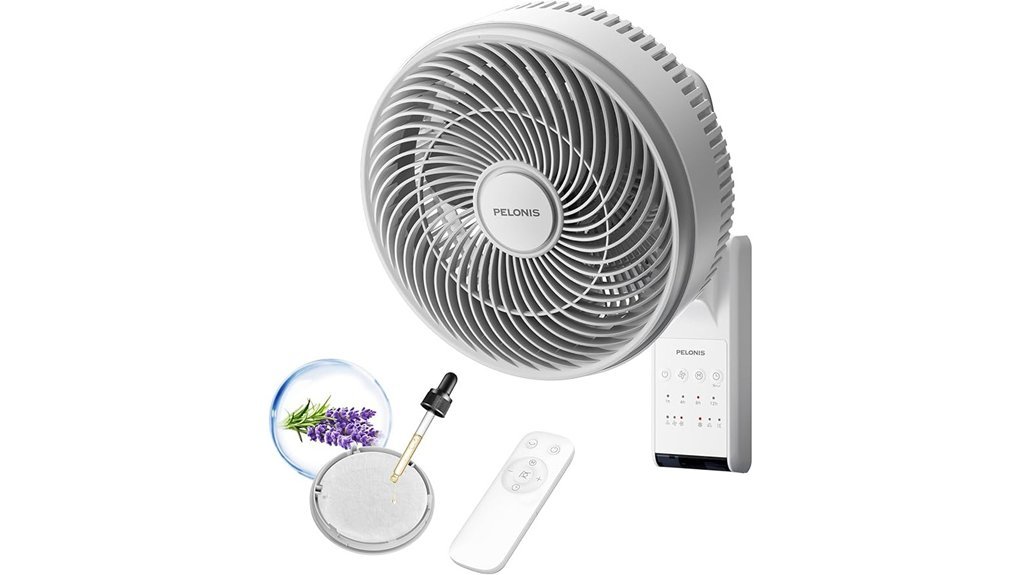
I mounted this fan in a tight RV bedroom and felt the difference right away. The *wall mount* frees floor space and keeps things tidy. It hits like a steady coastal breeze. You get 15 ft per second airflow that reaches deep into the room. Corners stay cool. No dead zones.
I played with the swing and liked the coverage. It sweeps 90 degrees side to side and 68 degrees up and down. Air moves like a slow wave. You feel it on your skin within seconds. I used Slumberous mode at night and heard a soft hum. It sits at 36 dB which feels like a whisper in a quiet room. The 12 hour timer fits a full sleep cycle. Set it and forget it.
The build feels solid in hand. The tilt holds its position with no sag. I used it on a covered patio too and it handled the space well. It serves as a *space saving wall fan* for RV life or small rooms.
Best For:
You want a quiet wall fan for an RV or small bedroom. You need wide airflow with zero floor clutter. It fits like a glove.
Pros:
- Strong airflow, 15 ft per second with reach up to 33 feet
- Wide oscillation, 90 degrees horizontal and 68 degrees vertical
- Quiet sleep mode, 36 dB with timer and three modes
Cons:
- Wall install takes time and basic tools
- 14 inch head suits small to mid size rooms
- Three speeds keep control simple
Comoistar Wall Mounted Oscillating Fan with Remote
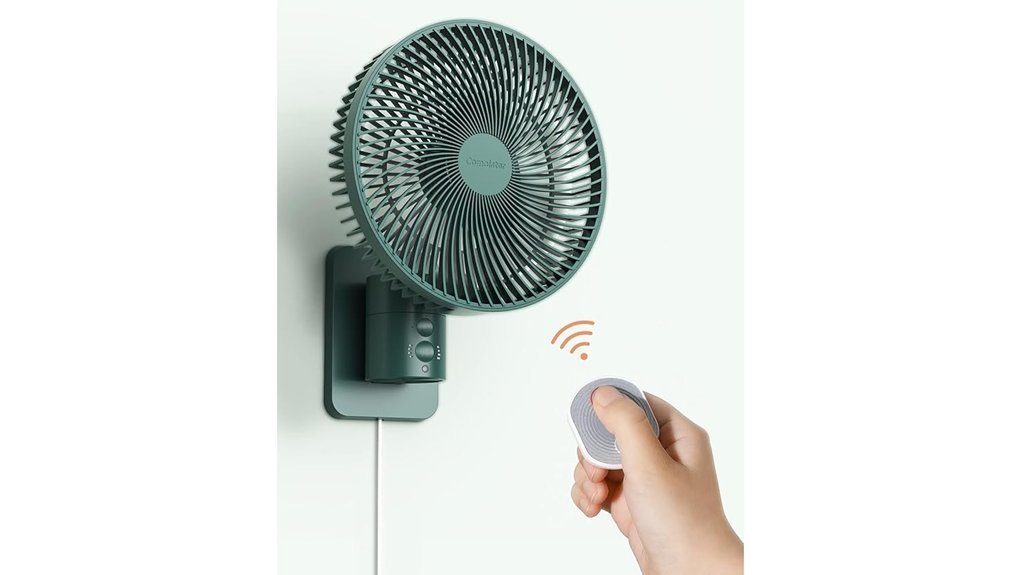
I mounted this fan in a tight RV bunk and it felt like a breath of fresh air. The compact body hugs the wall and frees up space. You feel a steady breeze on your skin within seconds.
The advanced JIWAN motor pushes up to 1900 CFM. It hums at about 45 dB so it sounds like a soft whisper. I slept through it with ease. Four speeds give you control for day or night. The seven blades slice air clean and smooth, like a gentle wave rolling in.
You can aim airflow with 90° oscillation and 120° tilt. I pointed it at the bed and cooled the whole corner. The remote and timer make late night tweaks simple. The magnetic holder keeps the remote right where you need it, no more scavenger hunts.
Setup took me minutes. The fan feels light in hand and sits firm on the wall. Cleaning is quick with a dry cloth. It runs on AC or DC so it fits RV life with ease.
Best For:
You want a compact wall fan for an RV or small room. You like quiet airflow with easy control.
Pros:
- Strong 1900 CFM airflow with a soft 45 dB sound
- Compact wall mount that saves floor space
- Remote control with timer and magnetic holder
Cons:
- 8.5 inch size suits small spaces best
- Adhesive mount fits smooth surfaces best
- Four speeds keep control simple but focused
10000mAh Clip-On Quiet Oscillating Rechargeable Fan
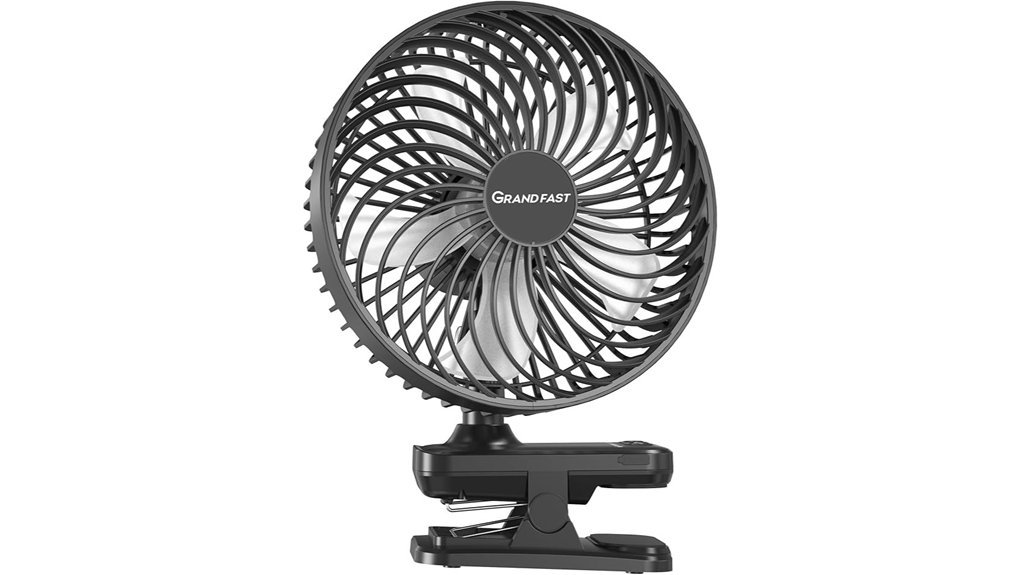
For RV nights where silence matters, I’ve run this 10,000mAh clip on fan beside my bunk and it hums like a soft whisper. You feel a steady breeze on your face. No harsh buzz. It pushes air for up to 42 hours so your sleep stays cool till morning. Four speeds give you control. I tap low for a gentle drift. I bump it up when the cabin feels stuffy.
The 25 to 40 dB sound stays easy on the ears. Think rustling leaves. The clamp grips tight and feels solid in hand. It fits up to 2.16 inches and leaves surfaces clean. I clip it to a shelf or rail. I also set it on a table when I want quick access. Oscillation sweeps air across the bed. Tilt aims it right at you. The removable cover pops off so dust clears fast.
Best For: RV travelers and campers who want quiet airflow with long battery life and flexible placement.
Pros:
- 10,000mAh battery runs up to 42 hours for long trips
- Quiet 25 to 40 dB keeps nights calm with four speeds
- Strong clip and oscillation give flexible airflow in tight RV spaces
Cons:
- Charge time hits about 6 to 7 hours
- Clamp fits up to 2.16 inches
- Control stays on unit with no remote
I keep this fan within arm’s reach. It earns its spot every trip. Like a trusty co pilot, it keeps the air moving while you rest.
DR.PREPARE Quiet Bladeless Tower Fan with Remote
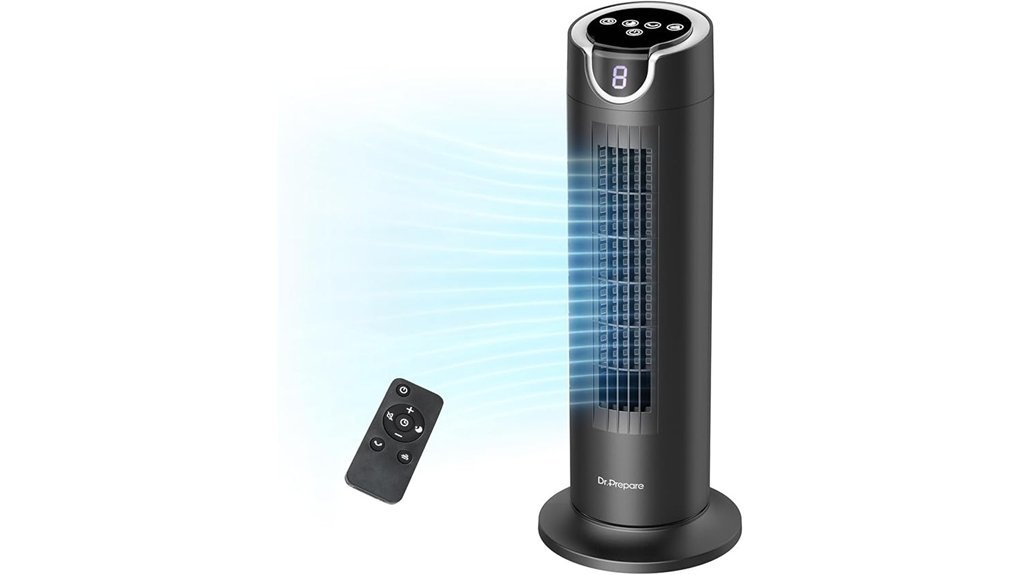
I ran this fan in a tight RV bunk on a humid night. It felt like a quiet breeze across your face. *Soft hum, steady flow.*
The DC motor pushes air up to 23 ft/s. You feel real cooling on skin. Noise sits near 25 dB. Think library hush. Sleep comes easy.
You get eight speeds. Tap the screen or use the remote from bed. Set a 1 to 8 hour timer. Drift off and forget it.
The 80° oscillation sweeps air across the space. No dead spots. The 16 inch bladeless body fits narrow corners. It feels safe to touch and wipes clean fast. The rear guard and impeller come off for a quick rinse. *Clean like a whistle.*
Sleep mode lowers sound and light. Nights stay calm. I kept it by my pillow and barely noticed it.
Best For: Small RV rooms and light sleepers who want quiet cooling with simple control.
Pros:
- Quiet DC motor at about 25 dB with strong airflow to 23 ft/s
- Eight speeds with remote and timer for easy use
- Bladeless build with 80° oscillation and simple cleaning
Cons:
- 16 inch height suits small rooms better
- Smart control fans offer app links
- Wider sweep fans cover larger areas better
VizGiz USB Ceiling Fan Portable 6-Blade
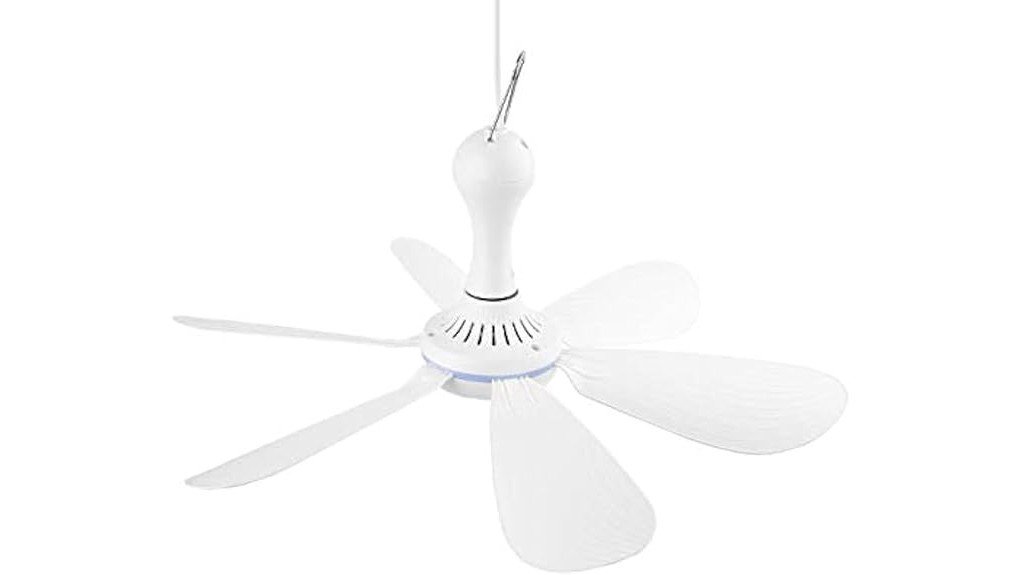
RV life gets sticky on still nights. I’ve used the VizGiz USB ceiling fan in tight rigs and tents, and it moves air like a gentle tide.
This USB powered fan plugs into a power bank or any 5V 2A port. You hang it in seconds. The compact body feels light in your hand and the plastic stays cool to the touch. It fits small RV bedrooms and pop up campers with ease.
You hear a soft hum, like a whisper in leaves. The six blades spin smooth and push a steady breeze across your face. Hot air fades and sleep comes easier. The detachable blades twist off fast, so cleaning feels simple and quick.
Off grid trips feel easier with this setup. It sips power and keeps air moving while you rest. Think of it as your pocket wind on a string.
Best For: RV campers and tent users who want a USB ceiling fan for quiet airflow in small spaces.
Pros:
- Lightweight build that hangs fast and saves space
- USB power support works with power banks and 5V 2A sources
- Quiet airflow with removable blades for easy cleaning
Cons:
- Needs a 2A source for full speed and strong output
- Airflow feels gentle during peak heat
- Hanging style suits overhead setups more than floor use
Factors to Consider When Choosing Fan for Rv Bedroom
Choosing a fan for your RV bedroom feels like fitting a puzzle piece. Space rules everything. I’ve tested units in tight bunks and wide slides, and size makes or breaks comfort.
Start with fit and mounting. You want a fan that sits right and feels solid. Clip fans grip tight. Ceiling fans save floor space. A loose mount rattles and hums, which gets old fast.
Next comes power. RV life runs on limits. I’ve used USB fans, 12V fans, and battery models. Each has its place. USB works for short bursts. A 12V setup runs steady through the night. Battery fans add freedom when you park off grid.
Sound matters more than you think. A soft whirr can feel like white noise. A harsh buzz cuts through sleep like a barking dog. I always test fans at night with lights off. Your ears tell the truth.
Airflow seals the deal. You want a steady breeze on your skin. Not a weak puff. Not a wind tunnel. Look for wide coverage so air moves across the whole bed.
Keep it simple and practical:
- Size: fits your space without crowding
- Mount: clip, wall, or ceiling
- Power: USB, 12V, or battery
- Noise: smooth and low
- Airflow: steady and wide
Pick a fan that feels right in your space. You’ll hear it. You’ll feel it. And you’ll sleep better because of it.
Fan Size And Fit
Fan Size and Fit
I’ve tested fans in tight RV bedrooms. Size makes or breaks comfort. Pick a fan that fits your space like a glove.
Check the diameter first. You want airflow that you can feel on your skin. Compact fans from 8 to 16 inches work best. They move air with a soft hum.
Mind the footprint. A bulky base crowds your floor. You need clear walkways and easy reach. Think of it like packing a suitcase, every inch counts.
Weight matters in real use. I prefer light units for quick moves. They feel easy in hand and safe on mounts. Your walls stay stress free.
Match the mount to your layout. You have options that fit different setups.
- Wall mounted fans save floor space
- Ceiling models push air across the room
- Portable fans give you flexible placement
Give the fan room to breathe. Air should flow around the housing. You hear less noise and feel cooler air.
A clean fit keeps your room calm. It looks sharp and feels right.
Power Source Options
Power Source Options
I’ve tested these fans in tight RV spaces and open camps. Power choice shapes your comfort fast.
USB fans feel like a Swiss Army knife. You plug into a laptop or power bank. You get 5 volt output and quiet hum you can sleep through. I use them at a desk or bunk. Air feels light on your skin and easy to aim.
AC or DC fans bring muscle. They pull from 100 to 240V hookups. You feel a stronger push of air across the room. Blades sound fuller and steady. I run these during hot afternoons at full hookup sites.
Battery fans cut the cord. A 10000mAh pack runs for hours. You get freedom at a picnic table or trailhead. The casing warms a bit in hand and the airflow stays smooth.
Clip on designs help you chase airflow. I clip one to a shelf or bed rail. You place breeze right where you sit.
Watch your power draw like fuel in a tank. Lower watts stretch your RV battery life.
- USB fans, 5 volts input
- AC or DC fans, 100 to 240V input
- Battery capacity, up to 10000mAh
- Power use, about 5 to 50 watts
Pick the source that fits your setup. You’ll feel the difference the first night.
Noise Level Consideration
Power sets runtime. Noise decides if you sleep.
I’ve tested fans in tight RV bunks. Sound bounces like a drum. Even a soft hum can feel loud at night. Aim for 25 to 45 decibels. That range feels like a quiet whisper.
I notice a sweet spot near *36 dB*. Some wall units hit it well. They fade into the background. You hear air move, not a motor grind.
Speed control matters. You want smooth steps. Sudden jumps wake you fast. Good fans keep a soft tone at every level.
Here’s what I look for:
- Low decibel rating, around 25 to 45 dB
- Multiple speed settings, each one stays calm
- Steady sound profile, no pitch spikes
- Solid reviews, real users confirm quiet use
Trust your ears. Marketing noise means little. Real tests tell the truth.
A quiet fan feels like a gentle breeze on your face. No sharp edges in the sound. No rattles. Just calm air.
Pick a model built for silent use. You protect sleep and keep nights smooth. In a small RV that peace is worth gold. Quiet gear lets you hit the hay and stay there.
Airflow And Coverage
Airflow And Coverage
I’ve tested fans in tight RV bedrooms. Airflow makes or breaks your sleep. It’s the difference between stuffy air and a cool breeze on your skin.
Start with CFM, cubic feet per minute. This tells you how much air the fan moves. Higher CFM means stronger airflow. In a small RV space, you want steady movement that reaches every corner. Think of it like stirring soup so heat spreads evenly.
Check how the air feels. A good fan pushes a soft stream you can feel on your face. It should cool you without blasting your eyes dry.
Oscillation matters. I rely on it every night. It sweeps air across the bed so you avoid warm pockets. The room stays even and calm.
Size counts. You need a compact fan that fits your nightstand. I’ve used bulky units that crowd the space and kill comfort. A small frame with strong output hits the sweet spot.
Speed control gives you flexibility. Nights shift fast in an RV. One minute feels warm, the next feels cool. You can dial it in with ease.
Look for these key features:
- High CFM rating for real airflow power
- Oscillation function for full coverage
- Multiple speed settings for control
- Compact design that fits tight spaces
The sound matters too. You’ll hear a soft hum that blends into the night. It feels like white noise with a purpose.
Get this balance right and you create a cool cocoon. Air flows smoothly. Temperatures stay steady. Your RV bedroom feels comfortable even on warm nights.
Mounting And Portability
Space feels tight fast in an RV. I’ve felt that squeeze many nights. A fan that moves with you makes life easier.
Go light. I stick with models under two pounds. You can lift them with one hand and shift from bed to dinette in seconds. Aim for a compact body around eight to sixteen inches. It slips onto shelves and leaves walkways clear.
Mounting matters. A clip fan grips a bed rail with a firm bite. A wall unit keeps surfaces open and feels clean to the eye. A solid base adds confidence on bumpy roads. No wobble. No rattle.
Noise sets the mood. I prefer a soft hum under forty five decibels. It sounds like a calm breeze and fades into the night.
Storage seals the deal. A slim fan tucks into a drawer with ease. Your space stays tidy and calm.
What I look for
- Weight under two pounds
- Size between eight and sixteen inches
- Clip mount or wall bracket
- Stable base with tight grip
- Quiet motor under forty five decibels
- Easy storage footprint
*Think of it as a pocket breeze you can park anywhere.*
Control And Features
Because space feels tight, control features matter a lot. I’ve used these fans in small RV bedrooms, and easy control feels like gold.
A remote control saves you from climbing out of bed. You tap a button and feel the airflow shift across your skin. That small win adds up fast.
Look for at least four speeds****. You get a soft breeze or a strong push of cool air. Think of it like a dimmer switch for comfort.
A timer keeps things simple. Set it and drift off while the fan hums softly. It clicks off later and saves power.
Airflow direction matters too. Oscillation or tilt spreads cool air across the whole bed. No more hot spots on your back.
Noise can make or break your night. I aim for 45 decibels or lower. That sounds like a soft whisper in the dark.
Controls should feel natural. You want buttons you can tap half asleep. No bright lights in your eyes. No guessing games.
Key features to check:
- Remote control with clear buttons
- Four or more speed settings
- Built in timer
- Oscillation or adjustable head
- Quiet motor under 45 dB
Good controls feel like second nature. Set it and forget it, like a loyal night watch that keeps you cool.
Conclusion
I’ve tested these fans in real RV bedrooms, hot nights and tight spaces. The right pick turns that box into a cool cocoon. You feel the soft breeze on your skin. You hear a low hum that fades fast. *Sleep comes easy.*
Pick your style and match your space.
- Ceiling fans move air across the whole bed
- Wall fans save space and stay steady
- Clip on fans hit your face with direct airflow
Focus on three things. Noise level matters. You want a soft whisper. Power counts. Strong airflow cools fast. Placement wins. Aim the breeze where you sleep.
I set mine near the headboard. Cool air hits my face. The cabin feels fresh. Like a calm night by the lake.
Your RV stays comfortable. Your energy stays high. That fan works like a quiet travel buddy that never quits.