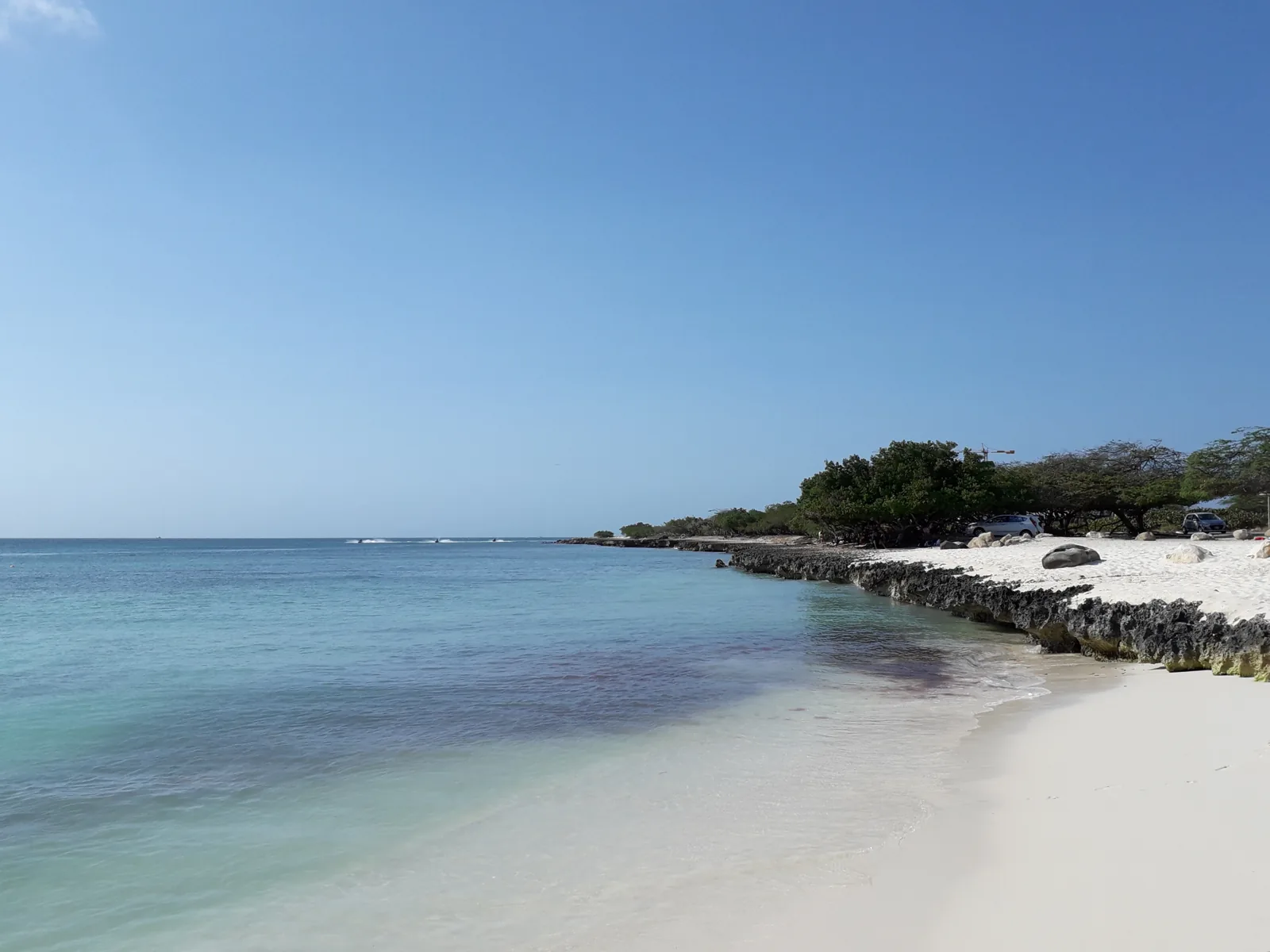
The best beach in Aruba for most visitors is Eagle Beach: it is the widest beach on the island, it has free public parking and shade, and it is free to use. It was also voted #3 in the Caribbean in Tripadvisor’s 2026 Travelers’ Choice awards, according to Aruba Tourism. But “best” changes with your trip. Families with toddlers do better at Baby Beach, snorkelers at Mangel Halto, and anyone who wants a quiet swim near the resorts at Boca Catalina.
Below we compare nine beaches by the things that decide a beach day: how calm the water is, whether there is shade and food, what it costs to get in, and how far it is from the Palm Beach hotel strip.
We may earn a commission when you buy through links on this page, at no extra cost to you. As an Amazon Associate we earn from qualifying purchases.
How we chose and compared
We haven’t visited every beach for this guide, so nothing here is a personal impression. Facilities, water conditions and drive times come from the official Aruba Tourism Authority beach pages (aruba.com). Park fees and opening hours come from the Aruba Conservation Foundation, which runs Arikok National Park. The Renaissance Island price comes from the resort’s own day-pass page. Sea turtle rules come from the Government of Aruba and the Turtugaruba Foundation. All sources were checked on October 30, 2026 and are listed at the end.
One thing applies to every beach below: Aruba Tourism states that all beaches in Aruba are public. Hotels can rent you a lounger, but they can’t keep you off the sand.
Aruba beaches compared
| Beach | Coast | Water | Best for | Entry | Facilities (per aruba.com) |
|---|---|---|---|---|---|
| Eagle Beach | West (leeward) | Calm | Space, sunsets, the fofoti trees | Free | Parking, shade areas, some huts, food nearby, bus |
| Palm Beach | West (leeward) | Calm | Water sports, bars, nightlife | Free (loungers rented) | Parking, food, shops, piers, bus |
| Arashi Beach | Northwest | Calm, shallow | Families, easy snorkeling | Free | Free shade huts, bar, chair rentals, parking, bus |
| Boca Catalina | Northwest | Calm, clear | Quiet swim close to the resorts | Free | Parking by the road, makeshift huts, steps down |
| Mangel Halto | Southwest (Pos Chiquito) | Calm, shallow inside the reef | Snorkeling, kayak, SUP, shore diving | Free | Public huts, wooden deck, bus |
| Baby Beach | South (near San Nicolas) | Shallow lagoon | Small kids, waders | Free (rentals extra) | Free huts, food stand and grill, public restroom, bus |
| Rodger’s Beach | South (next to Baby Beach) | Calm bay | Local feel, fewer crowds | Free | Dive shop, shower, restaurant, parking, bus |
| Flamingo Beach (Renaissance Island) | Private island off Oranjestad | Calm | Flamingo photos | $125 Island Pass for non-guests (incl. taxes/fees) | Resort island; food and cabanas extra |
| Dos Playa / Boca Prins | Northeast (windward), in Arikok | Heavy Atlantic surf | Scenery, dunes, photos | Arikok pass, $22 per adult | None on the beach; 4×4 or hike |
The pattern is simple. Aruba’s west and south coasts face away from the trade winds, so the water is calm. The northeast coast takes the Atlantic swell head-on, so those beaches are for looking at, not swimming.
1. Eagle Beach: best all-round beach in Aruba
Aruba Tourism calls Eagle Beach the widest beach on the island. Its two fofoti trees, bent permanently southwest by the trade winds, are probably the most photographed spot in Aruba. It sits just south of the Palm Beach high-rise area, in front of the low-rise hotels, so it feels roomier than Palm Beach. There is ample public parking, shaded areas and some free beach huts.
Who it’s for: couples, first-time visitors, anyone who wants a long walk on soft sand and a sunset.
Skip it if: you want snorkeling right off the beach or a bar every 50 yards. Palm Beach has more going on.
Eagle Beach is also where most of Aruba’s sea turtle nests are found, according to Turtugaruba. Nesting runs from March through December. If you see a fenced “box” around a nest, that nest is about 60 days old and close to hatching. Turtugaruba says late afternoon to sunset (5-7 PM) gives the best chance of seeing hatchlings. Keep your distance and don’t use a flashlight; lights pull hatchlings away from the sea.
2. Palm Beach: best for water sports and amenities
Palm Beach is a two-mile strip lined with the big resorts, piers, beach bars, restaurants and water sports concessions. The water is calm, so it works for swimming and casual snorkeling. Two of the island’s largest malls are a short walk inland.
Who it’s for: people who want parasailing, a beach bar and dinner without getting in a car.
Skip it if: you want space. The sand in front of the resorts fills up with rented loungers.
3. Arashi Beach: best easy snorkeling for families
Arashi is on the island’s northern tip, past Malmok, on the road to the California Lighthouse. Aruba Tourism describes calm, shallow water, free shade huts, a beach bar and chair rentals. The best snorkeling is on the left side of the beach when you face the sea.
Who it’s for: families who want a step up from a resort beach without a long drive, and beginner snorkelers.
Skip it if: you hate rocks underfoot. The official page recommends water shoes for the rocky sections near the shore, and advises arriving early because the huts and closest parking go first.
A cheap pair of water shoes solves the rock problem at Arashi, Boca Catalina and Mangel Halto. The SEEKWAY Quick-Dry Aqua Sock water shoes are a top seller in Amazon’s women’s water shoe category, with 4.5/5 from 18,000+ Amazon ratings (October 2026). Thin aqua socks like these protect against sharp rock and hot sand, but they are not hiking soles; for the Arikok trails, wear real shoes.
4. Boca Catalina: best quiet swim near the resorts
Boca Catalina is a small, secluded bay in the Malmok area, about a 5-minute drive from the Palm Beach high-rises. You park along the road and take steps down to the sand. Aruba Tourism notes you can often have the bay to yourself on weekdays, while weekends bring local families. Tres Trapi, a few minutes away, is known for starfish in the shallows and passing turtles; look, don’t touch.
Who it’s for: strong and weak swimmers alike, snorkelers who want clear water without a boat.
Skip it if: you need a restroom, food or rentals. The huts are makeshift and there are no listed facilities, so bring water and shade.
5. Mangel Halto: best snorkeling beach in Aruba
Mangel Halto is in Pos Chiquito on the southwest coast. Mangroves shelter calm, shallow water, and you can walk out to the edge of the reef. Aruba Tourism lists parrotfish, yellowtail snapper, sergeant majors and blue tangs, and says the reef drops to 110 feet, where octopus, morays and barracuda live. It is also a shore diving site and a launch point for kayaks and paddleboards.
Who it’s for: snorkelers and divers, and anyone who wants quiet shade under the public huts.
Skip it if: you need a bar or restaurant on the sand; the official page lists only public transport as an amenity. Weak swimmers should stay inside the reef, because conditions change past the drop-off.
For more reef spots around the region, see our guide to the best snorkeling in the Caribbean.
6. Baby Beach: best beach in Aruba for small kids
Baby Beach is a half-moon lagoon near San Nicolas at the southern end of the island. The water is shallow enough that you can wade a long way out and still touch the bottom. Snorkeling is good where the bay opens to the ocean, but Aruba Tourism asks swimmers to stay inside the marked snorkel area for safety. There is a refreshment stand, Big Mama’s Grill, a public restroom, rented beds and snorkel gear, and free huts.
Who it’s for: families with toddlers and anyone who’s nervous in deeper water.
Skip it if: you’re staying at Palm Beach for a short trip. Aruba Tourism puts it at about a 45-minute drive from the Palm Beach hotels, so it’s a half-day outing, not a quick swim.
7. Rodger’s Beach: best local-feeling beach
Rodger’s Beach is right next to Baby Beach: a narrow strip of white sand where fishermen anchor their boats in a calm bay. It has a dive shop with snorkel and dive rentals, a shower and a restaurant. The old Lago refinery is visible across the water, which some people find gritty and others find interesting. The beach is named after Captain Rodger, who opened the refinery in 1928.
Who it’s for: anyone going to Baby Beach who wants a calmer alternative a minute’s drive away.
Skip it if: you want a postcard view without industry in it.
8. Flamingo Beach on Renaissance Island: best for flamingos, if you’ll pay
The flamingos everyone photographs live on Renaissance Island, a private island owned by the Renaissance Wind Creek Aruba Resort. Hotel guests get access. Non-guests need an Island Pass, which the resort’s day-pass site lists at $125 including taxes and fees (checked October 30, 2026). Passes are limited and sell out, and the pass page says Flamingo Beach itself is adults-only, with a set time window for interacting with the birds. Food, drinks and cabanas cost extra.
Who it’s for: adults who want the flamingo photo and don’t mind the price.
Skip it if: you’re traveling with kids or on a budget. Every other beach on this list is free.
9. Dos Playa and Boca Prins: best wild beaches (no swimming)
On the northeast coast inside Arikok National Park, Dos Playa and Boca Prins are coves backed by cliffs and sand dunes, with heavy Atlantic surf. The Aruba Conservation Foundation describes Dos Playa as one of the most important sea turtle nesting sites on the island. Treat these as sightseeing stops: the swell is not safe for swimming.
Entry needs an Arikok conservation pass: $22 per adult, with children free (ACF lists the free age as under 17). The San Fuego visitor center is open 8:00 AM to 3:30 PM and the Vader Piet entrance 8:30 AM to 3:00 PM. The roads to the far coast are rough, so most visitors use a high-clearance 4×4, a guided jeep tour, or hike in.
Who it’s for: photographers, hikers, anyone who’s had enough of resort beaches.
Skip it if: you only have a regular rental car and want to swim.
Aruba’s sunscreen rule: pack an oxybenzone-free sunscreen
Aruba’s National Ordinance on environmentally harmful products (AB 2019 no. 67) bans the import, manufacture, sale and free distribution of sunscreen containing oxybenzone. The ban took effect on July 1, 2020, together with the island’s ban on many single-use plastics. In practice, you won’t find oxybenzone sunscreen on the island’s shelves, so bring a mineral one from home rather than hunting for it at a resort shop.
Two mineral options that work for a beach week:
- Thinksport SPF 50 Mineral Sunscreen, 3 fl oz: water-resistant, zinc-based and marketed as reef-friendly. It has 4.4/5 from 3,600+ Amazon ratings (October 2026). In Amazon’s review summary, buyers mention it blocks the sun well and has a mild citrus scent; like most zinc lotions, expect it to go on thicker than a chemical sunscreen. The 3 oz tube fits the TSA carry-on liquids limit.
- Badger Mineral Sunscreen Cream SPF 30, 2.9 fl oz: a zinc oxide cream that the listing describes as reef safe, water resistant and unscented, in a travel-size tube. SPF 30 is lower than Thinksport’s 50, so reapply more often if you burn easily.
Aruba is also trying to cut plastic litter, and the same law bans releasing balloons and plastic confetti outdoors. Aruba Tourism also asks visitors not to take sand, shells or coral home.
Which Aruba beach should you pick?
- One beach day only: Eagle Beach. Free, wide, easy parking, good sunset.
- Traveling with a toddler: Baby Beach if you have a car and half a day; Arashi if you want to stay within a short drive of the resorts.
- Snorkeling is the priority: Mangel Halto first, then the left side of Arashi or Boca Catalina.
- You want quiet: Boca Catalina or Rodger’s Beach on a weekday. Both fill up with local families on weekends.
- You want bars and water sports: Palm Beach.
- You want the flamingo photo: Renaissance Island, budgeting $125 per adult if you’re not staying there.
- You want scenery, not swimming: Boca Prins and Dos Playa in Arikok, with a 4×4 or a tour.
If you’re still choosing between islands, our comparison of the best islands in the Caribbean covers entry rules, fees and plug types for Aruba and nine others. For long beach days, a travel power bank keeps your phone alive for sunset photos.
FAQ
What is the number one beach in Aruba?
Eagle Beach is the most-cited answer. Aruba Tourism calls it the island’s widest beach, and it was voted #3 Best of the Best Beach in the Caribbean in Tripadvisor’s 2026 Travelers’ Choice awards.
Is Eagle Beach or Palm Beach better?
Eagle Beach is better for space and quiet; Palm Beach is better for water sports, bars and restaurants. They’re next to each other, so you can do both in one day.
Are all beaches in Aruba public?
Yes. Aruba Tourism states that all beaches in Aruba are public. Resorts can charge for loungers and cabanas, not for the sand. Renaissance Island is the exception you’ll hear about because it’s a private island reached by the resort’s boat.
Which Aruba beach is best for kids?
Baby Beach, because its lagoon stays shallow far from shore and it has food, a restroom and free huts. Arashi is the closer alternative from the Palm Beach area.
Can you swim at the beaches in Arikok National Park?
Not safely at Dos Playa or Boca Prins, which face heavy Atlantic surf. The Natural Pool (Conchi) inside the park is a sheltered rock pool; it’s reached by 4×4, tour or a long hike.
Sources
All checked October 30, 2026.
- Aruba Tourism Authority, Eagle Beach: https://www.aruba.com/us/explore/eagle-beach (widest beach, Tripadvisor 2026 award, parking, turtle nests)
- Aruba Tourism Authority, Palm Beach: https://www.aruba.com/us/explore/palm-beach (two-mile strip, facilities)
- Aruba Tourism Authority, Arashi Beach: https://www.aruba.com/us/explore/arashi-beach (huts, snorkel area, water shoes, all beaches public)
- Aruba Tourism Authority, Boca Catalina: https://www.aruba.com/us/explore/boca-catalina (5-minute drive, steps, weekday quiet)
- Aruba Tourism Authority, Mangel Halto: https://www.aruba.com/us/explore/mangel-halto (reef species, 110 ft drop)
- Aruba Tourism Authority, Baby Beach: https://www.aruba.com/us/explore/baby-beach (facilities, 45-minute drive)
- Aruba Tourism Authority, Rodger’s Beach: https://www.aruba.com/us/explore/rodgers-beach (dive shop, refinery history)
- Aruba Tourism Authority blog, 8 beaches: https://www.aruba.com/us/blog/8-beaches-you-must-visit-on-your-aruba-vacation (Tres Trapi)
- Aruba Conservation Foundation, experiences and hours: https://acf.aw/experiences (pass price, hours, Dos Playa nesting)
- Renaissance Wind Creek Aruba Resort, Island Passes: https://renaissancearuba.idaypass.com/services/island-passes/island-passes ($125 pass)
- Government of Aruba (DNM), turtle nesting season: https://www.gobierno.aw/en/it-is-the-season-when-sea-turtles-nest-on-the-beach
- Turtugaruba Foundation FAQ: https://turtugaruba.org/contact-us/ (nest boxes, hatching times)
- Afkondigingsblad van Aruba 2019 no. 67 (oxybenzone and plastics ban), via ELAW: https://elaw.org/resource/aw_plasticlaws (effective July 1, 2020)
- Arikok road access and windward surf: https://arubatourism.org/arikok-national-park
- Amazon listing ASIN B007SNM6OK (Thinksport SPF 50, rating and review summary); Amazon listing ASIN B079P2VV8X (Badger SPF 30); Amazon Best Sellers, Women’s Water Shoes (SEEKWAY ASIN B081DY9881 rating)