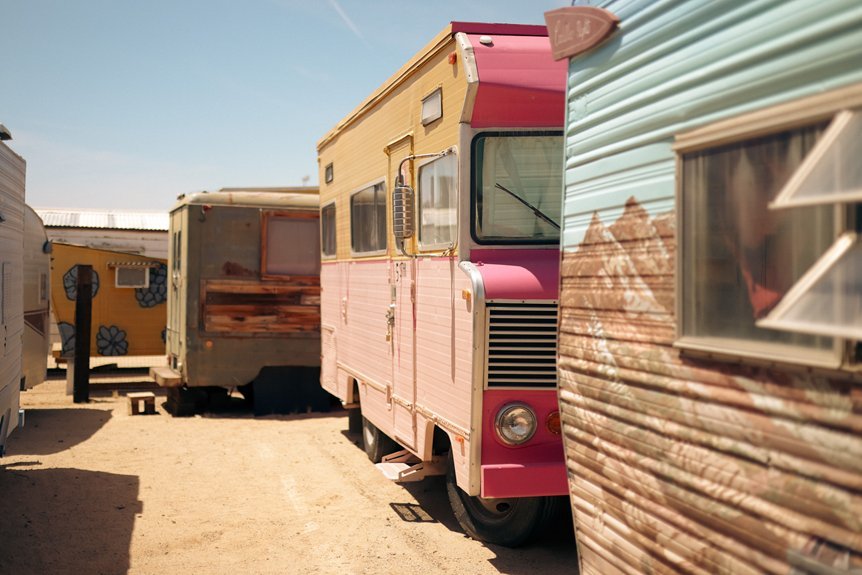
You want your RV to shine like fresh paint. I’ve tested these on hot fiberglass and dusty gel coat. Here’s what actually works.
Start simple. Use 303 RV Wash and Seal or Griot’s Wash and Wax. I like the slick feel under a sponge. You’ll smell a light soap scent and see water sheet off fast. It’s like giving your rig a quick rain jacket.
Need more bite. Grab Meguiar’s Cleaner Wax. I’ve watched it lift light oxidation with a soft pad. The surface goes from chalky to smooth in minutes. Think of it as a reset button for tired panels.
Got dull and faded sides. Step up to Meguiar’s Compound. It feels gritty at first then turns creamy as you work. I use firm pressure then lighten up. The gloss comes back like sunrise on glass.
Seal it in. Finish with Turtle Wax Hybrid Ceramic Spray. You’ll hear that squeak as you wipe. Water beads tight and rolls off in seconds. It’s your long shield for sun and rain.
What I look for every time
- UV protection, keeps color rich in harsh sun
- Easy application, spreads smooth and wipes clean
- Durability, holds shine after washes
Pick the level your RV needs. Keep it simple and stay consistent. Your rig will glow and turn heads at every stop.
303 Products RV Wash & Seal (1 Gallon)
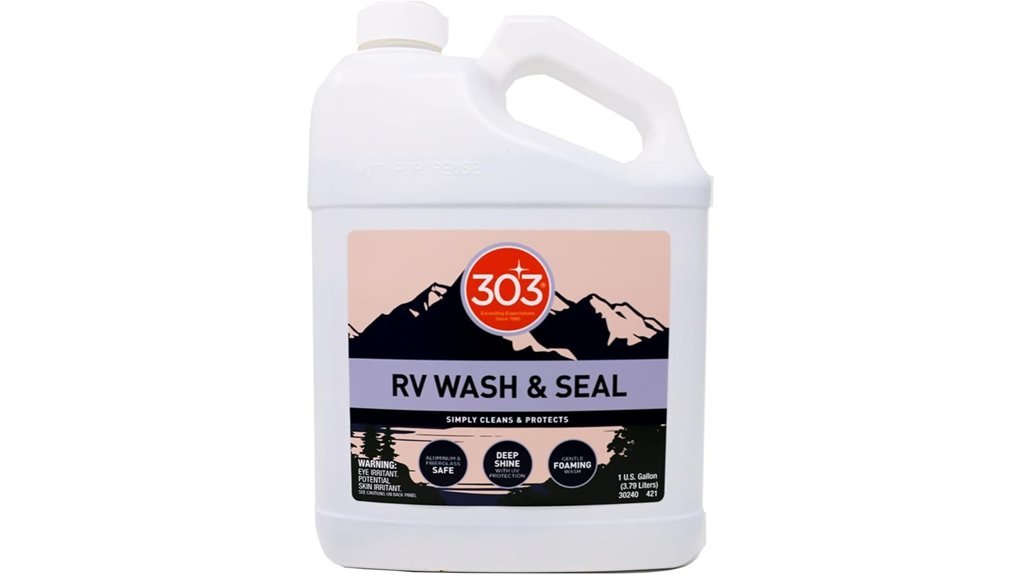
If you want a camper wash that works in one go, I’ve used 303 Products RV Wash & Seal and it delivers. Thick foam clings to the surface and lifts road grime fast. The soap feels slick in your mitt and smells clean and light. You rinse and see a clear gloss pop like fresh paint.
It uses a *pH neutral formula* so your decals and coatings stay safe. You also get UV protection that helps slow fade and crack. Water beads and slides off with a hydrophobic seal that cuts spotting. It feels like killing two birds with one stone.
Mixing is simple. I pour one ounce into five gallons of water. Wash with a mitt then rinse. Dry with a towel and the shine locks in.
Gold Eagle builds this with years of know how. The gallon jug lasts through many washes. You get steady shine and light protection each time.
Best For: RV owners who want a fast wash that cleans and adds shine in one step.
Pros:
- High foam soap lifts dirt with a smooth glide
- UV blockers help guard paint and trim
- Water beading seal reduces spots and boosts gloss
- Concentrated mix gives many washes per jug
Cons:
- Drying step brings the best shine
- Seal layer feels light next to a full wax
- Mixing adds one extra step to your routine
Meguiar’s Marine/RV One Step Cleaner Wax 32oz
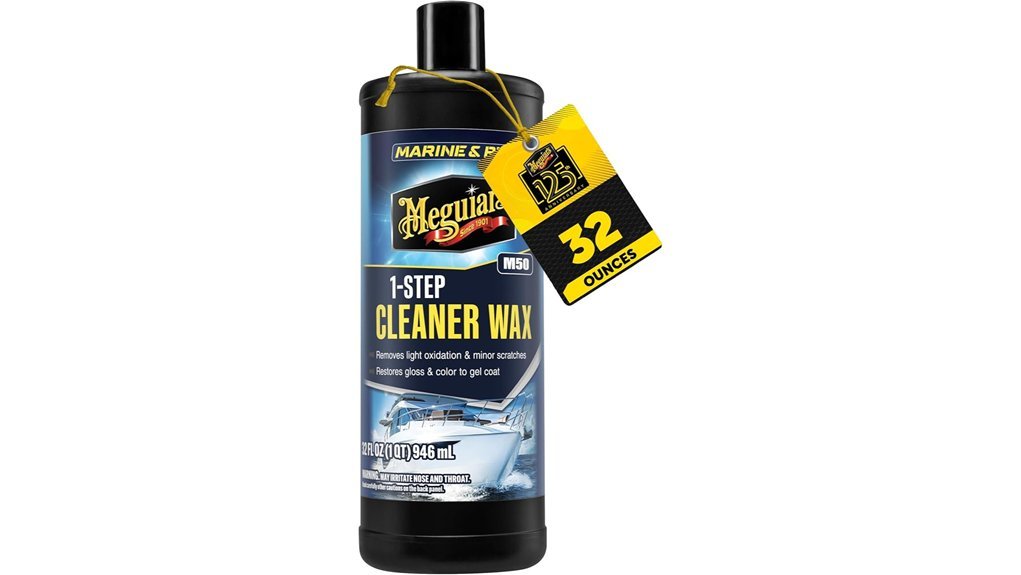
Meguiar’s One Step Cleaner Wax works like a Swiss army knife for gel coat care. I’ve used it on faded RV panels and dull boat hulls. It feels smooth and slightly creamy in your hand. The scent is light and clean. You get a 32 oz bottle that lasts through several full treatments. You can spread it by hand or run a DA polisher for faster coverage.
It cuts through light oxidation with ease. You’ll see haze fade as you buff. Minor scratches soften and blend in. The finish looks deeper and richer. Polishing oils feed the surface and boost shine. You also lay down UV protection that helps fight sun fade and salt air.
Best For: You want a quick all in one fix for gel coat that saves time and effort.
Pros:
- Cleans polishes and protects in one pass, like hitting three birds with one stone
- Lifts light oxidation haze and swirls with visible results
- Smooth formula adds gloss and shields against UV and corrosion
Cons:
- Heavy oxidation needs a stronger compound for full correction
- Wax layer fades sooner than a dedicated sealant
- Machine use takes a steady hand for even coverage
Meguiar’s Marine/RV One Step Compound 32 Oz
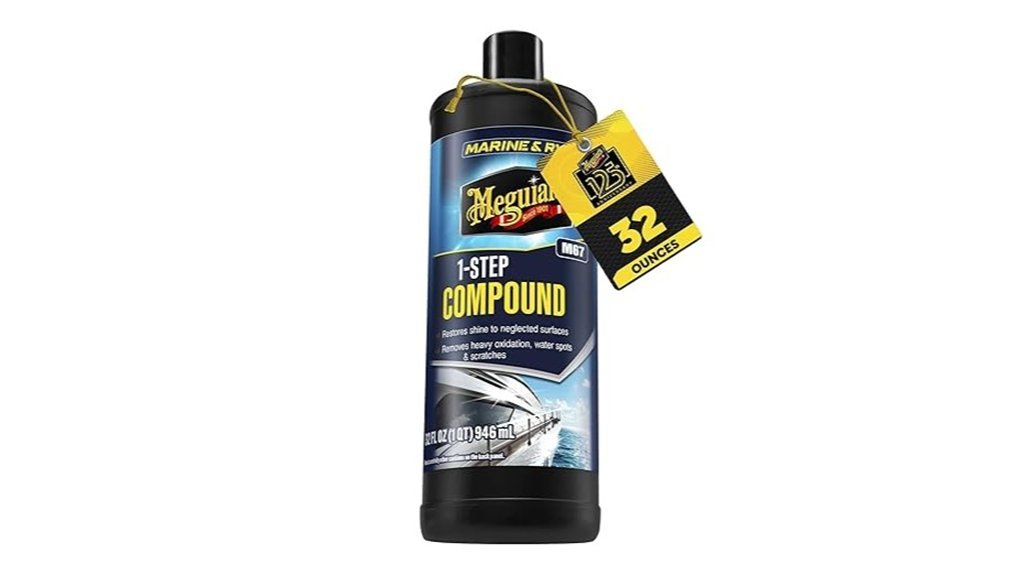
Serious RV owners face dull gel coat all the time. I’ve used Meguiar’s Marine RV *One Step Compound* on chalky panels and it cuts fast. The texture feels creamy in your hand. The smell stays light and clean. You watch haze fade like fog in sun. That’s the hook.
This compound targets fiberglass and gel coat with focus. It clears *moderate oxidation* and wipes out stains and water spots. Light scratches fade with a few passes. You get a *high gloss finish* that pops. Color looks deeper and richer. It’s like giving your rig a fresh coat without paint.
I’ve run it by hand and with a dual action polisher. It spreads smooth and stays workable. You hear a soft hum as the pad glides. Results look even and sharp. You spend less time and still get that pro look.
Best For:
RV and boat owners who want fast shine and oxidation removal on fiberglass or gel coat in one step.
Pros:
- Cuts oxidation and removes stains in one pass
- Brings back gloss and color with clear depth
- Works by hand or machine with steady results
Cons:
- Severe oxidation needs a stronger follow up
- Deep scratches call for extra correction steps
- Works best on fiberglass and gel coat surfaces only
Turtle Wax Hybrid Solutions Ceramic Spray Coating
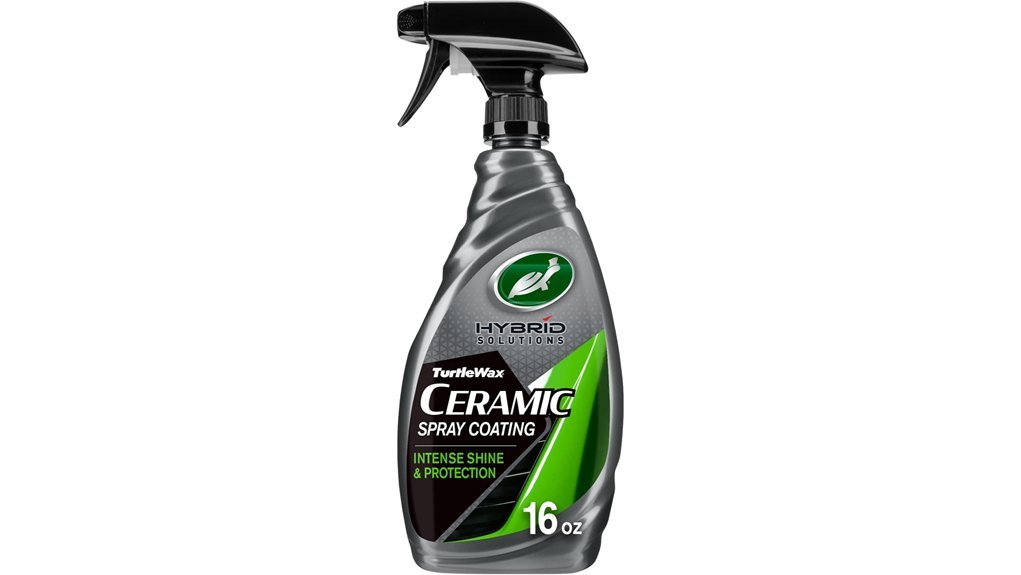
Turtle Wax Hybrid Solutions Ceramic Spray Coating fits RV owners who want fast protection that lasts. I’ve used it on dusty panels and sun baked paint, it wipes on slick and feels like glass under the towel. You spray it on a clean surface. Then you buff it off with a microfiber cloth. Done in minutes.
The formula uses ceramic polymers. Think of it like a raincoat for your RV. It builds a tough shield against UV rays and road grime. Colors pop right away. The gloss looks deep and wet.
Water behavior stands out. Drops bead tight and roll off fast. You hear that soft hiss as water slides away. Drying gets easier and spotting stays low.
You can use it on paint and glass. It works on trim and headlights too. Wheels clean up easier after a coat. I’ve even applied it in direct sun with smooth results.
With steady use you’ll keep your RV looking newer for about six months. That makes it a strong pick for busy owners.
Best For: You want a quick spray coating that delivers shine and solid protection with little effort.
Pros:
- Long lasting ceramic layer guards against UV rays and grime
- Deep gloss finish with tight water beading
- Simple spray and wipe use even in sunlight
Cons:
- Surface prep matters for best bonding
- Avoid use on soft fabric tops
- Lifespan shifts with climate and wash habits
Griot’s Garage RV Wash & Wax (64oz)
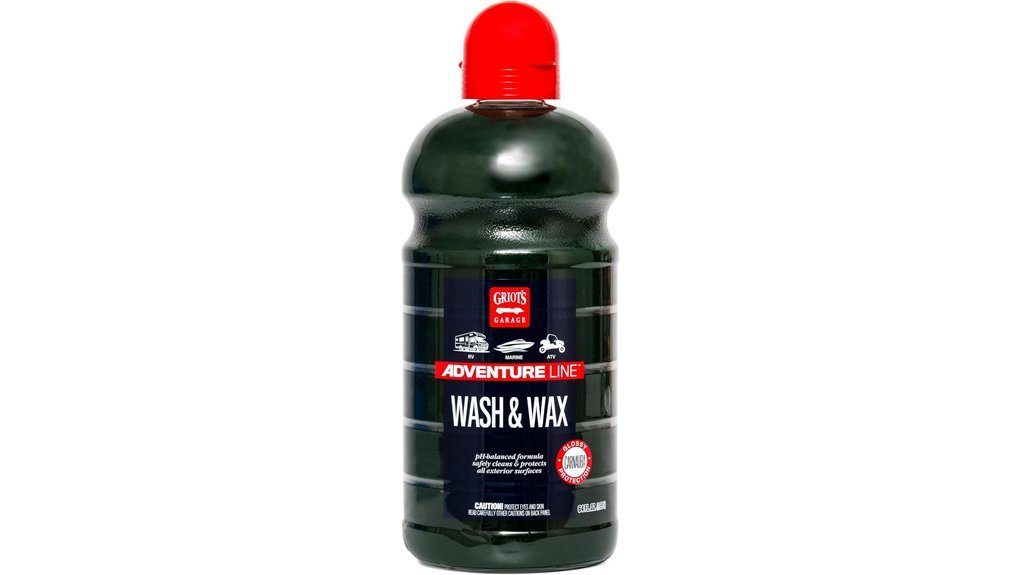
If you want a fast clean with a glossy pop, I’ve used Griot’s Garage RV Wash & Wax and it delivers. You get a 2 in 1 formula that lifts road grime and lays down carnauba wax in one pass. Suds feel slick in your mitt and rinse clean with a soft sheeting sound. I see deeper color and crisp reflections right away. It leaves a smooth touch that feels like fresh polish.
You can use it on paint, chrome, vinyl, plastic, rubber, and glass. The pH balanced mix keeps existing sealants happy and adds light protection from sun and rain. Think of it like a quick tune up for your RV’s skin. One ounce makes a gallon so the bottle lasts through many washes. I use it after trips for scratch free washes and a steady shine.
Best For: RV owners who want a quick wash that adds shine in one step.
Pros:
- 2 in 1 clean and wax saves time and effort
- Safe on multi surface areas across the RV
- High concentration stretches each bottle and saves money
Cons:
- Wax layer feels light compared to a paste wax
- Mix ratio needs care for best gloss
- Heavy oxidation needs a dedicated polish first
Factors to Consider When Choosing Camper Wax
When I pick a camper wax, I start with the surface. Gel coat feels smooth and needs a different formula than painted panels. Get this match right and you’re already halfway home.
Next, I check how long the protection holds. A good wax feels slick under your fingers and beads water like fresh rain on glass. You want shine that sticks around through sun and road grime.
Application matters more than brands claim. Some wax spreads like warm butter and wipes off clean. Others fight you every step of the way. I always reach for one that saves time and effort.
A solid wax also lifts light dirt as you work. That means fewer steps and less elbow grease. It keeps the job simple and your camper looking sharp.
UV protection seals the deal. Sunlight bakes surfaces and dulls color fast. A strong formula keeps that deep gloss alive and kicking.
Focus on these points and you’ll land on a *reliable* pick that keeps your RV turning heads.
Surface Compatibility
Surface Compatibility
I’ve tested wax on mixed RV skins. Some shine like glass. Others leave a chalky film you can feel.
Your rig blends fiberglass, gel coat, vinyl, plastic, rubber, and aluminum. Each reacts in its own way. A smart pick handles all of them with a smooth wipe.
Look for *multi surface* labels. That tells you one bottle can coat the whole coach. You keep a steady gloss and skip product swaps.
I check the formula first. Some blends feel slick on gel coat yet grab on plastic. You want a clean spread and a soft buff. Think of it like butter on warm toast.
Paint needs care too. A safe wax keeps color deep and bright. No haze. No dull patches.
Don’t skip trim and headlights. Clear plastic shows every smear. A good wax leaves them crisp and clear.
I watch for these signs during use:
- smooth glide on fiberglass
- clean buff on painted panels
- no white residue on rubber seals
- clear finish on headlights
- even gloss on aluminum
A solid pick keeps every panel in sync. Your RV looks sharp from nose to ladder. And your detailing time stays short and sweet.
Protection Durability
Protection That Lasts
Shine catches your eye first. Protection keeps your RV safe after the buffing stops. I’ve tested these in sun and rain, and the right formula feels slick like glass.
Pick wax with ceramic polymers. They block UV rays and fight road grime. You’ll see less fading and fewer stains over time. That’s the difference between a quick glow and a finish that sticks like glue.
Water behavior matters. A strong coat beads water fast and sheds it with a soft hiss. That hydrophobic layer cuts spotting and keeps dirt from clinging. Your wash days get easier.
Layering helps. You can build protection coat by coat. Each pass adds depth and strength. I like how the surface feels smoother with every layer.
Check the pH. A neutral pH formula treats your paint with care. It keeps both the surface and wax in good shape. You get longer life without harsh effects.
Maintenance seals the deal. Use a wax that holds up for six months or more. Keep it topped and it stays sharp. Think of it as armor that ages well.
Application Method
Application Method
Wax choice matters. Your method matters more. I’ve tested both in the field and the difference shows fast.
Apply by hand for control. You feel the surface and guide each pass. Tight corners become easy. Trim stays clean. The wax feels smooth like soft butter. You build a clean even layer.
Grab a machine for big RV walls. Speed saves your arms. A rotary buffer cuts fast and hums loud. It needs a steady hand. Heat builds quick. Paint can haze if you rush. A dual action polisher feels calmer. It vibrates in small circles. You get speed with control. That balance pays off.
Follow the label every time. Each formula has its own sweet spot. Some like thin coats. Others want a short haze time. The scent can hint at cure time, sharp solvents mean quick flash.
Buffing seals the deal. I use a plush microfiber towel that feels like suede. Light pressure wins. The gloss deepens like a mirror at sunrise. Streaks fade. The surface turns slick.
Think of it like icing a cake. Smooth strokes beat thick blobs.
Quick picks from my kit
- Hand applicator pads, soft foam for even spread
- Dual action polisher, safe power with low heat
- Microfiber towels, high pile for final buff
- Rotary buffer, fast cut for large flat panels
You control the finish. Choose the tool that fits your pace.
Cleaning Capability
Cleaning power makes or breaks a wax. I’ve seen weak formulas just smear haze like butter on cold toast.
You want a blend that lifts dirt and light oxidation while adding gloss. I like how a good wax feels slick under a mitt. You can hear the grime release with each pass.
High foam helps a lot. The suds cling and creep into pores. They loosen grit so you wipe it away with less effort.
Look for gentle cleaners. You keep the finish smooth and bright. I’ve run these on gel coat and clear coat with zero bite.
Built in cleaners save time. You wash and protect in one go. That cuts your routine in half and keeps results steady.
A pH balanced mix keeps things safe. It plays well with sealants and coatings. You avoid film buildup that can turn into a sticky mess.
What I check on the label
- Foam level, thick suds that hang on the panel
- Cleaner type, mild and non abrasive
- pH balance, safe for coated surfaces
- Rinse feel, slick and residue free
Think of it like a two in one shampoo for your rig. Clean look, smooth touch, and less elbow grease.
UV Resistance Level
UV Resistance Level
I’ve parked rigs under brutal sun and watched cheap wax fail fast. The surface feels hot to the touch and dull to the eye. *UV protection stands as your shield*. Think of it like sunscreen for your RV.
You want a wax that blocks ultraviolet rays and keeps color rich. I look for formulas with UV inhibitors. These additives form a tight barrier you can feel with your hand. It feels slick and smooth.
What I check in the field
- UV inhibitors in the formula
- Depth of gloss after full sun days
- Water beading after heat cycles
- Finish feel after wipe down
A strong wax keeps shine for months with basic care. I’ve seen top picks hold gloss for six months. The paint looks wet and alive. Decals stay crisp.
Heat reveals the truth. I check panels at noon. I look for fade and haze. A good wax holds like a coat of armor. That old saying fits, an ounce of prevention beats a pound of cure.
Invest here and you save time later. You cut down on buffing and repaint work. Your RV keeps that showroom pop.
Water Repellency Power
Water Repellency Power
I’ve tested plenty of RV waxes, and water behavior tells the truth fast. You want tight beads that slide off like rain on glass. *That slick feel matters.*
Strong water repellency keeps your rig looking sharp with less scrubbing. Water rolls off and takes dust with it. Think of it as a raincoat for your RV.
Look for hydrophobic tech. That simply means water pulls away instead of spreading. You will see small beads form and race off the surface.
A good formula also adds UV protection. The sun feels harsh on bare paint, and this layer takes the hit. Your finish keeps its color and gloss longer.
Here is what I check every time:
- Beading action that forms fast and moves quick
- Slick finish you can feel with your hand
- Durable layer that lasts through several washes
- UV blockers that shield paint and decals
After a wash, you will notice fewer streaks and spots. The surface feels smooth like polished stone. Dirt struggles to grab on, and cleanup stays easy every trip.
Pick a wax that leaves that glassy glide. It makes your RV easier to care for, plain and simple.
Finish And Shine
Finish And Shine
Water beads look cool. Shine seals the deal. I’ve tested wax on sun baked RV panels, and you can see the glow pop fast.
A quality wax lifts the look right away. You get a slick feel under your hand. Light glides across the surface like glass. That’s the sweet spot.
I reach for blends with carnauba or modern polymers. Carnauba gives that warm glow. Polymers boost clarity and reflection. You see deeper color and crisp lines.
You also get light correction. Fine scratches fade. Dull spots wake up. Your RV starts to look like it just rolled off the lot.
Hydrophobic action matters. Water pulls tight into beads. It slides off with a soft hiss. Less spotting shows up after a rinse.
Regular coats build protection. UV rays hit the barrier first. Dirt lifts off easier. Road grime loses its grip.
What to look for
- Carnauba wax for rich depth
- Synthetic polymers for sharp gloss
- UV blockers for sun defense
- Easy wipe on and wipe off feel
- Strong water beading action
I like to apply in the shade. The wax smells faintly sweet and spreads like butter. Buff it out and you get that mirror flash.
Think of it like a raincoat for your RV. It keeps the shine alive through long trips and hot days. Your rig keeps that freshly detailed look with less effort.
Formula Type
Formula Type
I’ve tested these on dusty rigs and slick fiberglass. The right formula feels like a shortcut that actually works.
Pick a two in one wash and wax. You clean and protect in one go. Suds feel slick in your hand. The panel squeaks clean after a rinse. *That saves real time.*
Wash often. Go with a concentrate. You mix a small cap with water. The soap smells fresh and cuts road film fast. Your bottle lasts longer. Your wallet feels it.
Choose a pH balanced blend. It plays nice with wax and coatings. Your finish keeps that smooth glass feel. You keep the shine you paid for.
Look for hydrophobic action. Water beads tight like marbles. It slides off with a soft hiss. Spots fade between washes. *Less drying stress.*
Application matters. I use a mitt by hand on most jobs. I grab a buffer for big panels. Both should feel easy and smooth.
Keep it simple:
- Two in one for speed
- Concentrate for value
- pH balanced for surface care
- Hydrophobic for beading
- Hand or buffer friendly for control
Good soap is the grease in the wheels. It keeps your routine quick and your RV looking sharp every time.
Conclusion
You’ve seen how each wax performs. I’ve used them in sun and dust. Some give a quick shine. Others build a deep gloss you can feel with your hand. Your choice today shapes what you see months from now.
Picture your RV in bright light. The surface feels slick and smooth. Water beads and slides off like rain on glass. That comes from the right formula and a solid application. I’ve watched cheaper wax fade fast. I’ve also seen premium coats hold strong like a shield.
Go with a product that fits your use. Weekend trips need speed. Full time rigs need lasting protection. Apply it with care and patience. *Thin layers win every time.*
Pick well and your camper keeps that fresh look. People notice. You notice more. That shine sticks around like a good habit.