
You want a travel filter water bottle that keeps you safe in real conditions. I have tested these on dusty trails and in busy airports. You feel the grit. You taste the difference. Here is what works.
Top Picks That Deliver in the Field
*GRAYL GeoPress, full purification power*
I press once and hear a firm hiss. Water comes out clean and crisp. It handles viruses and heavy metals. That gives peace of mind fast. Like a bouncer at a club, it keeps the bad stuff out.
*LifeStraw Go, light and reliable*
I sip and get a smooth flow. The bottle feels light in hand. It targets bacteria and microplastics. Great for city travel or short hikes. Think of it as your daily shield.
*SurviMate, layered filtration control*
I taste neutral water with each sip. The filter stack works in stages. That means more coverage in mixed conditions. It acts like a coffee filter set; each layer adds clarity.
What Actually Matters on the Road
You need smart features that hold up all day. I look for these every time.
- Strong contaminant removal, viruses bacteria and sediment
- Easy operation, press or sip without fuss
- Long filter life, fewer swaps mid trip
- Solid build, it feels tough in your hand
- Right capacity, enough water for long days
Quick Advice Before You Buy
Pick based on your trip style. I grab GeoPress for remote travel. I choose LifeStraw for daily use. I pack SurviMate for mixed terrain.
One bottle can shift your whole trip, like finding shade on a hot day.
Brita Stainless Steel Insulated Filtering Water Bottle 20oz
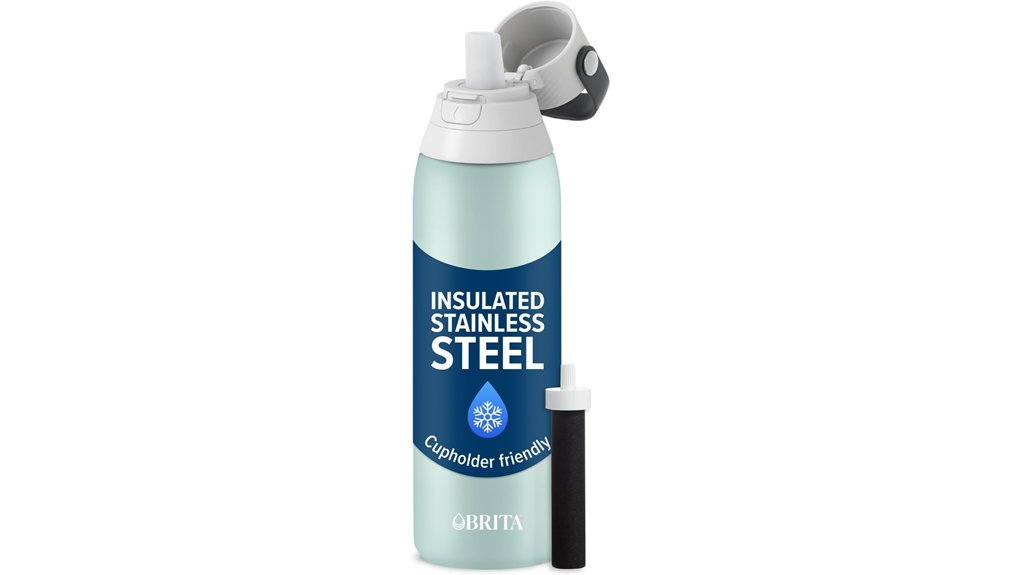
If you want cold water that tastes clean on the move, I’ve used this bottle and it delivers. The steel shell feels cool and solid in your hand. You hear a clean click when the lid snaps shut. Think of it as a mini fridge you carry.
You get *double wall insulation* that holds a chill for 24 hours. I filled it with ice at dawn and sipped cold water at dusk. The *carbon block filter* cuts chlorine smell and odd flavors. Water tastes crisp and fresh with each pull. The 20 oz *BPA free stainless steel* body rides well in a bag. The straw flows smooth and the push button lid opens with one thumb. The loop helps on quick grabs.
You also cut waste. One filter replaces up to 300 plastic bottles. Cleaning stays simple since the lid is top rack safe. Filters swap fast and last about two months.
Best For: You want a tough insulated bottle with a built in filter for daily carry and travel.
Pros:
- *24 hour cold hold* with double wall build
- *Better taste* from the carbon filter
- *One hand use* with straw lid and loop
Cons:
- Filter swaps every two months or 40 gallons
- Heavier feel than plastic bottles
- 20 oz size fits light to medium hydration days
LifeStraw Go Water Filter Bottle 22oz Aegean
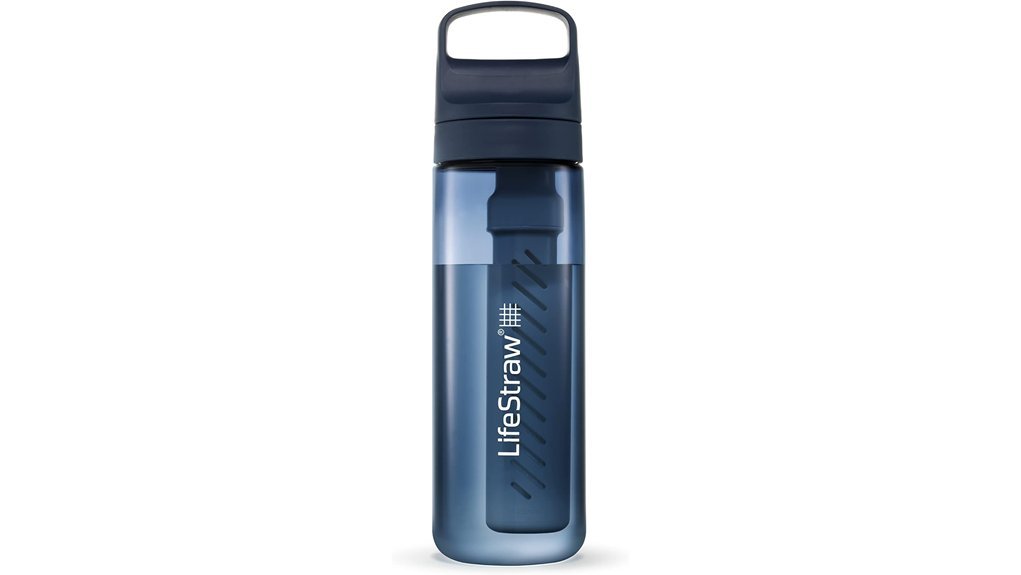
Frequent travel tests your gear. I’ve used the LifeStraw Go 22oz bottle on planes and dusty roads. It feels light in hand and the plastic has a clean smooth touch. You get a BPA free body with 50 percent recycled plastic. It slips into side pockets with ease. Fill from a tap or a sink and sip with confidence.
Inside, a membrane microfilter strains out bacteria and parasites. It also traps microplastics you can’t see. The carbon stage tames chlorine taste and odd smells. Water tastes crisp and neutral. Like turning murky into mountain fresh in one go.
Flow feels steady with a soft pull. I hear a faint sip sound as you drink. The bite valve seals well in a bag. The microfilter lasts up to 1000 gallons. That cuts piles of single use bottles. Your purchase also funds safe water for a child for a year. That lands like a drop in a dry well.
Best For: Travelers and commuters who want a grab and go bottle with real filtration for daily use.
Pros:
- Filters bacteria and parasites, also reduces microplastics and improves taste with carbon
- Long filter life, up to 1000 gallons for fewer plastic bottles
- Lightweight build, 50 percent recycled plastic with a tough feel
Cons:
- Carbon stage needs regular swaps, about every 2 months
- Virus and heavy metal reduction sits outside its scope
- Flow runs a bit slower than a plain bottle
Quick Specs:
- Capacity, 22 oz
- Filter type, membrane microfilter plus carbon
- Microfilter life, up to 1000 gallons
- Material, BPA free plastic with recycled content
- Use case, travel, commuting, light outdoor trips
If you want simple and safe hydration, this bottle pulls its weight. I reach for it when water quality feels iffy. It keeps things clean and easy, like having a small filter plant in your hand.
LifeStraw Go Water Filter Bottle 22oz Aegean
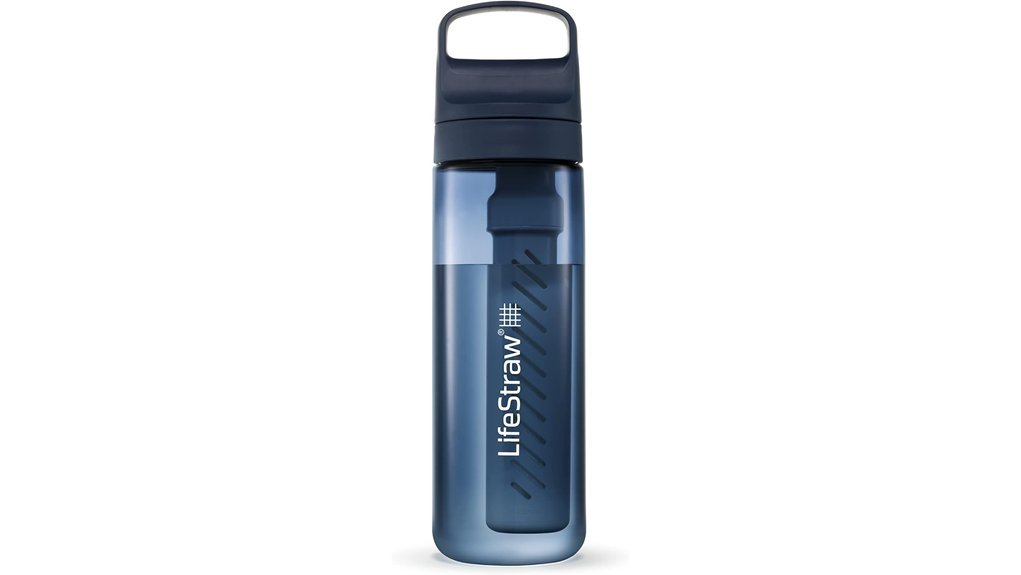
Travel light and drink with confidence. I’ve used the LifeStraw Go on dusty trails and busy airports, and it keeps water tasting clean and crisp. The advanced microfilter works like a gatekeeper. You sip, it filters. Simple as that.
You get a 22 ounce BPA free bottle that feels smooth in hand. It uses 50 percent recycled plastic, which I like on long trips. The sip has a slight resistance, like a firm straw, but it feels steady and controlled.
The membrane removes 99.999999% of bacteria and 99.999% of parasites. The carbon filter cuts chlorine and odd smells. Water from a tap or stream comes out fresh. Think of it as turning rough water into something that tastes like home.
Fill up almost anywhere. I’ve filled it at a park fountain and a shallow creek. The microfilter lasts up to 1,000 gallons. That means fewer disposable bottles in your bag and in the trash.
Your purchase also supports a child with safe drinking water for a year. That adds real impact to a daily carry item. A solid warranty backs it up, so you can pack it and go.
Best For: Travelers and hikers who want a portable bottle with reliable purification and better taste on the move.
Pros:
- Filters bacteria, parasites, and microplastics, adds a carbon stage for taste
- Long life microfilter up to 1,000 gallons, great for frequent travel
- Lightweight bottle with 50 percent recycled plastic, easy to carry anywhere
Cons:
- Carbon filter needs a swap about every two months
- Targets bacteria and parasites, heavy metals and viruses need other tools
- Flow feels a bit slower than a standard bottle, like sipping a thick smoothie
LifeStraw Peak Collapsible Squeeze Bottle Water Filter 650ml
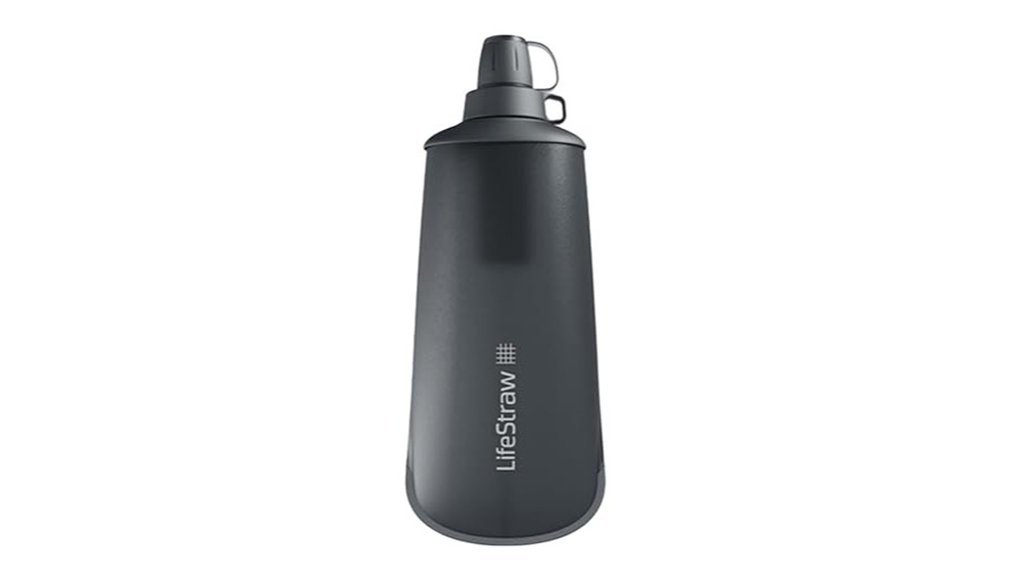
Outdoor travel pushes your gear hard. I’ve used the LifeStraw Peak Collapsible Squeeze Bottle on dusty trails and busy hostels. It feels light in hand and packs down like a soft flask. Think of it as your pocket lifeline.
You get 650 ml capacity that slips into tight spaces. The bottle feels tough and slightly rubbery. It resists leaks during rough hikes. Water tastes clean and crisp after each sip.
Filtration does the heavy lifting. It removes 99.999999% of bacteria and 99.999% of parasites. It also clears microplastics and grit you can feel between your teeth. Murky water turns clear fast.
Flow stays steady with the updated microfilter. I noticed less clogging over time. The backwash tool helps you keep it running smooth. It works like clearing a blocked straw.
You can drink straight from it or squeeze into a pot. I often fill a cook cup at camp. It also connects with Peak gear for flexible setups. That kind of range feels like a Swiss Army knife.
The Dark Mountain Gray finish looks clean and hides scuffs. It blends into any pack setup. It stays low profile during travel.
Best For:
Ultralight hikers and fast packers. Travelers who want safe water without bulk. Anyone who values speed and simplicity on the move.
Pros:
- Strong filtration for bacteria parasites and microplastics
- Soft collapsible body saves space in small packs
- Multiple use modes for drink or squeeze tasks
Cons:
- 650 ml size calls for frequent refills on long days
- Hand pressure adds effort during heavy use
- Virus protection calls for a purifier add on in high risk areas
Quick Specs:
- Capacity: 650 ml
- Weight: very light and packable
- Filter type: membrane microfilter
- Use modes: sip squeeze straw connect
- Color: Dark Mountain Gray
SurviMate 5-Stage Ultra-Filtration Water Bottle
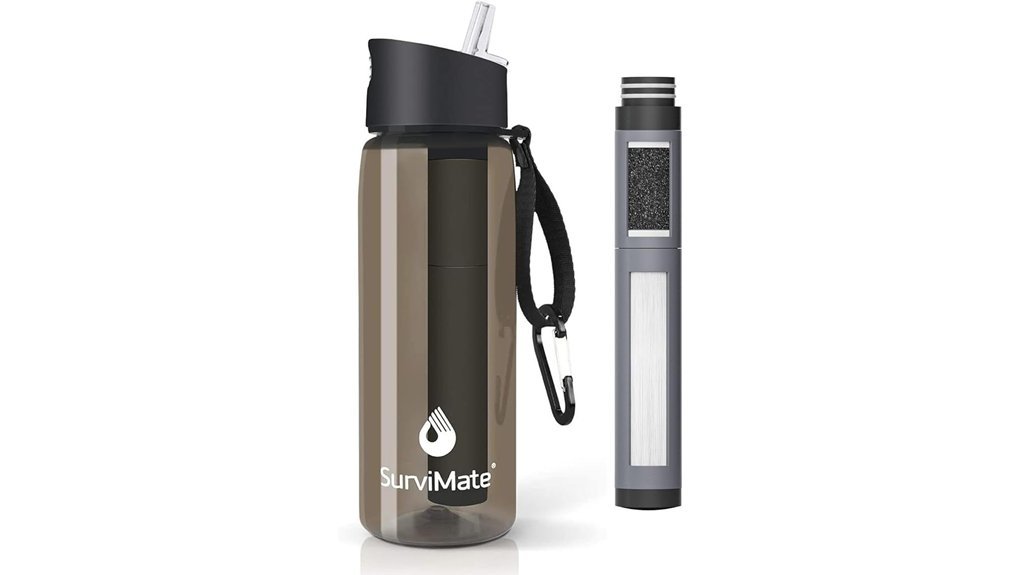
If you drink from sketchy sources, this bottle feels like a safety net. I’ve used it on murky streams and it delivers *clean taste* every time. The 0.01μm filter grabs the tiny stuff you can’t see. Think bacteria and fine particles. The five stage system uses an NSF tested filter. It cuts 99.99% of contaminants like chlorine and metals. No swampy smell. No weird aftertaste.
Flow stays quick and smooth. You get up to 550 ml per minute with a steady squeeze. The bottle feels light in your hand at 10 ounces. The Tritan plastic stays tough and clear. The 650 ml size suits day hikes. The built in compass adds a handy trail touch. It’s like having a mini guide on your lid.
Setup takes a minute. I dump the first sips to clear carbon dust. After that it runs clean. The filter lasts about 1500 liters. That’s a mountain of saved plastic. Keep the air hole open for easy flow. Treat it like good boots and it will serve you well.
Best For: You want safe water on hikes, travel days, and emergency kits. You value *portable filtration* that handles unknown sources.
Pros:
- 0.01μm 5 stage filter removes 99.99% of contaminants, including metals and odors
- Fast flow rate, up to 550 ml per minute with easy squeeze
- Long filter life, about 1500 liters for fewer plastic bottles
Cons:
- Hand wash care keeps parts in good shape
- First sips clear harmless carbon dust
- 650 ml size suits short trips and needs refills on long days
Philips Stainless Steel Filter Water Bottle with GoZero
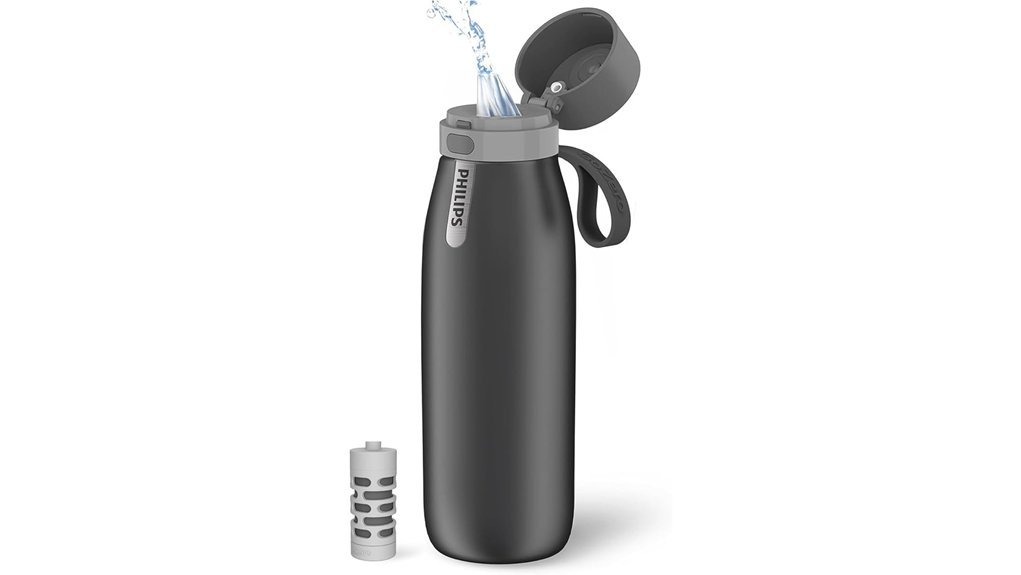
City commutes feel smoother with this bottle in hand. I’ve used it on trains and flights. It rides like a steady co-pilot. The GoZero filter cleans up taste fast. You sip and notice a crisp finish with no chlorine smell. The stainless steel shell feels cool and solid.
You get 530 ml in a slim shape. It slides into a cup holder with ease. The double wall insulation keeps water cold for 24 hours. I hear a soft click from the lid. The silicone mouthpiece feels smooth on the lips. One hand opens it in a snap.
The filter handles chlorine and fine bits. It keeps key minerals in place. Each filter lasts about 40 gallons or two months. I swap it in under a minute. At 13.58 ounces it feels light in a bag. This bottle cuts down plastic use like a champ.
Best For:
Daily commutes and air travel. You want cold water and clean taste on the go.
Pros:
- GoZero filter lifts taste and removes chlorine and odors
- Insulated steel keeps water cold up to 24 hours
- One hand lid with soft mouthpiece feels quick and clean
Cons:
- Filter swaps every two months
- Some parts need hand wash
- 530 ml suits light to moderate hydration
Quick Specs:
- Capacity, 530 ml
- Weight, 13.58 ounces
- Filter life, 40 gallons or two months
- Material, stainless steel with silicone mouthpiece
GRAYL GeoPress 24oz Water Purifier Bottle Black Camo
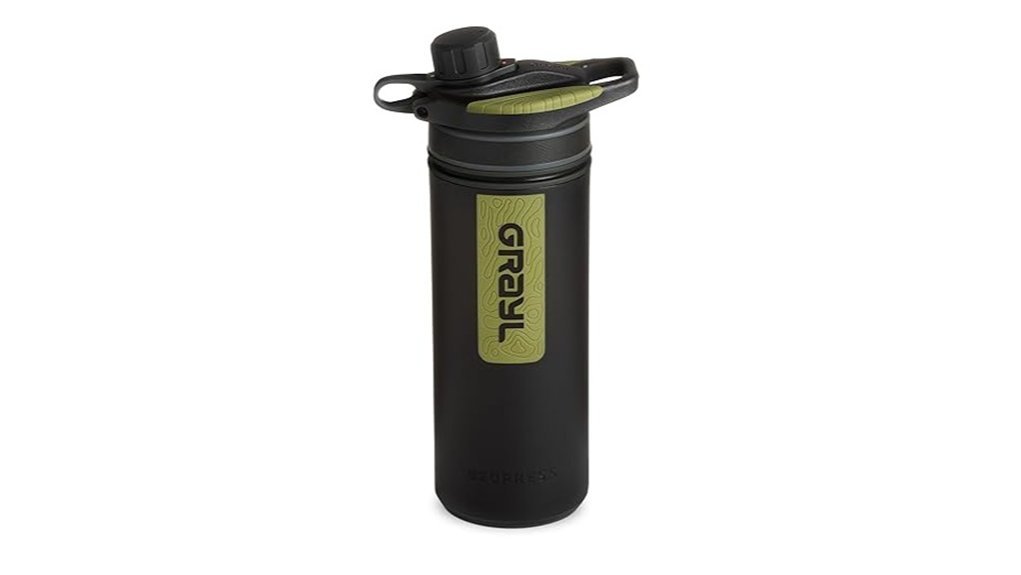
Frequent international trips push water safety to the limit. I’ve used the GRAYL GeoPress in busy cities and dusty trails, and it delivers true purification every time. You fill it from a tap or stream, then press with steady force. The motion feels firm and smooth, like a French press. In seconds, you get clean water that tastes crisp with zero odd smell.
This 24 ounce bottle eliminates viruses, bacteria, and protozoa. It also cuts chemicals and heavy metals, so your water feels fresh and light. I like how fast it works, you can purify up to five liters per minute. That speed matters when you feel thirsty and tired. The polypropylene shell feels solid in hand, with a slightly textured grip that holds even when wet.
Each cartridge treats about 65 gallons, so you get solid mileage before a swap. I’ve packed it in carry ons and hiking bags, and it slides in without fuss. The black camo finish gives it a rugged look, like it belongs in the wild. You can count on it for travel, hiking, or emergency kits. It’s a workhorse that keeps pace with you.
Best For:
Travelers and hikers who want fast water purification across the globe.
Pros:
- Removes viruses, bacteria, protozoa, chemicals, and heavy metals for true purification
- Simple fill, press, drink design that works in seconds
- Durable build with a 65 gallon cartridge life and ten year warranty
Cons:
- You apply firm pressure during use, your arms will feel it after many presses
- Replacement cartridges add ongoing cost
- Bulk feels larger than a basic bottle, it still packs well
Membrane Solutions C3 Filtered Water Bottle 36oz
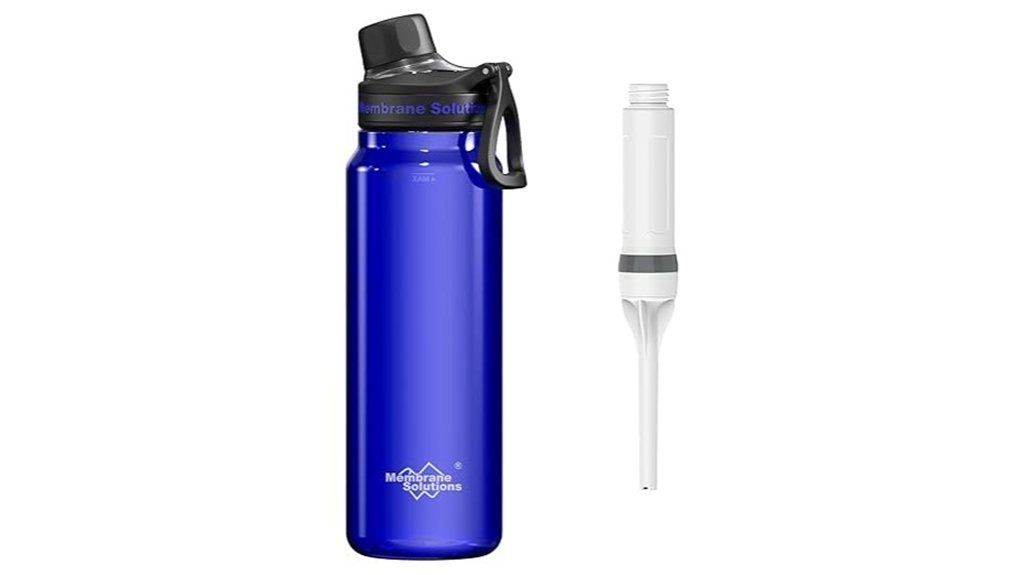
Big thirst on the trail. I’ve carried the Membrane Solutions C3 on dusty hikes and long airport days. It feels solid in hand and the Tritan shell shrugs off drops with a dull thud. You get a 36oz BPA free bottle that keeps you moving without constant refills.
Sip and go. The 4 stage ACF filter cuts chlorine smell and odd tastes. Water comes out clean and crisp like a fresh stream. Flow hits about 800 ml per minute so you don’t wait around. It handles sources up to 500 ppm TDS with steady output.
Little details win. The wide mouth makes filling easy at sinks and spigots. The leakproof lid seals tight in a packed bag. A time ring tracks up to 264 gallons so you know when to swap. An extra cartridge comes in the box which feels like found money.
Cleanup stays simple. The bottle goes in the dishwasher. I rinse the filter by hand and keep it fresh.
Best For: Travelers and hikers who want fast flow and big capacity in one grab and go bottle.
Pros:
- Big 36oz volume with quick 800 ml per minute flow
- 4 stage ACF filter improves taste and reduces chlorine and microplastics
- Tough Tritan build with tight lid and wide mouth
Cons:
- Filter needs hand care after use
- Best with sources up to 500 ppm TDS
- Size feels bulky in small packs
A trusty workhorse. It drinks like a charm and keeps pace all day.
Membrane Solutions C3 Filtered Water Bottle 32oz
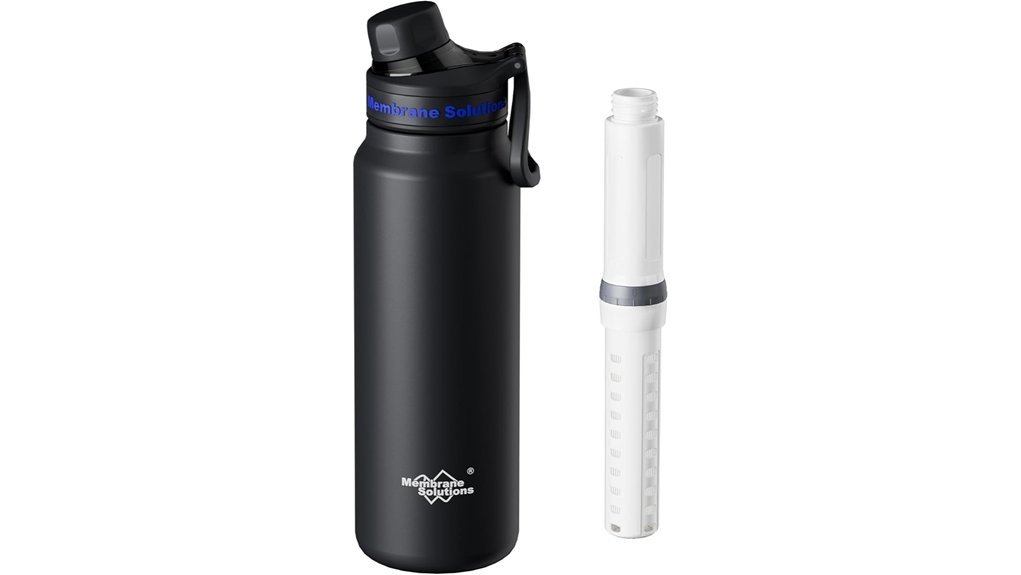
Outdoor trips test your gear fast. I’ve used the Membrane Solutions C3 on muddy riverbanks and dusty trails, and it pulls clean water like a charm. You taste neutral water with no odd smell. That feels like hitting an oasis in the desert.
You get 0.1 micron ACF and UF filtration. That means tiny pores that trap bacteria and fine debris. The six stage system removes 99.9999% of bacteria and 99.97% of microplastics. I drank from streams and city taps with confidence.
Filter life stands out. The ACF runs up to 132 gallons. The UF reaches 1,057 gallons. You swap parts less often and stay focused on the trail.
The 32 oz stainless steel body feels cool in hand. It resists rust and heat well. I’ve knocked it on rocks and it held strong like a tank. The wide mouth makes filling quick. The cap seals tight and stays dry in a pack.
Flow comes from manual suction. You sip and pull water through the filter. It feels simple and field ready. Think of it as your own portable spring.
Best For: You want safe water on hikes and travel. You camp off grid and need steady filtration. You prep for emergencies and want gear you can trust.
Pros:
- 6 stage ACF and UF system, removes bacteria and microplastics with high accuracy
- Long filter life, up to 1,057 gallons on UF for fewer swaps
- Steel build, tough shell with a wide mouth and tight seal
Cons:
- Manual sip flow, slower than pump systems
- Heavier build, about 2 pounds in your pack
- Lower flow feel, compared to open bottles without filters
Philips GoZero Filtered Water Bottle 22oz Blue
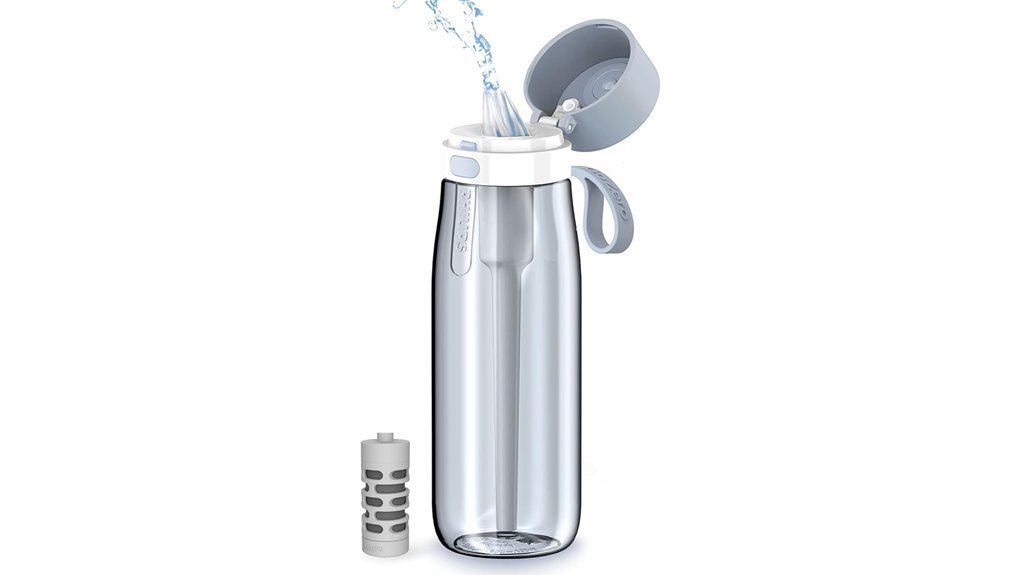
If you want better tasting tap water on the go, I’ve tested the Philips GoZero 22oz and it hits a sweet spot. You sip and notice a clean taste right away. The activated carbon fiber filter cuts chlorine smell and odd flavors. Your water tastes crisp like a fresh start.
Each filter runs up to eight weeks or 40 gallons. I found that span easy to track. You swap less and drink more. It feels like set it and forget it.
The slim BPA free Tritan bottle feels light in hand. It slides into cup holders with no fight. The flip cap snaps shut with a soft click. The seal feels tight and dry in a gym bag. You sip through a soft silicone mouthpiece. It feels smooth on the lips. The carry loop adds grab and go ease. The bottle cleans in the dishwasher with no fuss. One filter replaces up to 450 plastic bottles, that cuts waste and clutter.
Best For: You want better tasting tap water during commutes, gym time, or travel. Think grab and go with a clean sip every time.
Pros:
- Improved taste from an activated carbon fiber filter, cuts chlorine and odors
- Long filter life, up to 8 weeks or 40 gallons, less upkeep
- Slim leakproof build, easy carry loop, fits most cup holders
Cons:
- Focus stays on taste, advanced contaminant removal sits outside its scope
- Fresh filters keep flavor at its peak, plan simple swaps
- Price sits above basic bottles, value shows in daily use
26oz 3-Stage Filter Water Bottle (Sky Blue)
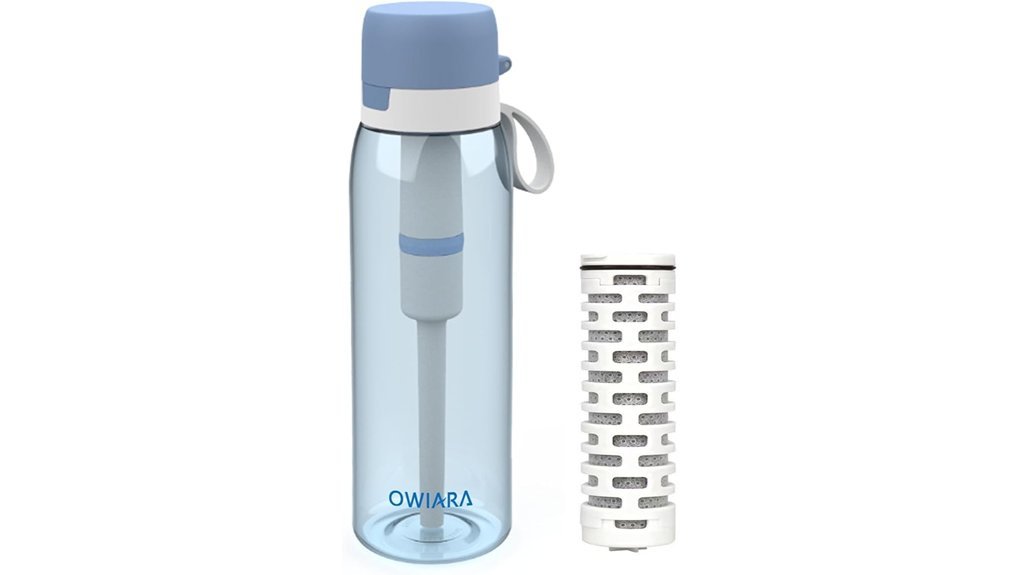
Frequent travel dries your throat fast. I’ve used this 26oz 3-stage filtered bottle on flights and dusty trails. The sip tastes clean and crisp. Think fresh rain after a storm.
The filter uses imported activated carbon fabric. It cuts chlorine taste and odd smells. Water feels smooth on the tongue. You notice it with every sip.
The Tritan body feels light in hand. It weighs 0.31 kilograms and stays BPA-free. I toss it in a pack and go. The soft handle sits easy in your grip.
The removable filter lasts up to 300 liters. That covers many trips. You swap it in seconds. Keep it clean and it keeps flowing like a well oiled machine.
Care stays simple. Rinse with cool water. Let it air dry. The wide mouth helps you reach every corner. Amazon backs it with a 30 day return.
Best For:
Travelers and hikers who want clean tasting water on the go.
Pros:
- 3-stage filtration improves taste and cuts chlorine and odors
- Lightweight Tritan build feels tough and stays BPA-free
- Filter lasts up to 300 liters and swaps fast
Cons:
- Works best with cool water for daily use
- Regular cleaning keeps flavor fresh
- 26oz size suits short trips and city carry
SurviMate Filtered Water Bottle with 5-Stage Straw
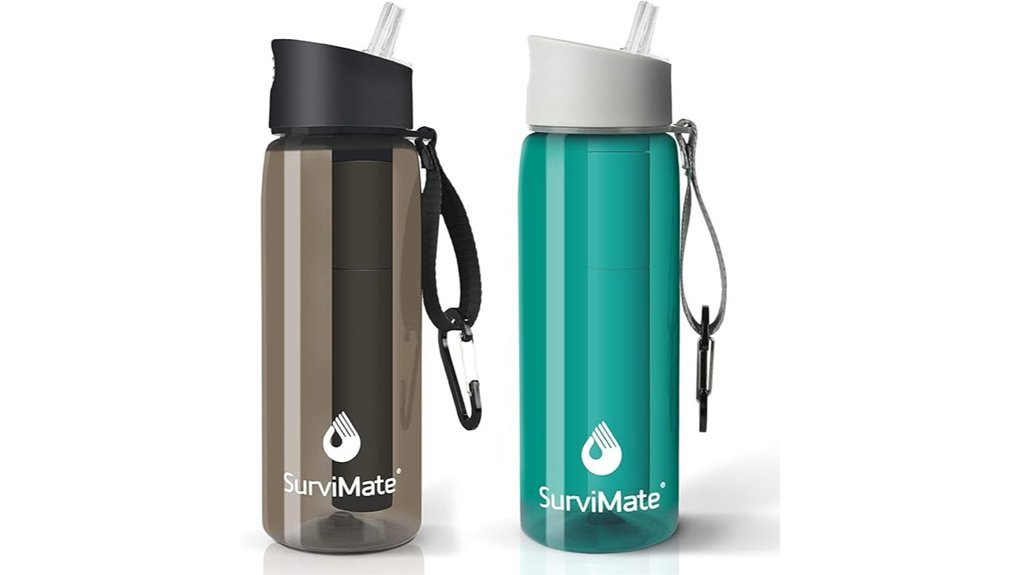
Travel light and drink safe. I’ve used the SurviMate bottle on dusty trails and by cold streams. The sip feels smooth and the taste turns clean after a few pulls, like flipping a switch.
You get *ultra fine filtration* at 0.01 micron. That means tight pores that trap tiny particles. I like how the five stage system layers protection. It uses a coarse screen first. Then a 0.01μm hollow fiber membrane. Next comes a PP layer. Then purification beads. Finally activated carbon fiber for taste. Water comes out crisp with no plastic smell.
Fill it and sip. No pump needed. No battery fuss. After 5 to 8 draws the flavor brightens. Think of it as priming a new tea bag. The bottle feels solid in hand and the mouthpiece seals well.
The filter handles up to 1500 liters each year. Swap it in seconds. That keeps your kit simple on long trips. I clipped it to my pack and it held up on rocky climbs. The small compass adds a quick check when the trail twists.
BPA free build keeps water clean and taste neutral. This bottle fits hiking, camping, and emergency kits with ease.
Best For: Hikers and travelers and preppers who want ultra fine filtration in a grab and go bottle.
Pros:
- 5 stage system with 0.01 micron membrane removes 99.99 percent of contaminants
- Fill and sip design gives fast access to clean water
- Long life filter up to 1500 liters keeps costs low
Cons:
- Flavor peaks after 5 to 8 sips during first use
- Focus stays on particles and taste, chemical reduction varies by source
- Compass offers quick reference and suits basic direction checks
Bachgold Portable Water Filter Bottle for Camping
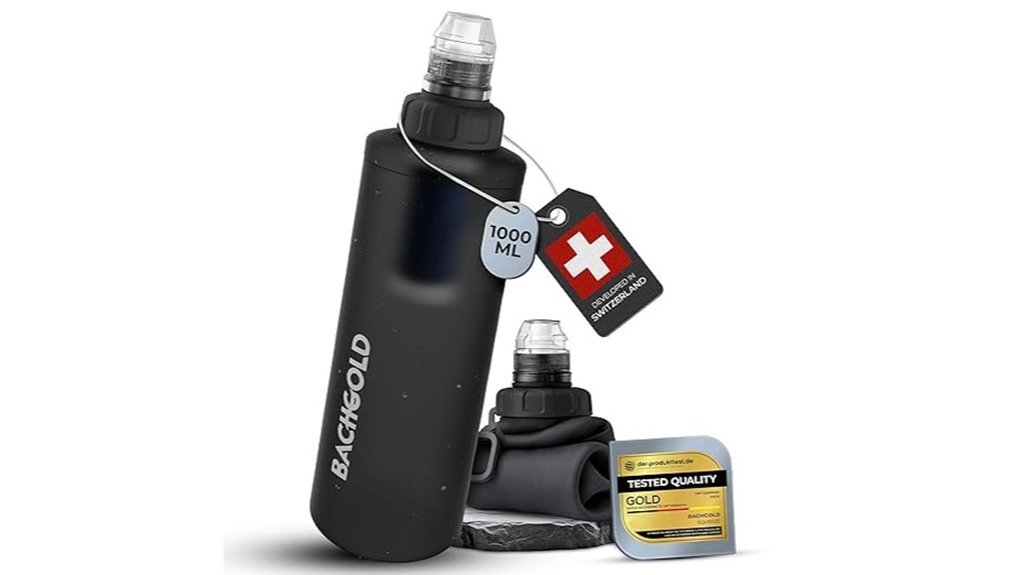
For *ultralight backpacking*, I trust the Bachgold Squeeze Bottle in the field. It feels like carrying a soft flask with a purpose. Light as a feather. Tough as a boot.
You get a Swiss design that folds flat after use. It holds 33.8 ounces and weighs under 100 grams. You barely feel it in your pack. That matters on long climbs.
The filter uses a dual stage system. It combines a nanofiber layer with a *0.2 micron hollow fiber membrane*. Water tastes clean and crisp. I notice a fresh smell instead of that swampy hint.
Fill it from a stream. Squeeze and drink. You hear a soft rush as water pushes through. It feels simple and fast.
It fits standard 28 mm threads for easy swaps. The TPU body feels smooth yet strong in hand. I have stuffed it into tight pockets and it keeps shape like a champ.
*Like a pocket knife for water*, it stays ready for trails or travel.
Best For: Ultralight hikers and solo trekkers who want fast safe water anywhere.
Pros:
- Dual stage filter gives up to 1000 liters with solid contaminant removal
- Ultralight build keeps your pack fast and agile
- Squeeze design delivers water on demand
Cons:
- Squeezing takes some hand pressure during long use
- 33.8 ounce size suits solo use best
- Filter life fits mid range trips more than extended expeditions
Tech Specs:
- Capacity, 33.8 oz
- Weight, under 100 g
- Membrane size, 0.2 micron
- Filter life, up to 1000 L
- Material, TPU soft bottle
AQUAPHOR City Water Filter Bottle 17 oz
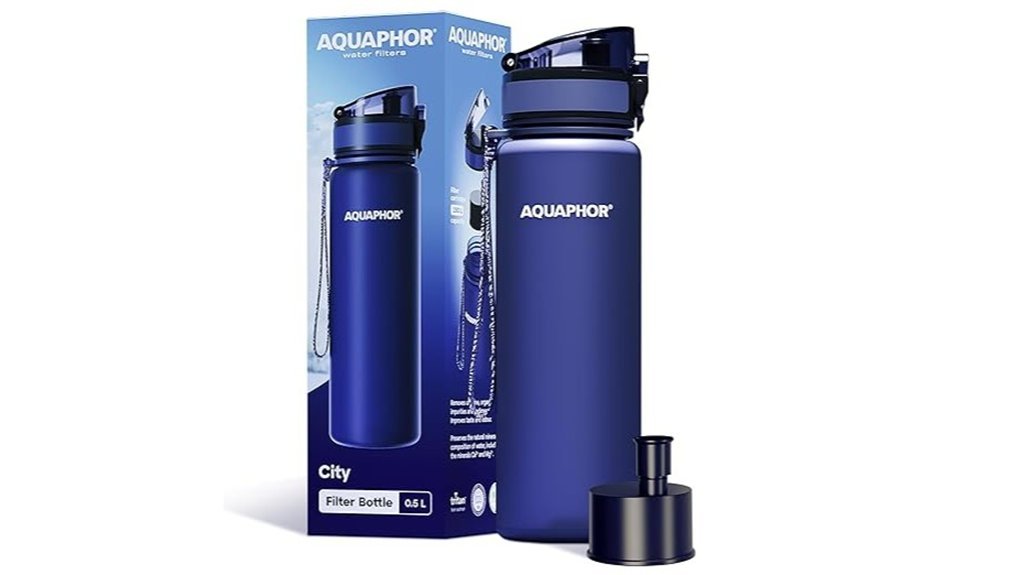
I’ve carried the AQUAPHOR City through busy commutes and dusty trails. It feels light in your hand and slips into a cup holder with ease. The *17 oz size* keeps things simple and quick. Think grab and go, like your morning coffee.
The sip is clean and crisp. The carbon filter cuts that sharp chlorine smell right away. Tap water tastes smooth and fresh after a few pulls. You hear a soft draw as you sip, which reminds you the filter is working.
The body feels solid yet light. The BPA free Tritan plastic has a smooth finish and holds up to drops. I’ve tossed it in a bag and kept moving without worry. It’s built for daily bumps and scrapes.
You also cut down on waste. Each filter handles about 150 liters, which equals roughly 300 plastic bottles. That’s a small change that adds up fast, like coins in a jar.
Cleaning stays quick and easy. The lid seals tight and the spout flows well. No fuss. No leaks. Just steady hydration wherever you roam.
Best For:
You want a light filtered bottle for commuting, travel, gym, or casual outdoor use.
Pros:
- Carbon filter improves taste and removes chlorine odor
- *Lightweight Tritan build* feels durable in hand
- Replaces up to 300 plastic bottles per filter
Cons:
- Handles basic tap water filtration best
- 17 oz size suits short trips more than long days
- Filter swaps keep performance fresh
Filterelated 30oz Alkaline Filter Water Bottle
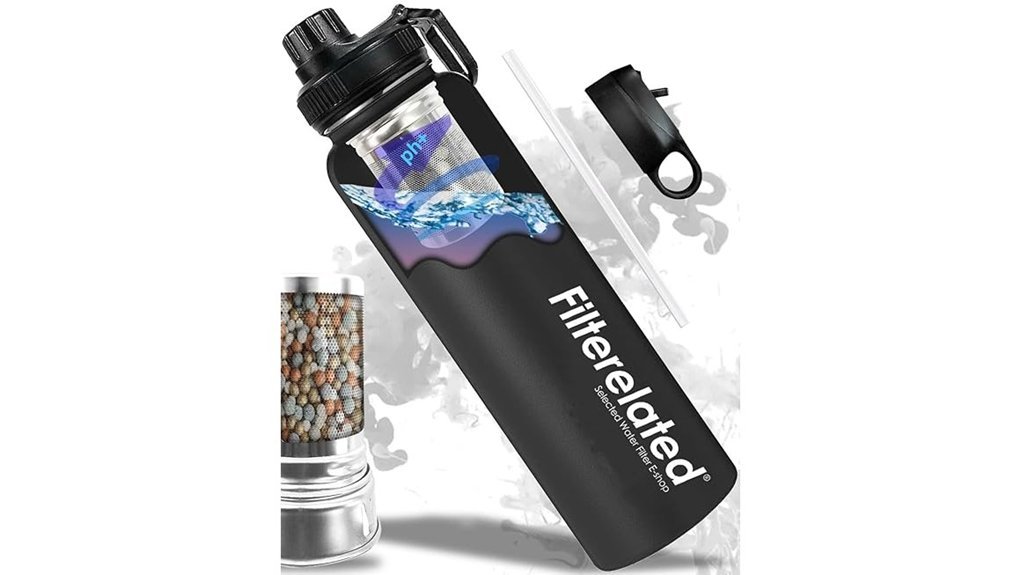
Need alkaline, mineral rich water on the go? I’ve used this bottle on hikes and gym runs, and it feels like a steady workhorse. The Filterelated 30oz bottle pushes pH up to 9.5+ fast, and the water tastes smooth with a light mineral bite. The ceramic filter adds calcium and magnesium you can feel on the tongue. It also lowers ORP to about -150mV for a fresher sip. You get a flip straw cap or a twist spout, so you pick your flow. The insulated steel body feels cool to the touch and keeps drinks steady for hours. It fits your hand well and opens with one thumb. Like a trusty sidekick, it stays ready for the next sip.
Best For: You want quick access to alkaline water during travel, workouts, or trail time. This bottle keeps pace with you.
Pros:
- Fast pH boost to 9.5+ with added minerals like calcium and magnesium
- Solid stainless steel build with insulation for hot or cold drinks
- Two cap styles give easy one hand sipping in any setting
Trade Offs:
- Straw use works best after you swap out the filter
- Heft sits around 1.9 pounds which feels solid in hand
- Filter swaps keep performance fresh over time
Quick Specs:
- Capacity, 30oz
- Material, stainless steel
- Filter type, mineral ceramic
- pH range, up to 9.5+
- ORP, about -150mV
I like how the lid clicks shut with a clean snap. The steel gives a faint cool feel even in heat. You taste the minerals right away, like a crisp spring sip.
Factors to Consider When Choosing a Filter Water Bottle for Travel
When I test a filter water bottle on the trail, I start with filtration power. You want clean water that smells fresh and tastes crisp. I look for filters that remove bacteria and microplastics. *Clear water matters more than hype.*
Next comes build quality. I squeeze the bottle and twist the lid. It should feel solid in your hand. No creaks. No plastic smell. Think of it like a trusty sidekick that never quits.
Size and capacity shape your day. A small bottle fits any pack. A larger one cuts refill stops. I pick based on trip length and heat. *Right size keeps you in the flow.*
Filter life affects cost and hassle. I track how many liters each filter handles. Longer life means fewer swaps. It saves time and cash. Like a car with great mileage.
Portability seals the deal. Weight adds up fast on long walks. I clip it to my bag and listen for rattles. Silence means good design. *Light gear feels like a feather in stride.*
Quick checks I use in the field
- Flow rate, fast sip or slow squeeze
- Filter type, hollow fiber or carbon
- Bottle material, BPA free plastic or steel
- Capacity, 500 ml or 1 liter
- Filter lifespan, total liters before swap
Pick the one that fits your trip and your pace. I’ve learned this the hard way. A good bottle turns sketchy water into peace of mind.
Filtration Effectiveness
Filtration Effectiveness
I’ve used these bottles in muddy streams and still water. The right filter turns that murky sip into something clean and crisp. Think of it as your last line of defense.
Start with the filter type. *Activated carbon* cuts bad taste and chlorine smell. *Ultrafiltration membranes* block bacteria and tiny particles. You’ll notice the water tastes fresher and feels smoother on your tongue.
Performance matters. Top filters hit 99.999999% bacteria removal** and 99.999% parasite removal**. That level of protection builds real trust in wild sources.
Check lifespan before you buy. Some filters run for 1,000 gallons or more. Longer life means fewer swaps and less hassle in the field.
Look for proof. Certifications like *NSF or ANSI* show tested safety and solid results. I treat that stamp as a green light.
Care keeps things flowing. A clean filter moves water with an easy squeeze. A dirty one feels slow and gritty, like sucking through sand.
Key things I always check:
- Filter type, carbon or membrane
- Removal rates for bacteria and parasites
- Rated lifespan in gallons
- NSF or ANSI certification
- Cleaning and replacement steps
Stay on top of upkeep. Fresh filters keep water clear and taste sharp. Think of it like changing oil in a car, small effort with big payoff.
Bottle Material Quality
Bottle Material Quality
I judge a bottle by how it feels in my hand. Grip matters. Sound matters. That hollow clink or dull thud tells a story.
Two things drive your pick. Strength. Safety.
You want a shell that shrugs off drops. You want clean taste with zero odd smell. *BPA free plastic* keeps water fresh. No weird aftertaste.
Stainless steel feels cool and solid. It rings with a sharp ping when tapped. I’ve dropped it on rock and it kept its shape. Many use double wall insulation. Your water stays cold for hours. Think ice at noon. The trade off shows up fast. Extra weight pulls on your pack.
Tritan plastic feels light and smooth. It flexes a bit under pressure. That saves it from cracks. I’ve squeezed it into tight pockets with ease. It travels well and keeps pace with long days. Over time you will see scuffs. That worn look tells its miles.
Pick what fits your trips. Like choosing boots for a trail. Light and quick. Or tough and steady.
Quick take
- Stainless steel, best for durability and cold retention
- Tritan plastic, best for low weight and easy carry
- BPA free build, keeps taste clean
I lean steel for rough routes. I grab plastic for all day carry. You feel the difference by mile three.
Size And Capacity
Size and Capacity
Capacity sets your pace. I’ve felt that on long miles. Your bottle becomes your gas tank.
You’ll see options from 17 oz to 36 oz. Pick your size with intent. Long hikes love 30 oz or more. Daily carry feels right near 20 oz.
Go big for road trips. Go light for quick errands. Think of it as packing snacks. Too much weighs you down.
Check the fit before you buy. I’ve jammed bottles into tight sleeves and felt the scrape. You want smooth entry into your pack or cup holder.
Weight matters in your hand. Aim near 0.5 pounds. Your grip will thank you after hours on trail.
A wide mouth helps in the wild. I can scoop from a stream with ease. Cleaning feels quick and fresh.
Balance rules here. Carry enough water for the stretch ahead. Keep it light so you move free.
Quick checks I use every time:
- Capacity that matches your route
- Dimensions that fit your bag
- Weight that feels easy all day
- Wide mouth for fast fills and clean rinses
*Dial this in and your bottle works with you, like a steady co pilot.*
Filter Lifespan
Filter lifespan sets your pace. I learned this the hard way on a long trip. Your filter runs like a fuel tank.
Some filters handle about 40 gallons or two months. Others push past 1000 gallons over years. You feel the difference in flow rate and taste. A fresh filter tastes clean and crisp.
Pick a capacity that matches your daily use. I drink more in hot climates. You will too. Plan ahead so you swap filters on your schedule.
Advanced systems use membrane microfilters. These feel steady and smooth over time. Think of them as a slow and steady engine.
Still, every filter reaches its limit. Performance fades like a dull blade. Water can taste flat or smell off. That signals a change.
Many bottles use replaceable cartridges. I like this setup for long travel. You keep the bottle and swap the core.
Keep these points in mind:
- Rated lifespan, check gallons and months
- Flow rate, fast flow feels effortless
- Taste quality, clean water should smell fresh
- Replacement access, easy swaps save time
Check the manufacturer rating before you go. I track usage on my phone. Plan your next filter before the current one slows. That habit keeps your water safe and your trip smooth.
Portability And Weight
Portability and Weight
I feel weight with every step. You will too. Keep your bottle under one pound. It rides light on long hikes and busy travel days.
I like a slim shape that slides into a pack. It clicks into cup holders with a soft tap. Space stays open for snacks and layers.
Material matters in your hand. BPA free plastic feels light and smooth. Stainless steel feels cool and solid. Choose what fits your carry style.
Balance counts like a tightrope walk. A light build still needs tough walls. Mine handled bumps with a dull thud and zero leaks.
Check size before you pack. Aim for carry on friendly dimensions. A snug fit keeps things calm in tight spaces.
Grip and profile seal the deal. A smaller body sits steady in side pockets. You move fast with less sway and less fuss.
Quick specs to scan:
- Weight, under 1 lb
- Capacity, 16 to 24 oz for daily carry
- Material, BPA free plastic or steel
- Shape, slim for cup holders
- Lid, leak tight with easy twist
Pick a bottle that feels like a feather in your bag. You keep comfort and keep moving.
Ease Of Use
Every move on the road should feel easy. I’ve tested bottles that fight you and ones that flow like water. You want the second kind. *Think smooth and quick.*
I reach for one hand lids every time. Your thumb clicks a button and you hear a clean snap. Your other hand stays free. Bags swing. Phone stays put. Life keeps moving.
Wide mouths feel like a breath of fresh air. You pour from a tap and hear water rush in. No splash mess. Cleaning feels simple with a quick swirl. A sponge fits right inside.
Straws and sip valves keep you in motion. You lift and drink. No twist. No pause. The flow feels steady and cool on your lips. It’s like a pit stop that never slows the race.
Weight matters after mile three. I’ve carried heavy steel and felt the drag. Lightweight bottles feel almost gone in your pack. Your shoulders thank you by sunset.
Filters need quick swaps. You twist and click and you’re done. No tools. No fuss. Clean water tastes crisp and smells fresh. That peace of mind is gold.
Small features stack up. Each one saves seconds and effort. Add them together and you stay focused on the road. That’s the whole point.
Conclusion
I’ve tested these bottles in dust, heat, and crowded airports. Each sip felt clean and crisp. No plastic smell. Just cool water that hits the spot.
You pick the bottle that fits your trip. Light for flights. Tough for trails. Simple for city days. Your pack stays light. Your routine stays easy.
*Hydration stays steady*. Your energy follows. You move like a well tuned engine.
Why stress over water on the road. This small upgrade pays off every day. It’s like carrying a quiet safety net in your bag.