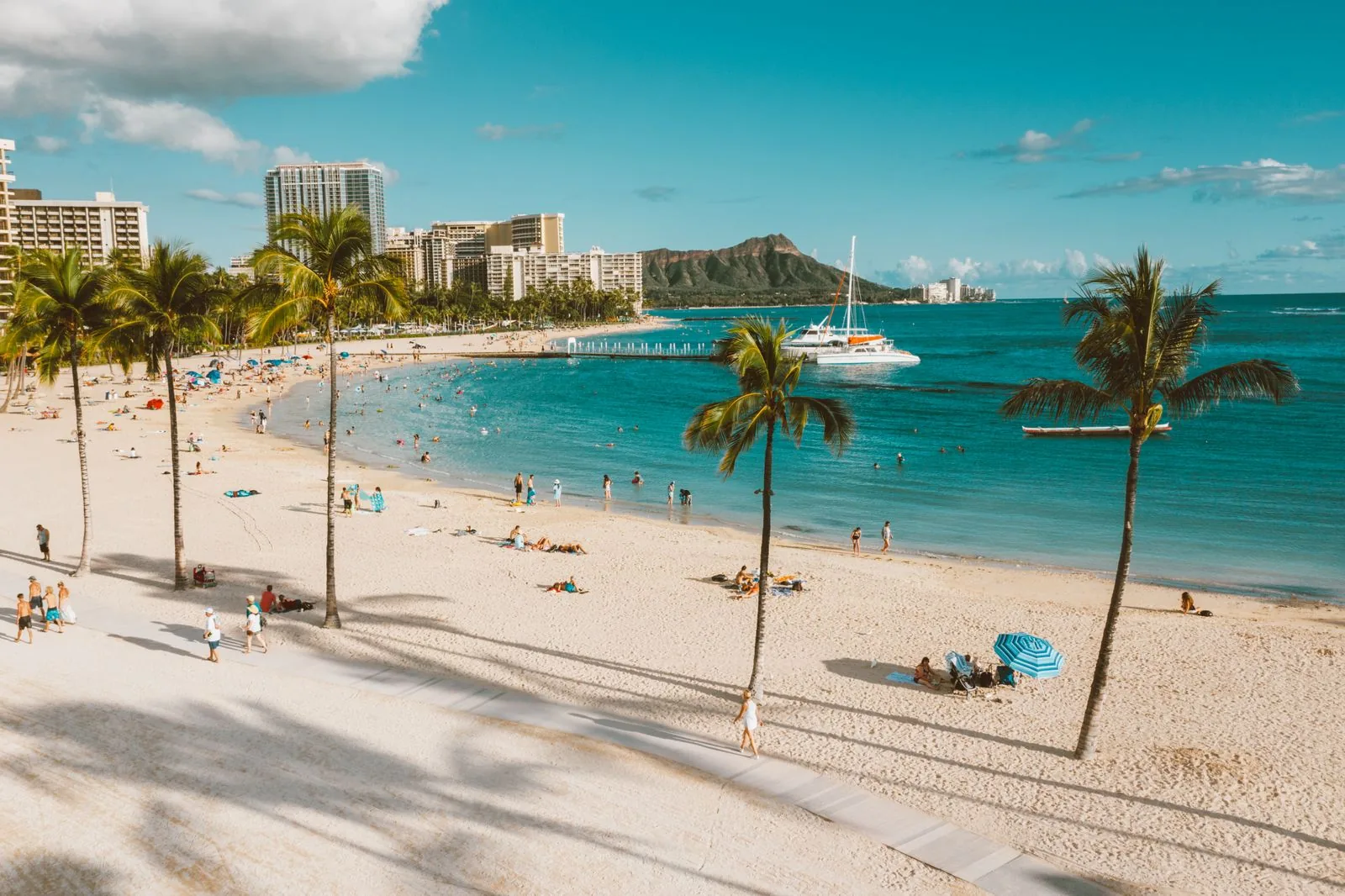
Oahu is the best Hawaiian island for most families with kids. It has the most lifeguarded beaches in the state (28 on the official Hawaii Ocean Safety list), the lowest average visitor spending per day of the four main islands ($219 per person in 2024, per the state tourism office) and the lowest ten-year ocean drowning rate. Pick Maui if your kids are older and you want resort pools and calm Kihei beaches, Kauai if your family hikes more than it shops, and the Big Island if a live volcano will matter more to your 9-year-old than a beach day.
Below we compare the four islands with numbers from Hawaii state agencies and the National Park Service, then list four pieces of gear that solve the problems families run into on every island: car seat rules, the Maui sunscreen law and ocean flotation.
We may earn a commission when you buy through links on this page, at no extra cost to you. As an Amazon Associate we earn from qualifying purchases.
How we compared the islands
We didn’t rank the islands by how pretty they are. We used figures a parent can check: visitor numbers and spending from the 2024 Annual Visitor Research Report published by the Hawaii Department of Business, Economic Development and Tourism (DBEDT), the statewide list of lifeguarded beaches and their hours from Hawaii Ocean Safety, drowning data from the Hawaii Department of Health, and kid pricing at the main paid attractions from the operators and the National Park Service. Molokai and Lanai are left out because together they saw fewer than 76,000 air visitors in 2024 and have very little family infrastructure.
Hawaii’s four main islands for families, side by side
| Island | Air visitors 2024 | Visitors on island on an average day | Avg. visitor spending per person per day | Lifeguarded beaches (Ocean Safety list) | Lifeguard hours | 10-year ocean drowning rate per 100,000 |
|---|---|---|---|---|---|---|
| Oahu | 5,794,854 | 111,613 | $219 | 28 | 8:00 am-6:30 pm | 27.2 |
| Maui | 2,352,272 | 51,100 | $283 | 10 | 8:00 am-4:45 pm | 64.6 |
| Hawaii Island (Big Island) | 1,735,380 | 36,740 | $240 | 10 | 9:30 am-4:45 pm | 51.8 |
| Kauai | 1,393,101 | 28,353 | $277 | 9 (11 towers) | 8:00 am-6:00 pm | 82.5 |
Sources: DBEDT 2024 Annual Visitor Research Report (arrivals, average daily census, per person per day spending); Hawaii Ocean Safety list of lifeguarded beaches (count and daily schedule; Oahu has a few weekend-only or seasonal towers, and Hanauma Bay runs 6:00 am-4:30 pm); Hawaii Department of Health drowning prevention page (ten-year rate, residents and non-residents combined). Checked November 2026.
Two things stand out. Daily spending on Maui and Kauai runs $58 to $64 per person above Oahu, and for a family of four over a week that gap adds up fast: lodging alone averaged $149.90 per person per day on Maui in 2024, according to DBEDT’s spending-by-category tables. And the drowning rate on Kauai is about three times Oahu’s. That doesn’t make Kauai unsafe for kids. It means the protected spots on Kauai matter more, and the open coast matters a lot.
Oahu: best for toddlers, first trips and tighter budgets
Oahu wins for young kids because the calm, guarded water is close to where families stay. Ala Moana Beach Park and the Magic Island Lagoon next to it both have lifeguards from 8:00 am to 6:30 pm every day, and the lagoon is enclosed by rock walls that keep waves out. Waikiki alone has four guarded stretches (Dukes, Kuhio, Queens and Kapiolani Park).
Hanauma Bay is the classic first snorkel for school-age kids, and children 12 and under get in free regardless of residency. Adults who are not Hawaii residents pay $25 plus an online fee, reservations open two days ahead at 7:00 am Hawaii time, and the preserve is closed every Monday and Tuesday so the bay can rest. Book the Wednesday-to-Sunday slots early.
Skip Oahu if you want quiet. Oahu hosts more than twice as many visitors on an average day as Maui, and Waikiki is a city beach.
Maui: best for families with older kids who want resort time
Maui’s south shore gives families the calm-water option Oahu offers, just with fewer towers. Kamaole I, II and III in Kihei are each lifeguarded, as are Makena State Park and Hanakaoo Park on the west side. Guards go off duty at 4:45 pm on Maui, nearly two hours earlier than on Oahu, so plan late-afternoon swims at your hotel pool instead.
For a rainy or windy day, the Maui Ocean Center in Maalaea is open 365 days a year. Its standard online prices start at $39.95 for kids 4 to 12 and $49.95 for adults, and the operator says the average visit is about two hours. Haleakala sunrise needs a $1 per-vehicle reservation on Recreation.gov, bookable up to 60 days ahead, on top of the park entrance fee, and the 3:00 am start is hard on small children.
Maui County also has a stricter sunscreen rule than the rest of the state: since October 1, 2022, Ordinance 5306 bans the sale, distribution and use of non-mineral sunscreens. Pack a zinc oxide or titanium dioxide product before you land.
Skip Maui if budget is tight. Maui had the highest daily visitor spending of the four islands in 2024.
Kauai: best for outdoorsy families who will stay inside the protected spots
Kauai has the fewest visitors of the four, which is the draw. For kids, two places do most of the work. Lydgate Beach Park on the east side has two rock-walled ponds, a shallow inner one for small children and a deeper outer one for beginner snorkeling, plus Kamalani Playground next door. Poipu Beach Park on the south shore has a natural wading pool and two lifeguard towers, one of which looks over the kiddie pond.
The drowning rate in the table is the reason to keep it to those spots. Hawaii’s health department reports Kauai has the highest ten-year ocean drowning rate of the four counties. If you plan Kee Beach or the Hanakapiai hike, non-residents need advance reservations for Haena State Park ($5 per person entry, kids 3 and under free, plus a timed parking slot that often sells out the moment it opens 30 days ahead).
For the Kauai-or-Maui question in more detail, see our Maui vs Kauai comparison.
Skip Kauai if your kids are weak swimmers and you want beach time every day, or if you need a big choice of kid-friendly restaurants and attractions.
Big Island: best for school-age kids who love volcanoes and turtles
The Big Island’s best kid attraction isn’t a beach. Hawaii Volcanoes National Park charges $30 per private vehicle for seven days, and anyone 15 or younger is exempt from the fee. On the Kona side, Kahaluu Beach Park is a shallow, partly sheltered bay with daily lifeguards from 9:30 am, a common spot to see green sea turtles.
The trade-off is distance. Kona and the volcano sit on opposite sides of the island, so the park is a full day trip from most Kona hotels, and Big Island guards keep the shortest hours (9:30 am to 4:45 pm). Families with toddlers who nap at noon will spend a lot of time in the car.
Skip the Big Island if you want white-sand beaches outside your hotel every morning.
Gear that fixes Hawaii-specific problems
Every island has the same three issues for families: Hawaii’s car seat law is stricter than many states, Maui bans chemical sunscreen, and visitor drownings in Hawaii happen most often while snorkeling. These four products address those rules. Ratings were read on the Amazon listings on November 19, 2026.
| Product | Solves | Fits | Amazon rating (Nov 2026) |
|---|---|---|---|
| BubbleBum inflatable booster | HRS 291-11.5 booster rule in rental cars and rideshares | 40-110 lbs, ages 4-11 | 4.3/5 from 6,886 ratings |
| Thinkbaby SPF 50+ mineral sunscreen | Maui County mineral-only ordinance | Babies and kids | 4.6/5 from 24,784 ratings |
| Body Glove Paddle Pals | Confidence in calm lagoons and pools | 33-55 lbs, ages 2-6 | 4.8/5 from 11,325 ratings |
| Stearns Type III child vest | Boat tours, kayaks, snorkel trips | 30-50 lbs | 4.6/5 from 3,132 ratings |
BubbleBum Inflatable Travel Booster
Hawaii law (HRS 291-11.5) requires a harness seat or booster for every child from 4 until 10, unless the child is at least 7 and taller than 4 feet 9 inches. That applies in rental cars and rideshares too, and a rigid booster is one more bulky item through the airport. BubbleBum deflates to about 12 x 6 x 4 inches, inflates by mouth in roughly 20 seconds per the listing, and is rated for 40 to 110 pounds and ages 4 to 11. The maker’s FAQ gives a height range of 40 to 57 inches.
Good for: families switching between rental cars, shuttles and rideshares across islands. Skip it if: your child is under 4 or still needs a harness; see our travel car seats for 2-year-olds instead.
- Fits in a backpack or purse when deflated
- Narrow enough for three across, per the maker
- Listing states it meets FMVSS 213
Cons: it is backless, and Hawaii DOT advises a high-back booster when the vehicle seat has no head restraint. The Amazon listing also carries a California Prop 65 warning for tris(2-chloroethyl) phosphate.
Thinkbaby SPF 50+ Mineral Sunscreen
Statewide, Act 104 bans the sale of sunscreen containing oxybenzone or octinoxate, and Maui County goes further and bans all non-mineral sunscreens. A zinc oxide sunscreen works on every island, so you only pack one. Thinkbaby lists zinc oxide as its mineral filter, SPF 50+ and 80 minutes of water resistance, and it is free of oxybenzone and avobenzone per the listing.
Good for: babies and kids with sensitive skin, and any family visiting Maui. Skip it if: your kids refuse lotion; a stick is faster on faces.
- Mineral-only, so it meets the Maui rule
- 80 minutes water resistant, which the listing calls the highest rating the FDA allows
- Small 3 oz tube for beach bags
Cons: Amazon’s review summary says opinions are mixed on white cast and thickness, and some buyers find it hard to spread. Value-for-money opinions are split too.
Body Glove Paddle Pals Learn-to-Swim Vest
This is a US Coast Guard approved vest (Type V/III, Level 70) with arm floats attached, sized for 33 to 55 pounds and ages 2 to 6. It suits the protected spots in this guide: Magic Island Lagoon, the Lydgate inner pond, the Poipu wading pool and hotel pools. A shoulder harness and a back buckle keep it from riding up and make it harder for kids to take off.
Good for: toddlers and preschoolers in calm, shallow water. Skip it if: your child is over 55 pounds or you need a boat-rated vest.
- USCG and Transport Canada approved
- Shoulder harness stops the vest riding up
- Back buckle discourages kids from unclipping it
Cons: it is a learn-to-swim aid, not a replacement for an adult within arm’s reach. Hawaii Ocean Safety warns that winds and currents can carry floaties and inflatables away from shore, so use it only in enclosed or guarded water.
Stearns Child Type III Life Vest
For snorkel boats, kayak tours or a Molokini trip, a conventional Type III vest with a leg strap is the more practical choice. The Stearns child vest is USCG approved, fits 30 to 50 pounds, has three adjustable buckles and a leg strap that keeps it from riding up, and weighs 0.32 pounds per the listing.
Good for: boat days and kayak trips. Skip it if: your tour operator already provides fitted child vests; ask when you book.
- Leg strap keeps the vest from riding up in the water
- Three buckles for a snug fit
- Light and simple to pack
Cons: it is a Type III vest, so it lacks the heads-up neck float of the Stearns Type II child model. The 30-50 pound range is outgrown quickly.
Which island fits your kids
- Under 5, first Hawaii trip: Oahu. Stay near Waikiki and use Magic Island Lagoon and the guarded Waikiki beaches.
- Ages 6-12 and a mid-size budget: Oahu with a Hanauma Bay morning (kids 12 and under free), or Maui’s Kihei beaches if you can absorb the higher daily costs.
- Teens and hiking families: Kauai, but plan Haena reservations 30 days out and swim only at guarded beaches.
- Kids obsessed with lava and science: Big Island, staying on the Kona side and doing the volcano as a full day trip.
- Two islands in one trip: about 1.35 million visitors went to more than one island in 2024. With kids, two islands is the practical limit for a 10-day trip because each move costs a half day of packing and flights.
Whichever island you pick, our best beaches in Hawaii guide lists entry fees, reservations and winter surf by beach, and the toddler travel stroller roundup covers what to push through the airport.
FAQ
What is the best Hawaiian island for toddlers?
Oahu. It has the most lifeguarded beaches, the longest lifeguard hours (8:00 am to 6:30 pm), and enclosed calm water at Magic Island Lagoon. Kauai’s Lydgate inner pond and Poipu wading pool are good alternatives if you prefer a quieter island.
Which Hawaiian island is cheapest for a family?
Oahu had the lowest average visitor spending per person per day in 2024 at $219, compared with $240 on the Big Island, $277 on Kauai and $283 on Maui, according to DBEDT. Several big kid attractions also have free child entry, such as Hanauma Bay (free for 12 and under) and Hawaii Volcanoes National Park (fee exempt for 15 and under).
Do kids need a car seat in Hawaii?
Yes. Under HRS 291-11.5, children under 2 must ride rear-facing in a harness seat, ages 2 to 4 in a harness seat, and ages 4 to under 10 in a harness seat or booster. Children 7 to 9 who are taller than 4 feet 9 inches may use a lap and shoulder belt instead.
Is Maui or Oahu better for kids?
Oahu is better for younger kids and tighter budgets because it has nearly three times as many lifeguarded beaches and lower daily costs. Maui suits families with older kids who want a quieter resort stay and are fine with lifeguards going off duty at 4:45 pm.
Is it safe to snorkel in Hawaii with kids?
It can be, at guarded and protected spots. Snorkeling is the most common activity in visitor ocean drownings in Hawaii, according to the Department of Health, and Hawaii Ocean Safety says snorkelers should be confident ocean swimmers. Choose a lifeguarded beach, ask the guard about conditions, and keep young kids within arm’s reach.
Sources
- DBEDT, 2024 Annual Visitor Research Report: files.hawaii.gov/dbedt/visitor/visitor-research/2024-annual-visitor.pdf (arrivals, average daily census, daily spending, multi-island visitors; checked 2026-11-19)
- DBEDT, 2024 daily visitor spending by category and island: files.hawaii.gov/dbedt/visitor/ (Maui lodging per person per day; checked 2026-11-19)
- Hawaii Ocean Safety, list of lifeguarded beaches: oceansafety.hawaii.gov/list-of-lifeguarded-beaches/ and Safety in the Ocean: oceansafety.hawaii.gov/safety-in-the-ocean/ (checked 2026-11-19)
- Hawaii Department of Health, drowning prevention information: health.hawaii.gov/injuryprevention/home/drowning-prevention/information (ten-year drowning rates by county, snorkeling; checked 2026-11-19)
- Hawaii DOT, child passenger safety: hidot.hawaii.gov/highways/safe-communites/child-passenger-safety; HRS 291-11.5 (checked 2026-11-19)
- Maui County Ordinance 5306 (mineral-only sunscreen): mauicounty.gov/DocumentCenter/View/130826/Ord-5306; DLNR news release, Nov 2021
- City and County of Honolulu, Hanauma Bay Nature Preserve: honolulu.gov/dpr/hanauma-bay-nature-preserve (fees, reservations, closed days; checked 2026-11-19)
- NPS, Hawaii Volcanoes fees: nps.gov/havo/planyourvisit/fees.htm; Haleakala fees and sunrise reservations: nps.gov/hale/planyourvisit/fees.htm (checked 2026-11-19)
- DLNR, Haena State Park: dlnr.hawaii.gov/DSP/PARKS/KAUAI/HAENA-STATE-PARK (checked 2026-11-19)
- Maui Ocean Center tickets: mauioceancenter.com/maui-aquarium-tickets/ (checked 2026-11-19)
- Go Hawaii, Poipu Beach Park and Lydgate Beach Park pages; Kauai Lifeguard Association tower locations: kauailifeguards.org/tower-locations/
- Amazon listings, Creators API and listing pages, Nov 19, 2026: ASIN B00AQYZCXK (BubbleBum, rating, dimensions, FAQ, Prop 65 notice), ASIN B004CDQ73K (Thinkbaby, rating, review summary), ASIN B01IN8Y0RO (Body Glove Paddle Pals, rating), ASIN B000NV9J08 (Stearns child vest, rating, weight)