You want a second screen that travels light. I’ve used Mobile Pixels on planes and in cafés. They feel slim in hand and slide into a bag like a notebook. The hinge clicks with a soft snap that feels solid.
You get fast setup. Plug in and start work. No fuss. No delay. It’s smooth like butter on warm toast.
Models serve different needs. I tested each in real work days.
- Duex Plus: slim build and easy mount
- Nexus: clean design and simple setup
- Fold: bigger view for spreadsheets
- UPERFECT: higher refresh for motion
You trade peak brightness for mobility. You gain real output in return. I finished edits faster and kept chats open on the side. That flow feels like a second pair of hands.
Build quality feels firm. Ports grip cables well. Screens show clear text with good color.
Pick based on your setup. Small desk or travel kit. Go Duex or Nexus. Need space. Choose Fold. Want smoother motion. Try UPERFECT.
Keep reading and I’ll match each model to your daily grind.
Mobile Pixels Duex Plus 13.3″ Portable Monitor
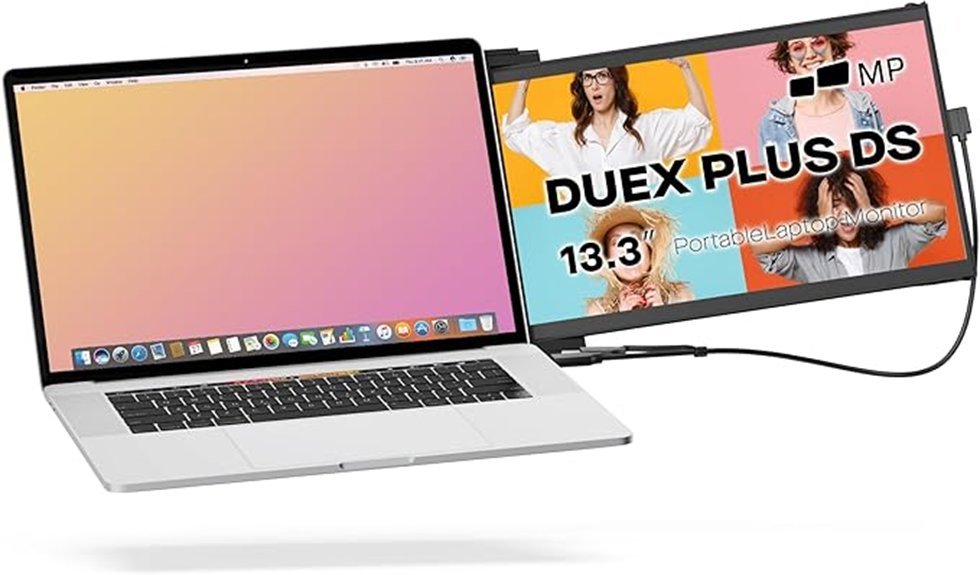
If you want a clean second screen that travels light, I’ve used the Mobile Pixels Duex Plus and it fits like a glove. You slide it onto your laptop and feel the smooth rails click in place. The 13.3 inch *FHD 1080P display* looks crisp for docs and video. Brightness hits 250 nits and works best indoors. Colors look balanced with a 1000 to 1 contrast ratio. The 60 Hz refresh rate feels steady for daily work.
It weighs 1.3 pounds so your bag stays easy to carry. The panel sits at 0.25 inches thin so it stays sleek. You can flip between landscape and portrait in seconds. I like the kickstand mode during calls. Setup feels like plug and play magic via USB C or HDMI. It runs on Windows macOS and Samsung DeX with no fuss. The *2ms response time* keeps motion clean. Like a trusty sidekick, it sticks with you anywhere.
Best For: You want a lightweight laptop monitor for travel work and multitasking on the go.
Pros:
- *Slim and lightweight build* that attaches to your laptop for true portability
- Easy plug and play via USB C or HDMI across Windows macOS and Samsung DeX
- Flexible modes like landscape portrait kickstand and presentation
Cons:
- 250 nits brightness suits indoor use best
- 60 Hz refresh rate fits work and casual use
- Attachment design fits most laptops with a snug setup
Mobile Pixels Nexus 13.3 Portable FHD Monitor
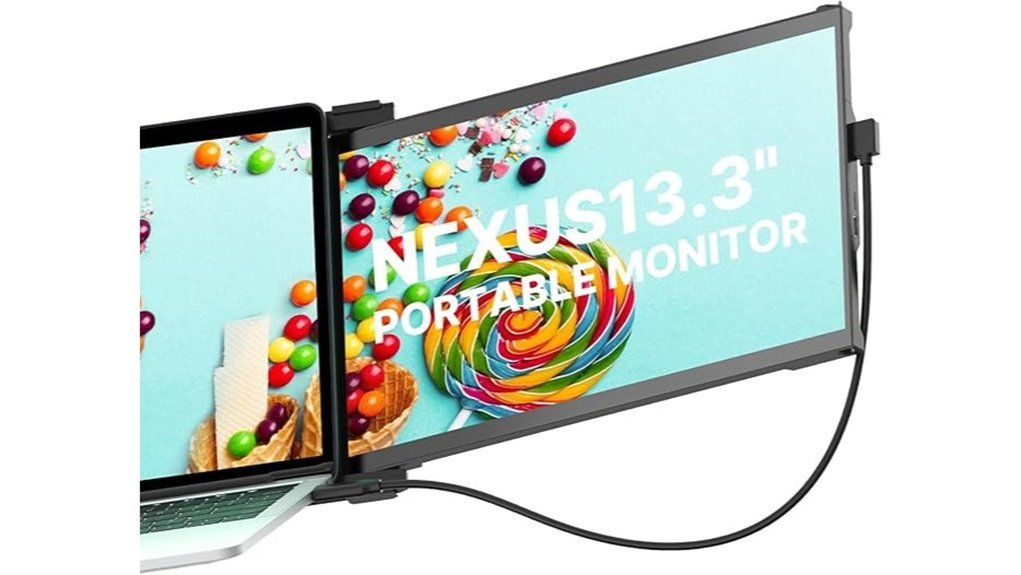
Frequent travelers and multitaskers get real value from the Mobile Pixels Nexus 13.3 *portable monitor*. I carried it through airports and cafés and it felt light in hand. The shell feels smooth and cool. It slips into a bag like a paperback. Think of it as a second desk that follows you.
You see a 13 inch IPS panel with *1080p resolution*. Colors look clean and text stays sharp. The screen opens wide to 270 degrees so you find a comfy angle fast. Glare stays manageable in most rooms. It works like a window that moves with you.
Setup feels quick and simple. You plug in USB C USB A or HDMI and you get a picture fast. I used it with a laptop a phone and a Switch. Cables click in with a firm feel. The *dual screen setup* keeps your flow going.
Build quality feels solid in daily use. The hinge moves with a soft resistance. Included cables cover most setups. A two year warranty adds peace of mind. It is a trusty sidekick.
Best For: Frequent travelers and remote workers who want a light second screen for productivity on the go.
Pros:
- *Light and slim* body feels easy to carry and attach
- Wide port support with USB C USB A and HDMI
- *Crisp IPS 1080p* panel with wide viewing angles
Cons:
- Best in moderate light since brightness sits at 250 cd per m²
- 60 Hz suits work and video playback
- Works best with laptops that match the attachment size and layout
Mobile Pixels Fold 15.6″ Portable Monitor
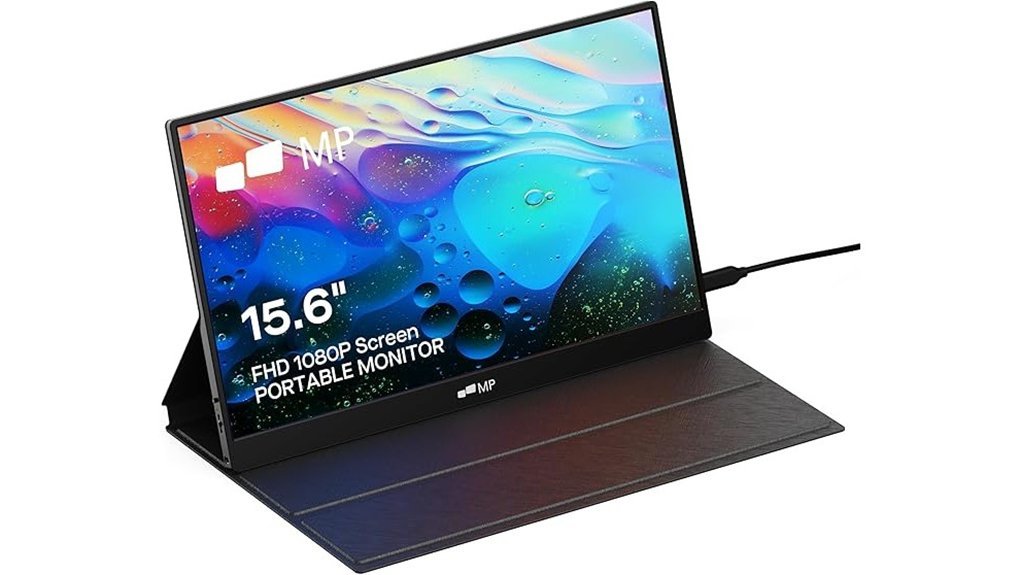
Remote work feels lighter with the Mobile Pixels Fold. I slid it into my backpack and forgot it was there. It weighs 1.6 pounds and feels smooth in hand. The 15.6 inch Full HD panel looks crisp at 1920 x 1080. Colors pop with HDR and motion stays clean with FreeSync. I opened it on a train table and got a clear view from any seat with the 178 degree angle. It shines at 300 nits for indoor use. The 60 Hz rate suits daily tasks. Contrast sits at 1000 to 1 and keeps text sharp.
Setup takes seconds. I plug in USB C or Mini HDMI and start work. It plays nice with macOS and Windows and Android and Switch. The speakers sound thin yet clear at low volume. I hear a soft hum in quiet rooms. A headphone jack fixes that fast. The low blue light mode feels easy on my eyes after long edits. It’s like a pocket office that opens anywhere.
Best For: You travel often and want a light second screen. You value quick setup and clean visuals for work and shows.
Pros:
- Light and slim body slips into any bag like a magazine
- Fast plug and play via USB C and Mini HDMI
- Clear Full HD image with HDR and wide viewing angle
Cons:
- 60 Hz and 25 ms feel slow in fast games
- Speakers sound flat at higher volume
- 300 nits suits indoor use more than bright sun
Mobile Pixels Duex Plus DS Portable Laptop Monitor
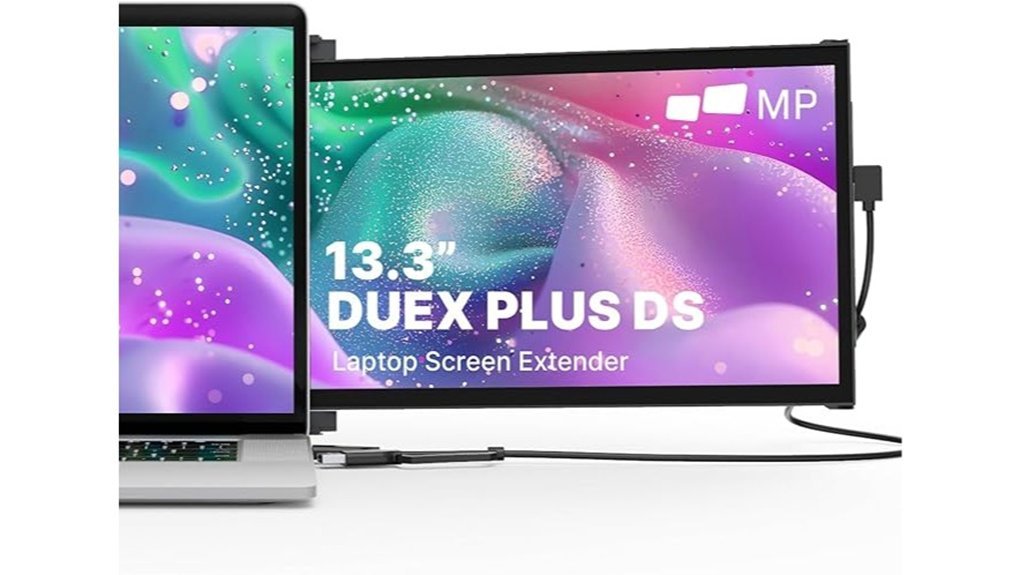
The Duex Plus DS feels like a second brain for your laptop. I slid it on and got instant space. The 13.3 inch Full HD IPS screen looks crisp at 1080p. Colors pop and text stays sharp. The panel hits 300 nits and handles most rooms. Wide angles keep the view steady as you shift.
Setup stays simple. I plugged in USB C or HDMI and got a quick signal. It plays nice with Windows and Mac. It also works with Android and Switch. The shell feels smooth with a faint plastic scent out of the box. The PC ABS build feels firm in hand. It weighs 1.3 pounds so your bag stays light. Thickness sits at 0.25 inches so it hugs your lid.
Flexibility stands out. I flipped it 270 degrees and switched to portrait. Presentation mode works like a charm. The slide mount locks with a soft click. Think of it as a pocket desk that travels.
Best For: You want a portable second monitor for work on the move.
Pros:
- Lightweight build keeps your carry easy
- Thin profile slides on without bulk
- Multiple modes give portrait and presentation views
- Wide device support via USB C and HDMI
Cons:
- 60 Hz panel suits daily tasks over fast gaming
- Mount plates add a quick setup step
- 300 nits brightness fits indoor use best
UPERFECT 17.3″ 4K 120Hz Portable Gaming Monitor
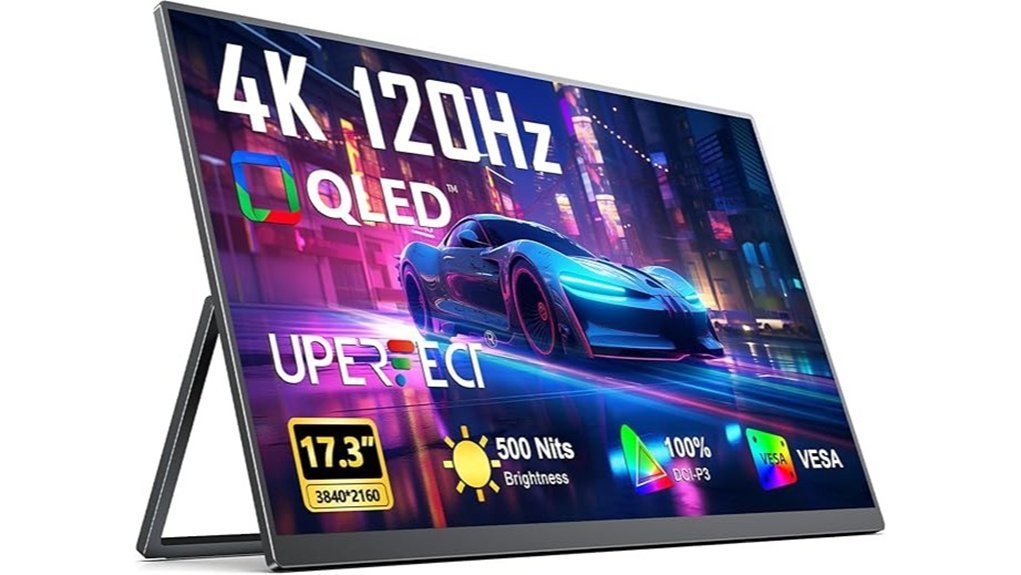
Gamers and creators who want one premium portable screen will like this. I’ve used it on flights and at desks. It feels like carrying a window with razor detail.
You get a 17.3 inch 4K UHD panel. Text looks sharp like fresh ink. Colors pop with QLED and full DCI P3. Skin tones look real. Reds feel rich.
Motion feels slick. The 120Hz refresh keeps scenes fluid. The 0.1ms response cuts blur to a whisper. Fast shooters feel tight and clean.
Brightness hits 500 nits. I used it near a window at noon. The screen stayed clear like a sunny day.
The shell uses recycled aluminum. It feels cool to the touch. The body stays firm in a bag. No creaks.
Setup stays simple. You plug USB C or HDMI and go. The 180° stand bends with ease. VESA support gives you more ways to place it. It fits a hybrid life like a Swiss Army knife.
Best For: You want a high end portable 4K display for gaming and content work. You care about color truth and smooth motion.
Pros:
- 4K UHD with QLED and *full DCI P3* for vivid color
- 120Hz and 0.1ms for smooth play and sharp motion
- Premium build with USB C and HDMI plus a flexible stand
Cons:
- Price sits at the higher end
- 17.3 inch size takes more bag space
- You need strong hardware for full 4K at 120Hz
Factors to Consider When Choosing a Mobile Pixels Review
I’ve tested these panels on planes and in cafés. You feel the weight in your bag right away. Size shapes your flow. A 13 inch screen slips in easy. A 15 inch screen gives you elbow room. Pick what fits your daily grind.
Resolution hits your eyes first. Text should look crisp like fresh print. Colors should pop like wet paint. Brightness matters in sunlit rooms. I check nits and color range so you get clear visuals every time.
Portability keeps you sane on the move. Hinges should feel smooth to the touch. The chassis should feel solid in hand. Weight stays low so your shoulders stay happy. Think of it as your digital sidekick.
Connectivity seals the deal. Your laptop should plug in with zero fuss. USB C keeps it simple. HDMI helps with older rigs. I test cables and ports so you get a clean link every session.
Quick specs I check:
- Screen size options
- Resolution and pixel density
- Brightness in nits
- Color accuracy and gamut
- Weight and thickness
- Port types and power draw
Match these points and you land a setup that works like a charm.
Screen Size Options
Because screen size shapes how you work and what you see, I always start here. I tested both Mobile Pixels options on planes, desks, and coffee shops. Each size feels like a different tool in your hand.
13.3 inch. Light and quick.
You pick it up and it feels almost weightless. The smooth metal stays cool in your bag. I barely notice it during a long walk. It slides out fast during a meeting. Like a pocket notebook for your laptop.
- Weight: about 1.3 pounds
- Best for travel and tight desks
- Easy setup in seconds
If you move all day, this size keeps your pace. You open it anywhere and get straight to work. Your shoulders will thank you.
15.6 inch. Big and immersive.
This one spreads out like a full desk. The extra space feels calm on your eyes. I see more windows at once and scroll less. Videos look richer and more vivid. It feels like upgrading from a seat to a couch.
- Larger viewing area
- Better for multitasking
- Great for streaming and presenting
If you sit longer and build projects, this size gives you room to think. Your workflow feels smoother and more relaxed.
My take after real use
You choose based on your day. Fast travel calls for 13.3 inch. Deep work fits 15.6 inch. I switch based on my schedule. Pick the one that matches your rhythm and you will feel the difference right away.
Resolution And Clarity
Resolution And Clarity****
Resolution sets the baseline for what you see. Clarity shows how alive those pixels feel. I’ve tested plenty of panels and you notice the jump right away.
Go with 1080p or Full HD. Text looks sharp. Images feel clean. You avoid that rough grain look that strains your eyes. It hits a sweet spot for work and streaming.
Clarity goes beyond pixel count. *IPS panels* bring colors that pop and stay steady from side angles. You can lean back or shift your seat and the image holds strong. Think of it like paint that stays fresh under any light.
Contrast adds depth. Aim for 1000:1 contrast ratio. Blacks look deeper. Whites feel brighter. You see more detail in shadows and highlights.
Brightness shapes daily comfort. Around 300 cd per square meter works well. Sunlight hits the screen and you still read clearly. Your eyes stay relaxed through long sessions.
Here is what I look for fast:
- Resolution: 1920 x 1080 for sharp everyday use
- Panel type: IPS for color and viewing angles
- Contrast ratio: 1000:1 for depth
- Brightness: 300 cd per square meter for visibility
Put it all together and the screen feels crisp and vivid. Like wiping fog off a window. You see everything clearly.
Portability And Weight
Portability And Weight****
I’ve carried these through airports and coffee runs. They feel light in your bag. Think paperback book, not a brick.
Most Mobile Pixels monitors weigh about 1.3 to 1.6 pounds. Your shoulder thanks you. Your commute feels easier.
The panels feel slim to the touch. Some hit 0.24 inches thin. They slide into a backpack like a folder. No bulk. No fuss.
You still get a full screen view. The design keeps the footprint tight. It feels like packing air.
Some models include built in mounts. I snap one onto my laptop in seconds. No extra stand needed. That saves space and setup time.
Here is what stands out fast:
- Weight: 1.3 to 1.6 pounds
- Thickness: as thin as 0.24 inches
- Form factor: slim portable monitor
- Mounting: integrated options on select models
I like how the hinge feels smooth. The panel stays steady on a shaky tray table. You hear a soft click as it locks in place.
This setup travels well. It keeps your load light and your workflow sharp. Like carrying a second desk in your sleeve.
Connectivity Compatibility
Connectivity Compatibility
I’ve tested these ports in real setups. Cables click in with a firm snap. No wiggle. No fuss.
You want three ports. *USB C*. *USB A*. *HDMI*. That trio covers laptops phones and consoles. It keeps your desk clean and your bag light.
OS support matters. I ran this on Windows macOS and Android. It boots fast and feels smooth. Plug and play means you skip driver hunts. You get a live screen in seconds.
Match the panel specs. Resolution and refresh rate shape what you see. Text looks crisp. Motion feels fluid. Your games hum instead of stutter.
I like gear that bends without breaking. This setup lets you swap from work laptop to console in a blink. Like a Swiss Army knife for screens.
What to check fast
- Ports: USB C USB A HDMI
- OS: Windows macOS Android
- Setup: plug and play ready
- Display: matching resolution and refresh rate
That flexibility keeps your flow steady. You move from desk to road with zero friction.
Brightness And Color
Once your ports click into place, you notice the screen right away. I look for *brightness first*. It hits you like stepping from shade into sun. Most portable monitors land at 250 to 500 nits. You feel the gap outdoors versus indoors.
Color shapes everything you see. I’ve tested panels that look dull and others that pop. QLED panels reach up to 100% DCI P3. That means richer reds and deeper greens. Great for photo edits and design work.
Contrast adds depth. A 1000 to 1 ratio gives you clean blacks and bright whites. Think of it like ink on fresh paper.
Motion matters too. 60Hz works fine for daily tasks. 120Hz feels smoother**** right away. You see it when scrolling or gaming.
Angles stay wide on good panels. I can tilt the screen and colors stay true. That helps during shared viewing.
Quick specs to scan:
- Brightness: 250 to 500 nits
- Color gamut: up to 100% DCI P3
- Contrast: 1000 to 1
- Refresh rate: 60Hz or 120Hz
- Viewing angles: wide IPS or QLED
In real use, these traits shape every session. The screen feels clear and alive wherever you set it up.
Build Quality Durability
Build Quality and Durability
I’ve tossed these in backpacks and felt the flex right away. Good builds feel *tight* in your hands. Cheap ones creak like a loose floorboard.
Start with materials. I look for *PC ABS plastic* or *aluminum*. They feel smooth and cool to the touch. They shrug off scratches during travel.
Check the frame next. Press the edges. You want zero give. Hinges should move with a soft resistance. No wobble. No squeak.
Weight matters. Around 1.3 lbs hits the sweet spot. It feels light in your bag yet solid on a desk. Like a paperback with a spine of steel.
Extras add real value. A fitted case keeps dust and grit away. *Low blue light* helps your eyes during long edits.
Warranty tells a story. I trust brands that offer two years. That shows faith in their own build.
Here’s what I scan fast:
- Materials: PC ABS or aluminum
- Hinge feel: smooth and firm
- Frame: rigid edges
- Weight: about 1.3 lbs
- Extras: case and eye care modes
- Warranty: two years
Daily use reveals the truth. I pack and unpack mine all day. A solid unit stays aligned and steady. It holds up like a good travel mug that never leaks.
Price And Value
Price sets the gut check. Value seals the deal. I’ve handled these panels and you feel the smooth metal and tight hinges right away.
Start with the screen.
- Resolution: FHD 1080P looks crisp for work. 4K adds razor detail that pops.
- Refresh rate: 120Hz feels silky in motion. Fast response keeps blur low.
You pay more as specs climb. That makes sense. You want gains you can see and feel.
Think about warranty next. A longer plan adds peace and cuts future spend. I like brands that back their gear for years.
Portability matters every day. I carry these in a bag and notice every ounce. Thin builds slide in like a notebook. Light weight saves your shoulder by lunch.
Check the box too. Cables in hand feel sturdy and click in clean. Wider ports mean fewer adapters and less fuss.
Here is the bottom line. You balance screen quality with speed and support. Then you match it to your budget. Do that and you’ll know if a Mobile Pixels monitor earns its keep. Like buying a good pair of shoes, you feel the value with every step.
Conclusion
You pull a slim screen from your bag. It feels cool and smooth in your hands. Your desk wakes up fast. Two screens. More space. Like opening a window in a stuffy room.
I’ve tested the Mobile Pixels Duex, Nexus, and Fold on trains and in cafés. I’ve also tried rivals like *UPERFECT*. Each one shifts how you work on the go. You gain focus. You see more. You finish faster.
Here’s what matters in real use:
- Size: Bigger panels feel like a real desk setup
- Brightness: High nits cut glare in bright rooms
- Power draw: Lower use keeps your laptop cool and quiet
- Mount style: Clip-on feels snug while freestanding feels flexible
The hinge on the Duex feels firm. The Fold bends with a soft click. The Nexus gives a clean wide view. UPERFECT screens feel light and simple to pack.
You want flow. You want comfort. Pick the screen that fits your pace. The right portable monitor turns any table into your workspace.