I’ve run these generators in dust and heat and long nights. You want steady watts and low noise. You also want fuel choice that fits your route. Think of it as your RV’s heartbeat.
The Westinghouse iGen5000 hums like a calm fan. I can hold a chat next to it. It sips fuel and keeps lights steady. Great for quiet camps.
Dual fuel units give you freedom. The WEN and ERAYAK models switch from gas to propane with ease. I like that propane smells clean and stores well. You pick what’s handy and keep rolling.
The Champion 4000W feels light in your hands. It starts fast and runs cool. I toss it in the bay and go. Small size yet solid output.
Pick based on your load. Count AC amps and fridge draw. Add a buffer so starts feel smooth. Your setup shapes your choice and your trips stay powered.
WEN 6800W Dual Fuel Inverter Generator (DF680iX)
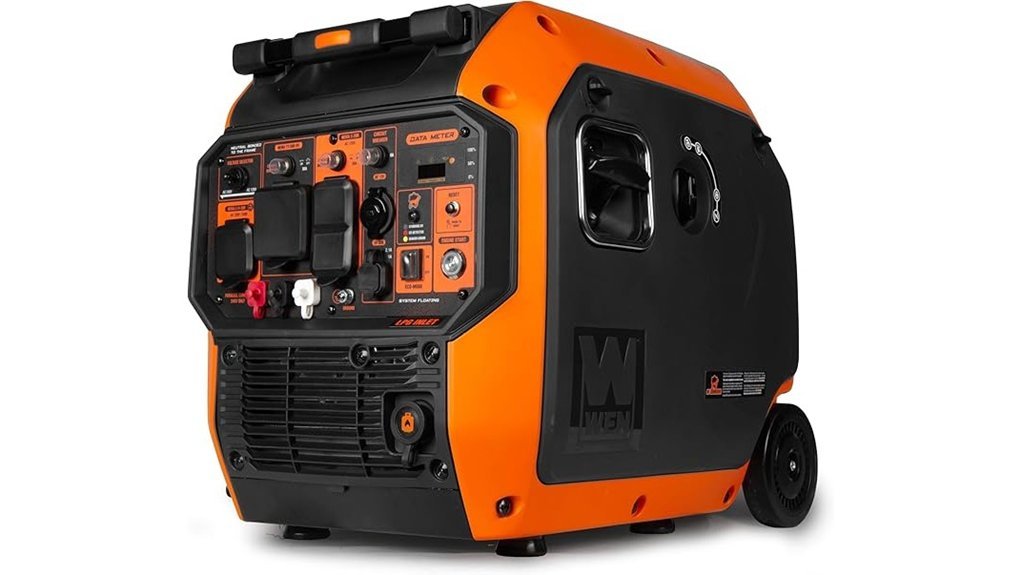
If you want real flexibility with solid power, I’ve run the WEN 6800W Dual Fuel Inverter Generator through long RV trips and it delivers. You can switch between gas or propane in seconds. I like that freedom at camp. It pushes 6800 surge watts on gas and 6000 on propane. That covers an RV AC plus more.
The 224cc engine hums at 64 decibels. Think normal conversation with a steady purr. Eco Mode trims fuel use when loads drop. You smell less exhaust and hear less strain. It feels dialed in. Safety stays front and center with CO shutdown and low oil protection.
You get real usability here. The RV ready TT 30R outlet plugs straight in. USB ports charge phones fast. A voltage selector keeps things steady. Wheels roll smooth over gravel. The handle extends with a solid click. Parallel support lets you stack power like adding logs to a fire.
Best For: RV owners and campers who want dual fuel freedom with strong output and easy transport.
Pros:
- Dual fuel use gives you freedom at camp and on the road
- High output runs an RV AC and key appliances with ease
- Quiet tone and smart safety features build confidence
Cons:
- Weight sits near 100 lbs so lifting takes effort
- Fuel tank size limits long gas runs
- Parallel use needs a second matching unit
Champion 4000-Watt RV Ready Inverter Generator

Camp trips test your gear fast. I ran this unit through long weekends in the woods. The Champion 4000 Watt RV Ready inverter generator delivers *lightweight power* you can trust. You get 4000 starting watts and 3000 running watts for key RV loads. Think fridge hum and coffee aroma at dawn. It weighs under 49 pounds so you can lift it without a grunt. It runs up to 10 hours on a 1.54 gallon tank. The sound sits at 64 dBA which feels like steady rain on a tent. *Clean sine wave power* keeps your electronics safe. CO Shield watches for fumes and shuts it down. You also get RV ready outlets and cold start that fires on the first pull. Add a second unit with *parallel capability* if you need more juice. For camping and tailgates it hits the sweet spot like a trusty pocket knife.
Best For: Campers and RV users and tailgaters who want a quiet portable power source for essential appliances.
Pros:
- I like the light carry at under 49 pounds
- You hear a soft hum at 64 dBA
- You get clean power and CO Shield for safety
- You can link units with parallel capability
Cons:
- You get a focus on portable use over whole home backup
- You refill a 1.54 gallon gas tank on longer runs
- You pull start each time with recoil only
Oxseryn 4400W Portable Inverter Generator RV Ready
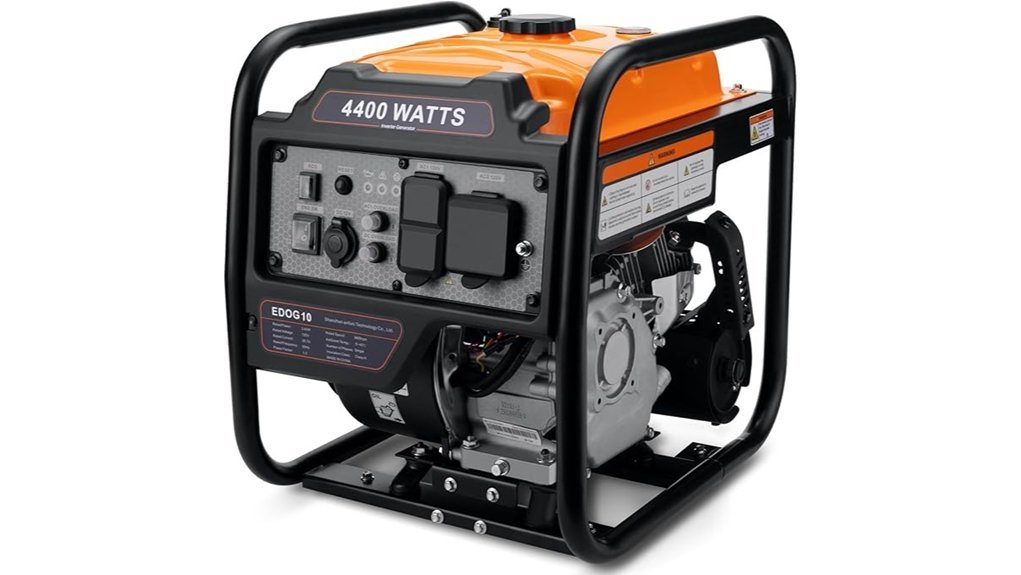
Weekend RV trips feel smoother with this 4400W inverter generator. I’ve hauled it across gravel and it feels solid in hand. You get 4400 peak watts and 3400 running watts for RV essentials and light home backup. It hums with a steady tone and keeps lights and fans happy.
You plug into two 120V AC outlets and a 12V DC port. The RV ready outlet saves setup time. I like that. At 56 pounds you can lift it without a wrestling match. It sips fuel and runs up to 14 hours at 25 percent load from a 2 gallon tank. *Eco mode* trims fuel use and softens the sound. Low oil shutdown and overload protection add peace of mind.
Cold starts feel easy. The pull has a firm bite and fires quick. It smells clean for a gas unit. Think of it as a steady camp buddy that pulls its weight.
Best For: RV campers and homeowners who want a light portable generator for basic power and backup.
Pros:
- 4400W peak and 3400W running power for RV gear and small home loads
- 56 lb frame feels portable with long runtime up to 14 hours
- RV ready outlet plus AC and DC ports with *Eco mode* for fuel savings
Cons:
- Open frame runs louder than enclosed inverter units
- One year warranty feels short for this class
- 120V output fits light duty loads and standard appliances
WEN 4800W Dual Fuel Inverter Generator (DF480iX)
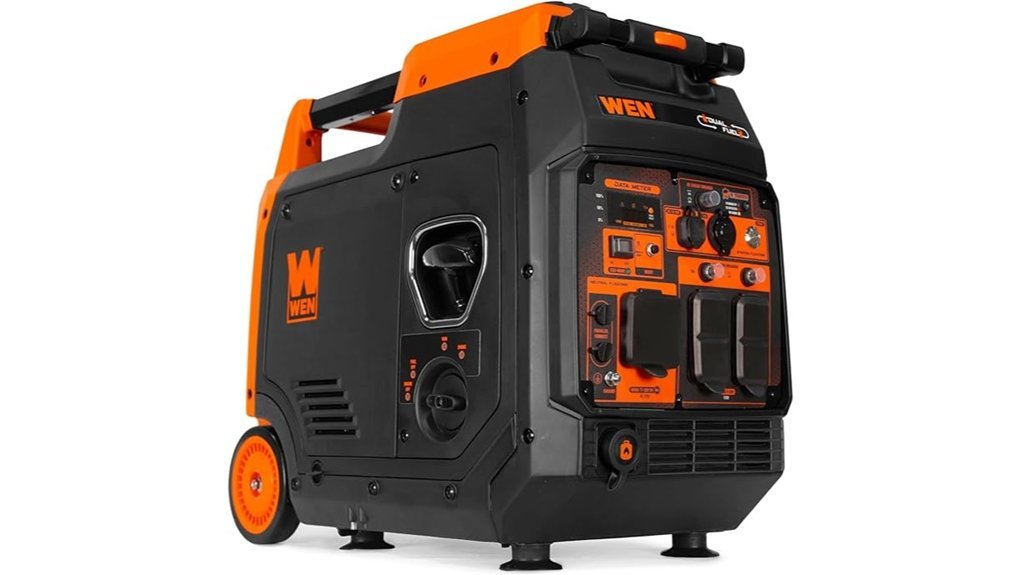
Dual fuel freedom gives you options on the road. I ran this WEN unit on gas and propane with ease. It delivers 4800 surge watts and 4000 running watts. You get *clean inverter power* for phones and laptops. The 224cc engine hums at 62 decibels. Think of a calm campsite at dusk. Eco mode sips fuel and runs up to seven hours on gas. A propane tank can stretch that to twenty.
You hit the electric start and it fires right up. I like the solid grip of the handle and smooth roll of the wheels. You get an RV ready TT 30R outlet plus USB ports. *Safety feels front and center.* CO shutdown kicks in fast. Low oil protection guards the engine. Overload alerts keep you in check. The three year warranty adds peace of mind.
Best For:
RV trips and camp nights where you want quiet power and fuel choice. It’s like a trusty Swiss Army knife for power.
Pros:
- Dual fuel use with gas or propane for longer trips
- Quiet sound with *clean inverter power* for sensitive gear
- RV ready outlet with electric start and strong safety tech
Cons:
- Weight sits near 80 pounds so lifting takes effort
- Gas tank holds 1.9 gallons so you refuel more often
- Output suits 120V gear so home backup stays limited
PowerSmart 3800W Dual Fuel Inverter Generator
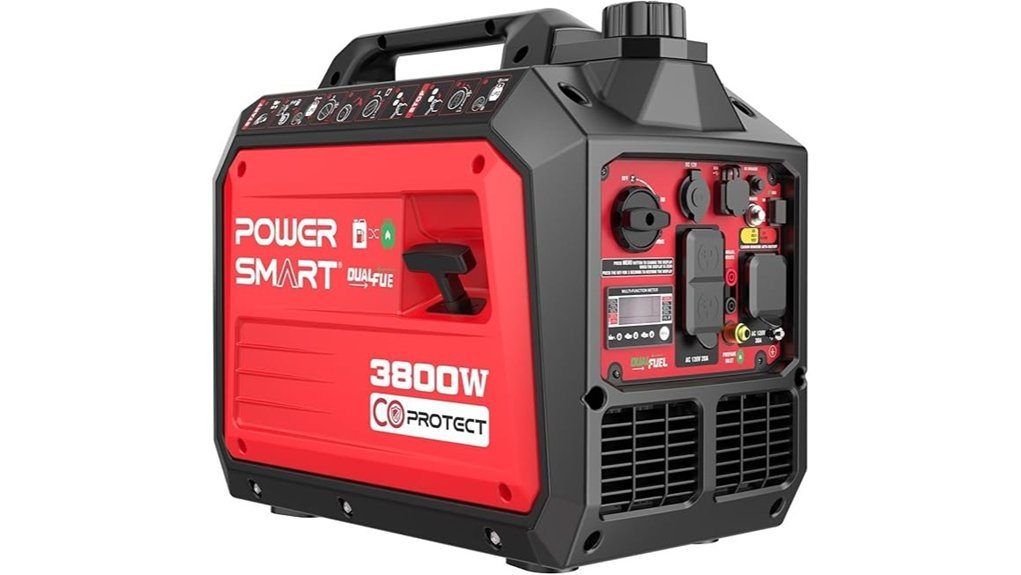
If you want clean power you can carry, I’ve run the PowerSmart 3800W Dual Fuel Inverter Generator in camps and backyards. It feels like a Swiss Army knife for power. You switch fuels in seconds. Gas or propane works. You get 3800 surge watts and 3100 running watts.
I plugged in a laptop and heard a soft hum. The pure sine wave output keeps screens steady. Lights stay flicker free. It purrs at 59dB so your campsite stays calm. Think quiet conversation.
You can lift it with one hand at 50.7 pounds. The frame feels tight and smooth. Storage stays easy. The 149cc engine fires up with a firm pull. Safety features step in fast. CO shutdown protects your air. Overload and low oil shutoff guard the engine.
You also get an RV ready TT 30R outlet. Hook up and go. Runtime hits about four hours per tank. The warranty adds peace of mind. It’s a small box with a big punch.
Best For: You want a light inverter generator for camping or RV trips. You value clean power for phones and laptops. You like fuel choice on the road.
Pros:
- Dual fuel use gives you freedom at camp
- *Pure sine wave* keeps electronics happy
- Light build and low noise fit quiet sites
Cons:
- Runtime fits short stints
- Pull start keeps things simple
- Power level suits small loads
Quick Specs:
- 3800 surge watts
- 3100 running watts
- 149cc engine
- 59dB noise level
- 50.7 lbs weight
- RV TT 30R outlet
- Gas or propane fuel
Westinghouse 4000W Dual Fuel Inverter Generator
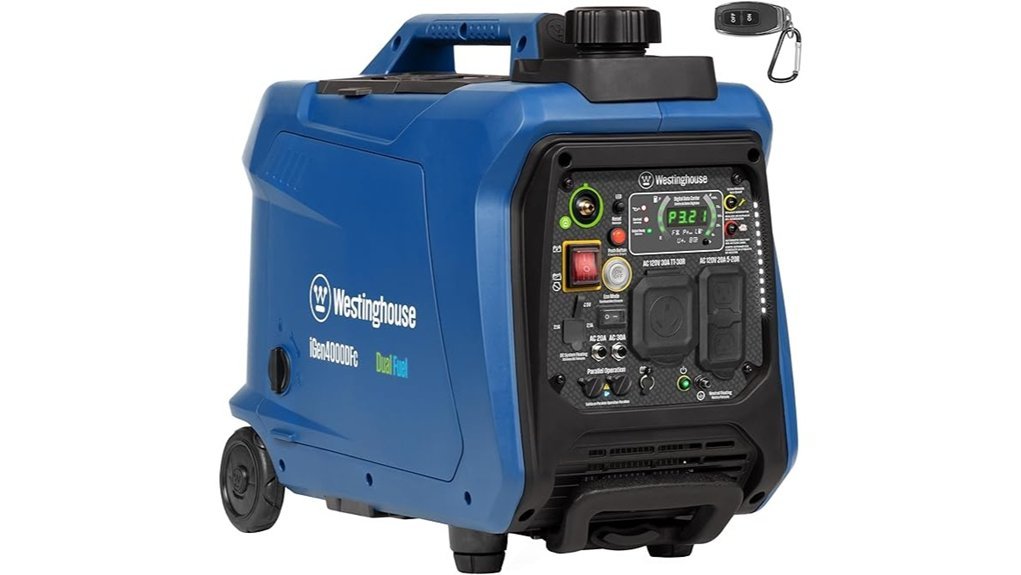
Frequent RV trips get easier with the Westinghouse iGen4000DFc. I ran it at a campsite and heard a soft hum like a calm fan. You get *flexible fuel options* that feel like having two keys to one door. It delivers 4000 peak watts and 3300 running watts for RV basics and sensitive gear. Power stays clean so your devices stay safe. You can swap between gasoline and propane for longer use. I saw about seven hours of runtime in real use. Noise sits near 52 dBA so your camp stays peaceful.
Starting feels smooth and quick every time. I used the remote start from inside my RV and it felt like magic. You also get push button and recoil backup. The RV ready TT 30R outlet plugs straight into your rig. USB ports keep phones charged on the go. The rotating display shows load and fuel at a glance. The handle feels solid in hand. Wheels roll easy over gravel like a suitcase at the airport. Safety stays front and center with CO shutdown. That feature acts like a watchful guard.
Best For: RV travelers and campers who want quiet power with dual fuel freedom and steady output for essentials and electronics.
Pros:
- Dual fuel use with gasoline or propane for longer trips
- Quiet sound near 52 dBA that blends into camp life
- Easy starts with remote push button and recoil
- RV ready outlet and clear digital display
Cons:
- Runtime around seven hours suits short stints
- Weight over 60 lbs feels heavy on rough ground
- Price sits higher than basic single fuel units
Westinghouse 5000W Quiet Portable Inverter Generator
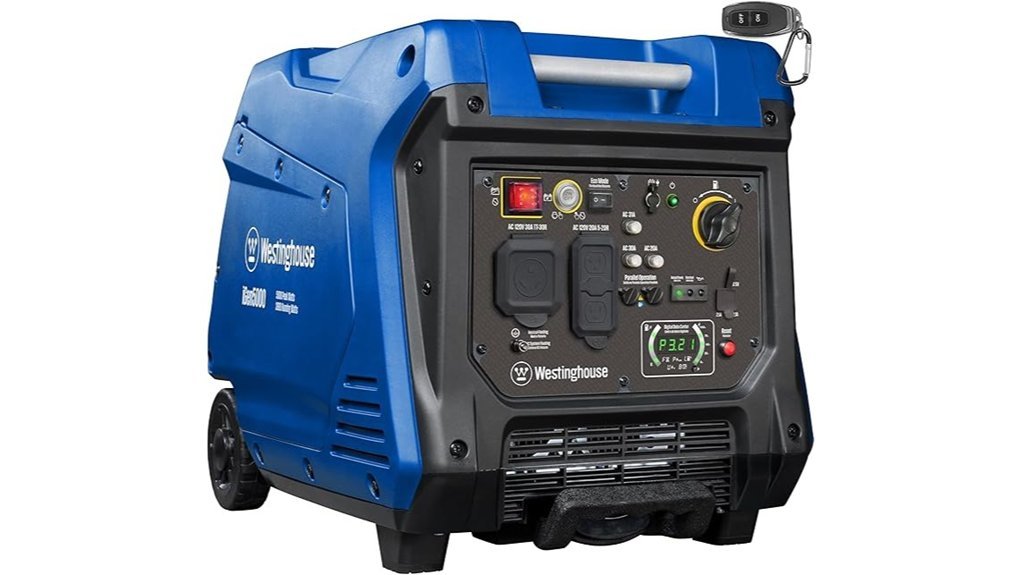
The Westinghouse iGen5000 fits RV life like a glove. I ran it at camp and heard a soft hum that fades into the trees. You get 5000 peak watts and 3900 running watts. That covers lights, a fridge, and your laptop with clean power under 3% THD. It sips fuel and runs up to 18 hours on 3.4 gallons. Economy mode keeps the sound low at 52 dBA. Starting feels easy with remote or key or pull cord. Wheels roll smooth over gravel and the handle feels solid in hand. The LED screen shows load and fuel at a glance. You also get an RV ready TT 30R plus home outlets and USB ports. It carries a 3 year warranty and feels built for long trips.
Best For: RV travel and camping with quiet inverter power and long runtime.
Pros:
- Quiet output near 52 dBA with a soft steady tone
- Long runtime up to 18 hours on 3.4 gallons
- Clean sine wave under 3% THD for phones and TVs
- Easy start with remote key and pull cord
- RV ready TT 30R with clear LED display
Cons:
- 3900 running watts fits essentials and mid loads
- Gas engine uses one fuel type
- Heavier build though wheels help a lot
WEN 5600-Watt Portable Generator with CO Sensor (GN5602X)
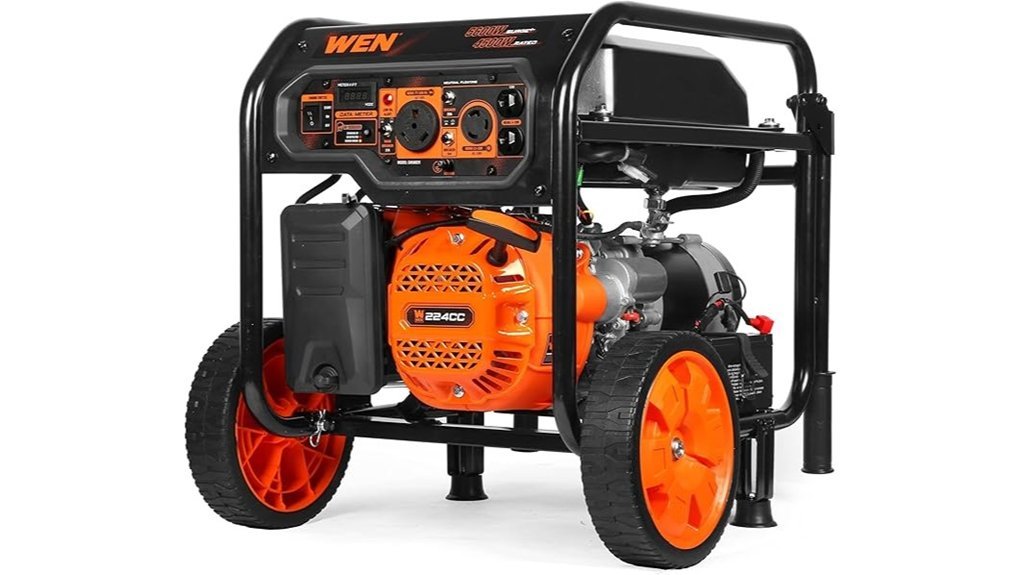
Weekend trips feel easy with this 5600 watt WEN generator. I fired it up at camp and heard a steady hum. The 224cc engine starts fast with electric push. Recoil backup gives peace of mind. You get 5600 starting watts and 4500 running watts for RV gear and tools.
The 4.3 gallon tank keeps power flowing for up to 12.5 hours at half load. I noticed fewer fuel stops and less hassle. The CO shutdown sensor adds a silent guard. WEN Watchdog tracks carbon monoxide and reacts fast. It acts like a watchdog that never sleeps.
Hookups stay simple and quick. You get four outlets for flexible use.
- TT 30R RV outlet for direct camper plug in
- L5 30R twist lock for secure high draw gear
- Two 120V household outlets for small devices
The data meter shows voltage and runtime at a glance. I like how it keeps you in the loop. The frame feels solid to the touch. At 120 pounds it feels hefty in hand. The wheel kit rolls it like a loaded cooler. The three year warranty adds extra trust.
Best For:
RV campers and homeowners who want steady portable power with built in safety for trips or backup use.
Pros:
- Strong 5600 starting watts with smooth electric start
- Long runtime up to 12.5 hours on one tank
- CO sensor and WEN Watchdog add smart safety
Cons:
- 120 pounds adds weight during transport
- Gas engine needs fuel care and upkeep
- 120V output fits many uses yet limits large appliances
Westinghouse 4650W Portable Generator with CO Sensor
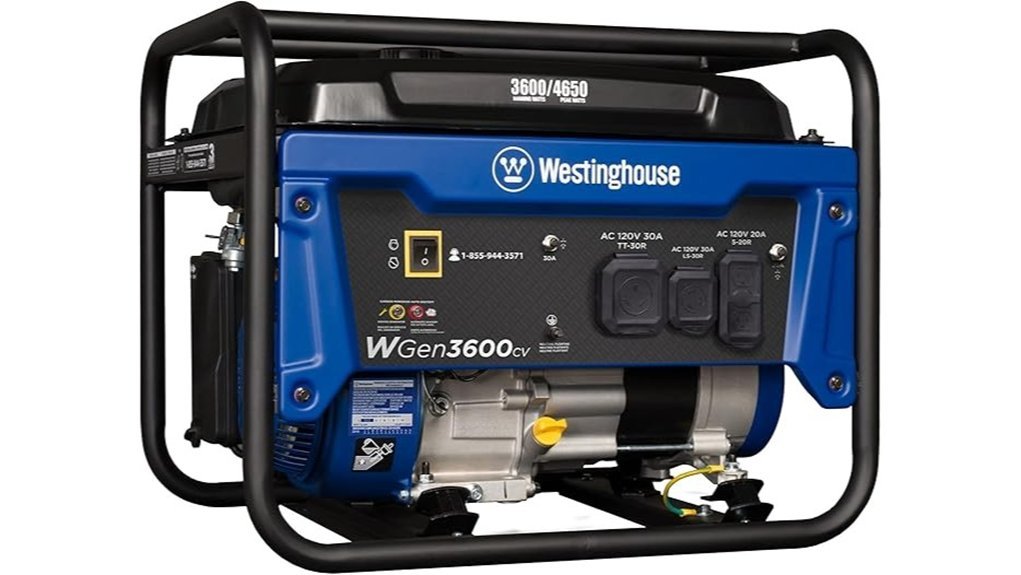
I’ve run this Westinghouse in camps and at home. It starts with a steady pull and settles into a low growl. You’ll notice a faint fuel smell on first use from factory testing. After that it runs clean.
The CO sensor acts like a watchdog. It shuts the unit off fast if fumes build. You get 4650 peak watts and 3600 running watts. That covers an RV air conditioner plus a fridge with room to spare. The 212cc OHV engine feels strong and steady. It hums along like a workhorse.
Fuel use stays friendly. I saw close to 14 hours on a 4 gallon tank at light load. That means fewer trips to refuel. The control panel keeps things simple. You get a TT 30R for RVs plus L5 30R and household plugs. Rubber covers feel thick to the touch. Low oil shutdown adds a safety net.
It weighs about 100 pounds. That heft keeps it planted on rough ground. I did miss a wheel kit during solo lifts. Setup stays easy with the included tools. You also get a three year warranty and lifetime tech support.
Best For: RV trips and home backup where you want steady power and built in safety for essentials.
Pros:
- CO sensor cuts power fast for safer use
- Long runtime up to 14 hours on 4 gallons
- RV ready outlets with TT 30R and L5 30R
Cons:
- Hefty build makes lifting a chore
- Gas only setup limits fuel choice
- Light fuel odor at first start from testing
ERAYAK 4500W Dual-Fuel Portable Inverter Generator
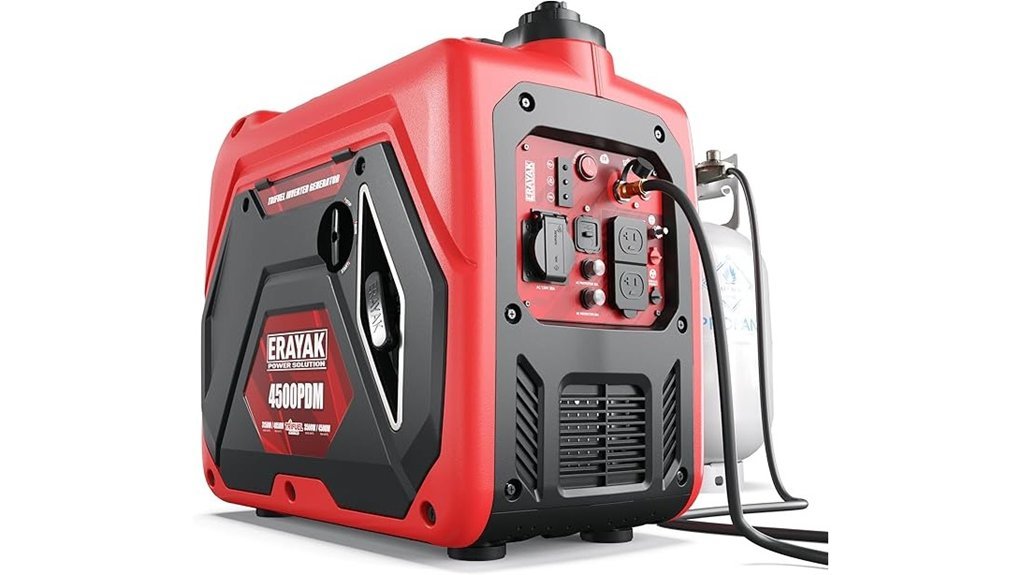
Dual fuel gives you freedom on the road. I’ve run this unit on both fuels at camp and during outages. It fires up with a soft hum you can stand near. Flip fuels in seconds. Gas takes over as propane fades. That switch feels like a relay baton.
You get *4500W peak power* on gas. Power stays clean with a sine wave output. Your laptop and phone stay safe. I ran lights and a fridge with zero flicker. Expect up to 16 hours on gas at light load. Propane can stretch past 20 hours. That long run feels like a slow burn candle.
At 54 pounds it feels compact in hand. The handle grips well with a solid feel. You get a 30A RV outlet plus standard ports. The panel layout makes sense at a glance. A CO shutdown adds peace of mind. The engine adjusts speed to save fuel and cut noise. Accessories come in the box. A three year warranty backs it up.
Best For: You want RV power that feels simple and steady. You camp often or prep for outages. You value long runtime and safe power for electronics.
Pros:
- Dual fuel runs gas or propane for flexible trips
- *Clean sine wave* keeps sensitive gear happy
- RV ready outlets and CO shutdown boost safety
Cons:
- Propane output sits lower than gas
- 54 pounds feels heavy on long carries
- 120V output fits light duty gear only
Champion 4500-Watt RV Ready Inverter Generator
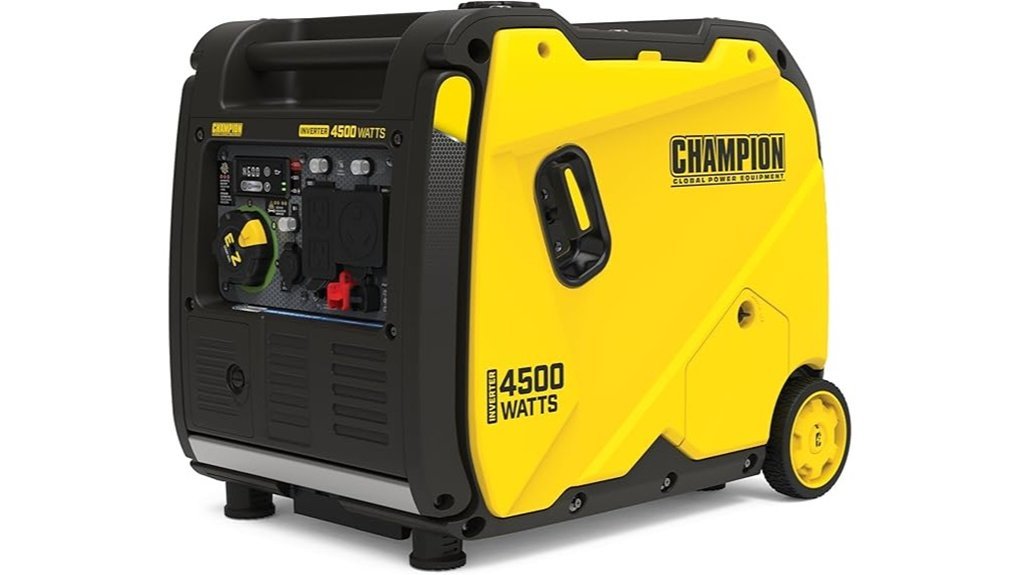
RV trips feel better with steady power. I ran the Champion *4500 watt inverter generator* on real camps. It hums like a calm fridge. You get 4500 starting watts and 3500 running watts. That covers lights and a small AC. The tank smells faintly of gas yet lasts long. I saw up to 14 hours on 2.3 gallons. Noise stays low at 61 dBA. Think quiet conversation by the fire.
Your gear stays safe with *clean power under 3% THD*. Phones and laptops charge smooth. I like the Intelligauge screen. It shows volts and runtime at a glance. CO Shield adds peace of mind. Cold Start fires up on chilly mornings. Economy mode sips fuel like a slow drip. Maintenance feels simple and quick. The handle feels solid in hand. Never flat tires roll over gravel with ease. Plug into RV or home or 12V with zero fuss. The three year warranty adds trust.
Best For:
RV travel and camping and tailgates with a need for quiet clean power.
Pros:
- Quiet 61 dBA sound that blends into camp noise
- Long runtime that stretches a full day on one tank
- *Clean sine wave power* that keeps electronics happy
Cons:
- Gas only setup limits fuel choice
- 3500 running watts fits light to mid loads
- Weight feels noticeable during solo lifts
This unit hits a sweet spot. It works like a steady heartbeat for your RV life.
Westinghouse 6500W Dual Fuel Portable Generator

If you want *fuel freedom* and RV ready power, I’ve run this unit and it delivers. I switched between gas and propane with ease. You get real choice on the road. It pushes 5300 running watts and 6500 peak watts. That covers AC units and kitchen gear. It hums with a deep steady growl. Think of it like a workhorse that keeps pace.
The 4.7 gallon tank ran long in my tests. I saw close to 14.5 hours with a light load. The 274 cc engine felt steady in heat and dust. You also get RV ready outlets and a transfer switch port. Safety stays front and center. The CO sensor adds peace of mind. Low oil shutdown protects the engine. It’s like having a watchful co pilot.
Moving it feels simple. The frame feels solid to the touch. Wheels roll over gravel with a dull crunch. Setup took me minutes. Plug it in and go. The hour meter keeps service on track.
Best For: RV trips, home backup, and anyone who wants dual fuel power with mid range output that holds steady.
Pros:
- Dual fuel use gives you real flexibility
- 5300 running watts handles RV loads and home circuits
- Safety features include CO sensor and low oil shutdown
Cons:
- Weight feels heavy during solo lifts
- Sound level stays noticeable under load
- Electric start stays absent which adds a manual pull step
Factors to Consider When Choosing an RV Generator
Match Power to Your Needs
I’ve run rigs that hummed and rigs that choked. Power matters. You want watts that fit your gear like a glove. Too little and lights flicker. Too much and fuel burns fast. Check starting watts for AC units. Then check running watts for steady draw.
- AC unit watt demand
- Microwave surge draw
- Battery charger load
Think of it as fuel for a campfire. Right size keeps a steady flame.
Pick the Right Fuel Type
I’ve smelled gas fumes at dawn and it sticks with you. Fuel choice shapes your trip. Gas units feel common and easy to find. Propane burns clean and stores well. Dual fuel gives you a handy backup.
- Gas for easy refills
- Propane for clean burn
- Dual fuel for flexibility
Choose what fits your route and storage space.
Control Noise and Vibe
Some generators purr. Others roar like a lawn crew at sunrise. You want a quiet hum near camp. Check decibel ratings. Stand a few feet away in your mind and listen.
- Low dB for calm nights
- Eco mode for softer sound
A quiet unit keeps neighbors happy and sleep deep.
Portability and Weight
I’ve lifted heavy units and felt it in my back. Weight counts. Handles help. Wheels save effort. Compact size fits tight bays.
- Carry handles for quick moves
- Wheel kits for rough ground
Treat it like a suitcase you lift often.
Runtime and Fuel Use
Long days need long runtime. I track hours per tank on real trips. Efficient units sip fuel and stretch miles. Bigger tanks run longer.
- Hours at half load
- Tank size in gallons
A good generator runs like a steady heartbeat through the night.
Power Output Needs
Power Output Needs
I size generators by real use in the field. You should too. Every appliance pulls its own watt load. Add them up with care. Think of it like packing a truck. One overload and things rattle.
Start with total wattage. Most portable generators sit between 3000 and 6000 watts. Match that to your setup. I always check both *starting watts* and *running watts*. Motors spike hard at startup. Your fridge may gulp 2000 watts at first. Then it hums at 1200 watts.
Listen for that low engine growl. Feel the heat off the casing. That tells you it works near its limit.
Keep runtime in mind. I look for 8 to 14 hours at half load. That gives steady power through the night. Add a 20 percent buffer. That space keeps your circuits safe and your gear happy.
Dual fuel models add flexibility. Gas and propane give slightly different output. I’ve seen small drops on propane.
Focus on balance. You want power and fuel efficiency in sync.
Quick checks:
- Total wattage of all devices
- Starting vs running watts
- Runtime at half load
- Fuel type and output change
- Safety headroom of 20 percent
Pick smart and you avoid tripped breakers and dead gear.
Fuel Type Options
Fuel Type Options
Power tells one story. Fuel tells the rest. I’ve run these units in heat and dust, and fuel choice changes everything.
Gasoline hits hard. You feel that punch when a compressor kicks on. Many units reach about 6800 surge watts. You smell the fumes and hear the sharper growl. It suits big loads and quick bursts. Think air conditioners and power tools. Like a sprinter off the line.
Propane runs clean. The exhaust smells lighter and the engine tone stays smooth. A 20 pound tank can push close to 20 hours. You swap tanks with clean hands. That matters on long trips. It sips fuel like a steady campfire.
Dual fuel gives you options. I switch fuels when a station runs dry. You keep the lights on without drama. It feels like having a spare key in your pocket.
Pick based on your habits. Long stays favor propane. Heavy starts favor gas. Mixed trips love dual fuel.
Quick picks
- Gasoline: high surge watts and fast response
- Propane: long runtime and cleaner burn
- Dual fuel: flexible supply and easy switching
Match fuel to your setup. Match runtime to your day. Then you roll out with confidence.
Noise Level Considerations
Noise Level Considerations
Noise shapes your whole trip. I’ve run generators from a soft hum to a lawnmower roar. Most RV units sit between *52 dBA and 72 dBA*. You’ll hear that gap right away.
Quiet models fit campgrounds and driveways. Loud ones draw stares fast. Think of noise like a campfire. A gentle crackle feels right. A blast ruins the mood.
I like units near *64 dBA*. You get steady power and a calm sound. Conversations flow. Sleep comes easy.
Watch for Eco Mode. It drops engine speed on light loads. You hear a softer tone. It saves fuel too.
Distance matters. Ratings come from 23 feet away. Move closer and the sound grows. Your ears will tell you.
Here’s what I look for in the field:
- dBA rating near 60 to 65
- Eco Mode for light use
- Inverter design for smooth power and lower noise
A quiet generator lets you hear the wind in the trees. You relax more. You wake up fresh. That’s the goal every trip.
Portability And Weight
Portability and Weight
I’ve hauled these units in dirt camps and tight RV bays. *Weight hits you fast.* You feel it in your arms and hear it in your breath.
Most generators land between 49 pounds and 120 plus. That gap changes your day. You lift with ease or you wrestle dead weight. Solo trips favor a lighter build. Your back will thank you.
Size matters just as much. You want a unit that slides into storage like a glove. Tight compartments demand compact frames. I’ve felt sharp edges scrape plastic bins. A snug fit saves time and stress.
Wheels help a lot. Telescoping handles feel like suitcase gear. You roll instead of carry. It’s the difference between a stroll and a grind.
Still, power comes with heft. Light units sip fuel and run small loads. Heavy units push more watts and run louder. You’ll hear that low hum at idle and a deeper growl under load.
Think balance. Match the generator to your strength and your space. Pick the one that fits your routine like a well worn tool.
Runtime And Efficiency
Runtime And Efficiency
Weight gets it into your RV. Runtime keeps it humming. I’ve learned this the hard way on long desert nights.
You want fuel to stretch like a good camp story. Dual fuel generators shine here. I’ve seen propane runs hit 20 hours at 25 percent load. That gives you freedom at camp.
Eco mode pulls its weight. It adjusts output to match demand. You save fuel and hear less engine growl. Think of it like cruise control for power.
Tank size matters more than you think. A 4 gallon tank can push 14 hours at half load. That means fewer cold refuels at dawn.
Sound matters too. A unit near *52 dBA* feels calm on the ears. You hear wind and fire crackle instead of a harsh drone.
Clean power keeps gear happy. Look for *THD under 3 percent*. Your laptop and fridge will thank you with longer life.
Here’s what I check every time:
- Fuel type for flexibility
- Tank size for longer runs
- Eco mode for smart fuel use
- Noise rating for comfort
- Low THD for safe electronics
Balance these like a well packed rig. You’ll get steady power that lasts through heat and cold.
Conclusion
You’ve seen how the right RV generator keeps your trips humming. I’ve tested these units on dusty sites and cold mornings. I hear the soft purr of an inverter and smell clean exhaust at idle. That calm sound feels like a steady campfire for your rig.
Pick quiet inverter power for close camps. Choose dual fuel for gas or propane freedom. Grab high watt models for big rigs and AC loads. Match output to your setup and your habits.
Think watts first. Your fridge and AC need steady power. Check noise levels. Your ears will thank you at night. Look at fuel use. Longer run time means fewer stops.
Treat your generator well and it will treat you well. Change oil on time and keep vents clear. I’ve seen a cared unit run like a loyal mule for years. Choose with intent and enjoy power that feels *endless* on every mile.