
You want calm miles and quiet nights. I’ve run these systems on hot asphalt and cold mornings. I trust them because they speak up before trouble grows.
*Real time RV monitoring keeps you in control.* You see temps rise before food spoils. You feel the tires hum smooth through the app. You hear alerts chime like a smoke alarm for your rig.
Pet safety matters first. Frigga 4G and Waggle act like a watchful co pilot. I’ve felt that panic fade when my phone buzzed with a temp spike. You get instant alerts and clear data. Your pets stay safe while you step away.
Tire pressure can make or break a trip. Tymate and GUTA TPMS read each wheel as you roll. I’ve watched pressure drift on a long grade. The alert came fast and I slowed before heat built up. That saves rubber and nerves.
Tank levels bring order to daily life. App based monitors show fresh gray and black levels at a glance. I like the clean readout and quick sync. No guessing. No surprise odors.
Power tracking ties it all together. You see voltage and draw in real time. I’ve heard the soft click of a relay and checked the app right away. That kind of feedback keeps systems happy.
*Pick gear that talks to you wherever you park.* Cellular links beat short range signals. Long battery life keeps sensors alive on long stays. Clear alerts cut through noise like a bell on a quiet lake.
Quick specs I look for:
- Cellular connectivity for wide coverage
- Long sensor battery life
- Loud and clear app alerts
- Easy install and stable pairing
- Accurate temp and pressure readings
Each of these tools adds a layer of calm. Think of them as a safety net that catches small issues early. You drive. They watch. That balance keeps every trip smooth.
Frigga 4G Temperature & Humidity Monitor with Alerts
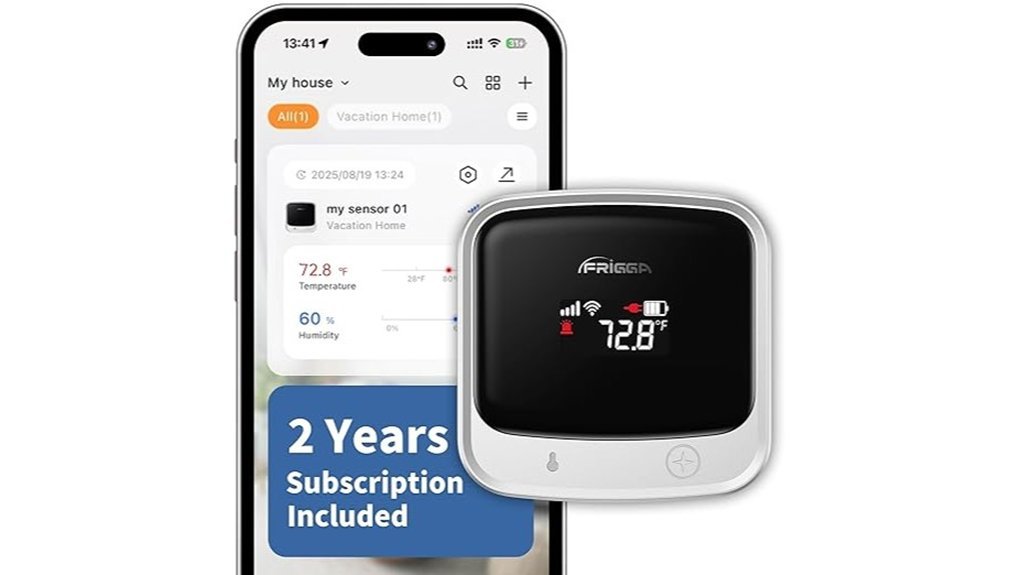
If you camp off grid or park far from signal dead zones, I’ve found the Frigga 4G monitor feels like a quiet watchdog. It uses a *built in 4G link* with a global SIM. You get coverage in most places I’ve tested. I’ve checked it in dusty lots and humid camps. It keeps reporting like a steady drumbeat. The screen updates every five seconds. The app logs data every 10 or 30 minutes. You can set *alerts that ping your phone or email or call you*. It runs about seven days on battery. I keep it plugged in for peace of mind. You can pull two years of *downloadable data* anytime.
Best For: You want steady temperature and humidity tracking during travel or off grid stays without WiFi.
Pros:
- *4G cellular with global SIM* gives you reach in most coverage areas
- Alerts hit your phone email or voice so you stay in the loop
- Stores up to two years of data with simple CSV export
Cons:
- Battery life tops out at seven days so you recharge often
- App sync runs every 10 to 30 minutes so readings feel stepped
- Coverage quality shapes performance in remote spots
Tymate TM2 RV Tire Pressure Monitoring System (TPMS)
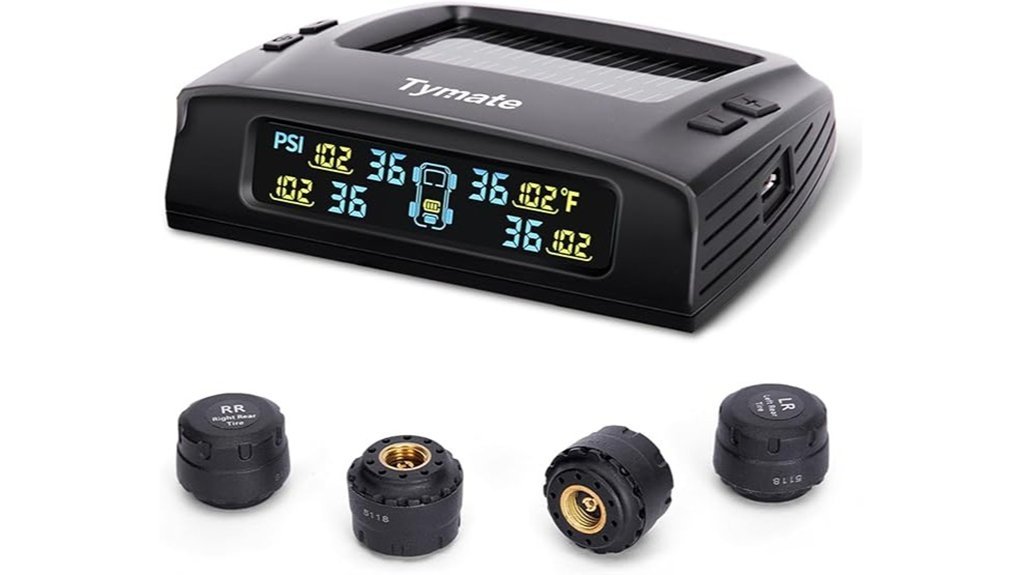
Budget rigs deserve tire safety you can trust. I ran the Tymate TM2 on a dusty trip and it kept watch like a guard dog. You get real time tire pressure monitoring for up to ten wheels. It reads 0 to 87 PSI with tight ±3 PSI accuracy. I felt the small sensors click on with a firm twist. Setup felt quick and clean.
The screen pops with color in bright sun. It charges by solar power or USB or a car socket. The signal hums steady at 433.92MHz. Long rigs can use a repeater for full reach. Six alerts watch your back like a hawk. You get warnings for leaks and heat and low power and signal drop.
Best For: Budget RV owners who want simple install and steady tire data across trailers and trucks.
Pros:
- Tracks up to 10 tires with ±3 PSI accuracy in a 0 to 87 PSI span
- Bright color LCD with auto light and three power options
- Six alert modes for leaks and temp and voltage and signal
Cons:
- Box includes 4 sensors so you add more for full rigs
- Longer RV setups benefit from a signal repeater
- External caps sit outside so you watch for theft or knocks
I like how it feels in daily use. You glance once and roll on. Peace of mind rides shotgun.
Tymate TM7 Wireless TPMS with 4 Sensors
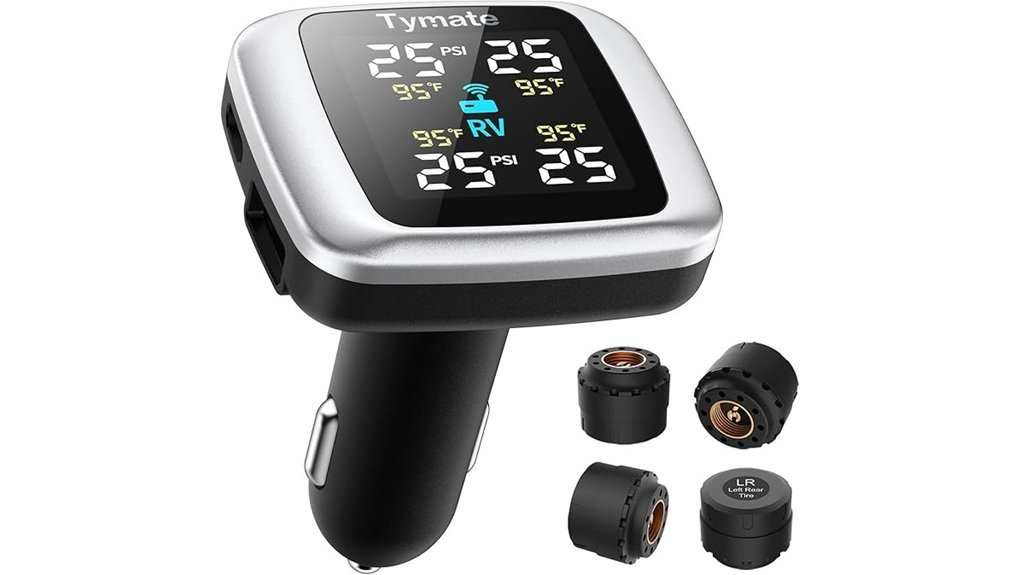
RV trips test your gear fast. I ran the Tymate TM7 on long hauls and rough roads. It felt like a co-pilot that never sleeps. You get *real-time tire pressure* and heat data that pops on screen. Alerts fire the moment something drifts. Think of it as a smoke alarm for your tires.
Six alarm modes cover leaks and heat spikes. You also get battery and signal alerts. The *color LCD* looks crisp in bright sun and dark nights. I like the adjustable backlight since it saves your eyes. Setup takes minutes. You plug into the 12V socket and go. No wiring fuss. It fits RVs and trucks with ease. A repeater boosts signal for long rigs. USB ports charge your phone on the fly. Sensors feel light in hand and swap batteries fast.
Best For: You drive an RV or tow often and want fast setup with clear alerts.
Pros:
- Plug and play install that takes minutes
- Live pressure and temp data with six alerts
- Bright color screen with easy backlight control and USB charging
Cons:
- External sensors sit on valve stems and feel exposed
- Long trailers benefit from a repeater which adds cost
- CR1632 batteries need periodic swaps
RV Pet Temperature Monitor with Cellular Alerts
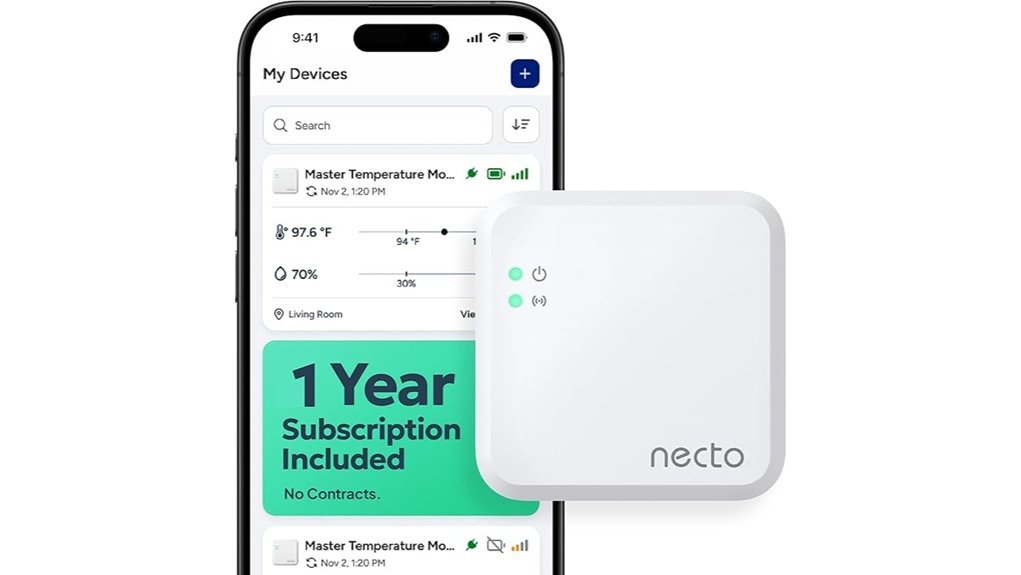
Pet owners who travel a lot need a monitor that works anywhere. I’ve used this cellular RV pet monitor on long drives and hot camp days. It feels like a watchdog that never sleeps. You get signal without WiFi. That matters in remote parks.
You see real time temperature and humidity on your phone. Alerts buzz fast and loud. I felt my pocket vibrate the second heat crept up. You can set limits that fit your pet’s comfort. Add up to five contacts for backup.
The unit tracks power too. That’s a lifesaver during hookups that fail. The rechargeable battery lasts about three days. It feels solid in hand with a smooth shell. During an outage it keeps watch like a night guard.
Setup took me minutes in the app. Taps felt quick and clean. The system logs data every 10 seconds. You can pull reports for a full year. That gives you a clear history of cabin conditions.
Best For: Pet owners who travel or leave pets in RVs and want reliable live monitoring without WiFi.
Pros:
- Cellular connection gives 24 hour access from almost anywhere
- Tracks temp humidity and power with custom alert limits
- Backup battery runs for days and sends safety alerts
Cons:
- Needs a cellular plan with a monthly fee
- Battery life spans about three days per charge
- App view refreshes every 10 minutes so it feels like a slow drip
Waggle 4G Pet Temperature Monitor Lite with Alerts
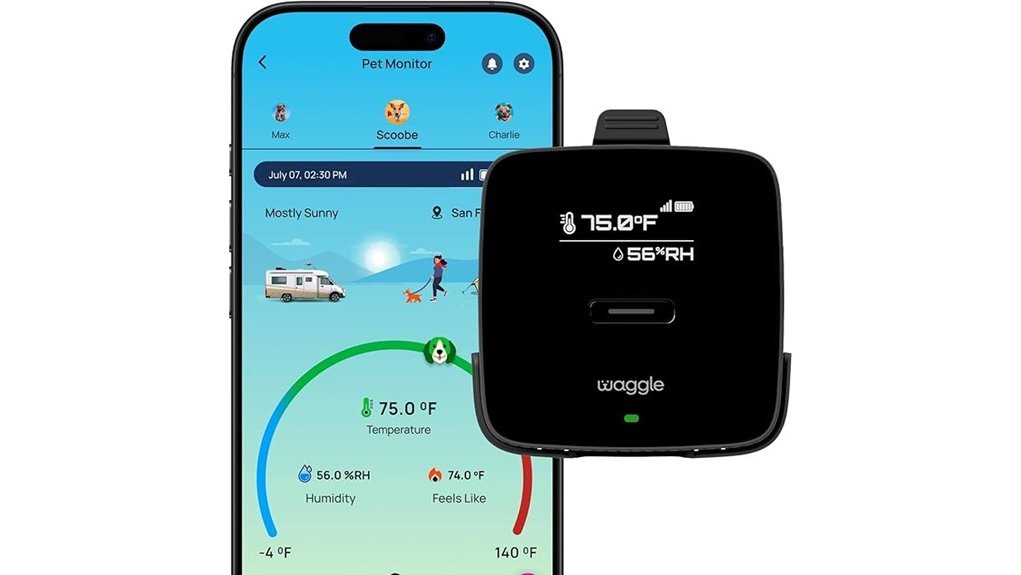
I tested the Waggle 4G monitor inside my truck on a hot afternoon. The cabin felt like an oven. The device stayed cool to the touch. It kept sending updates like a steady heartbeat.
You get 4G cellular coverage across major carriers. I saw signal hold in dusty camps and empty lots. No WiFi needed. That means you stay connected where phones struggle.
The unit tracks temperature humidity and heat index. You get instant alerts through app SMS or email. I set custom limits in seconds. Alerts came fast and loud. Like a smoke alarm for heat risk.
Battery life impressed me. I ran it for days without a charge. The maker rates it at up to 192 hours. That feels close in real use. You also get power loss alerts which add peace of mind.
Setup felt simple. Peel and stick then tap a few buttons. The display shows live readings at a glance. It fits tight spots with ease.
A subscription powers alerts and tracking. The service kept data flowing in my tests. Think of it as a safety net you can see.
Best For: You travel with pets and need steady temperature tracking without WiFi.
Pros:
- 4G cellular coverage keeps data flowing in remote areas
- Custom alerts hit your phone fast for temp humidity and power
- Long battery life up to 192 hours with easy setup
Cons:
- Subscription supports alerts and live monitoring
- Performance depends on cellular signal strength
- Display shows basics while the app holds deeper data
GUTA RV Trailer TPMS with 10 Sensors
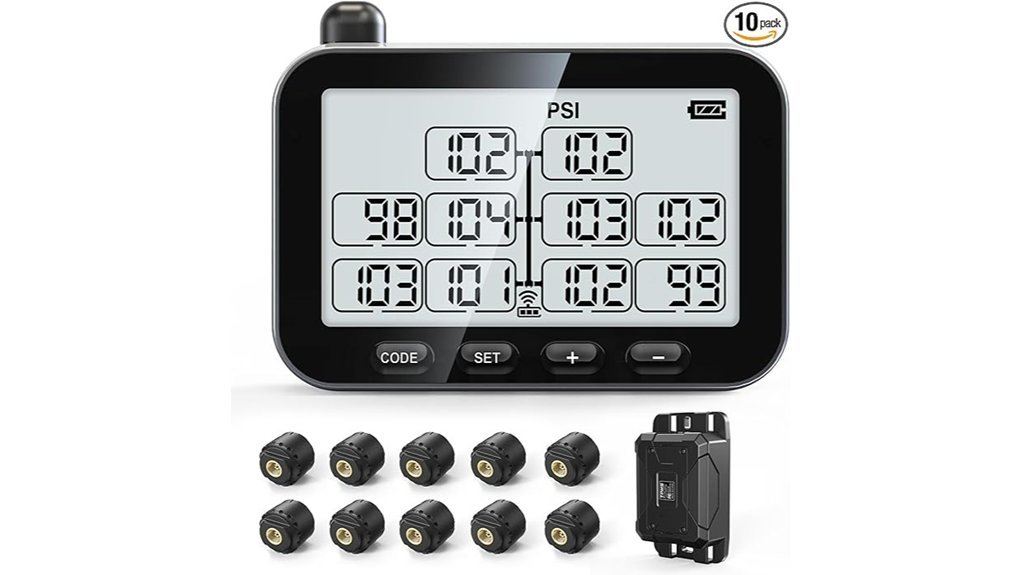
Built for long rigs, I’ve run this TPMS across a full multi axle setup. It feeds you *live tire data* at a glance. The screen shows pressure and heat in big numbers you can read in bright sun. It handles up to 188 psi and 185°F with ease. Think of it as a watchdog that never sleeps.
You get six alert types that ping fast. I heard sharp beeps the moment a slow leak started. You stay ahead of trouble before rubber gets hot and smelly. Setup feels quick with wireless pairing that walks you through each tire. The repeater boosts signal down a long trailer like a relay runner.
The monitor lasts about two weeks per charge in my use. Sensors keep going for years and feel solid in hand. It fits RVs, fifth wheels, and cargo trailers. You get steady tire safety mile after mile.
Best For: You run RVs or long trailers and want clear real time tire data with strong signal reach.
Pros:
- Tracks up to 10 tires with crisp pressure and temp readouts
- Six alerts cover leaks heat spikes signal drop and low battery
- Monitor charges fast and sensors last up to four years
Cons:
- Pairing many sensors takes a bit of time at first
- Monitor needs a recharge every 12 to 14 days
- Metal valve stems give the best fit and seal
TankMaster Wireless RV Tank Monitoring System with App
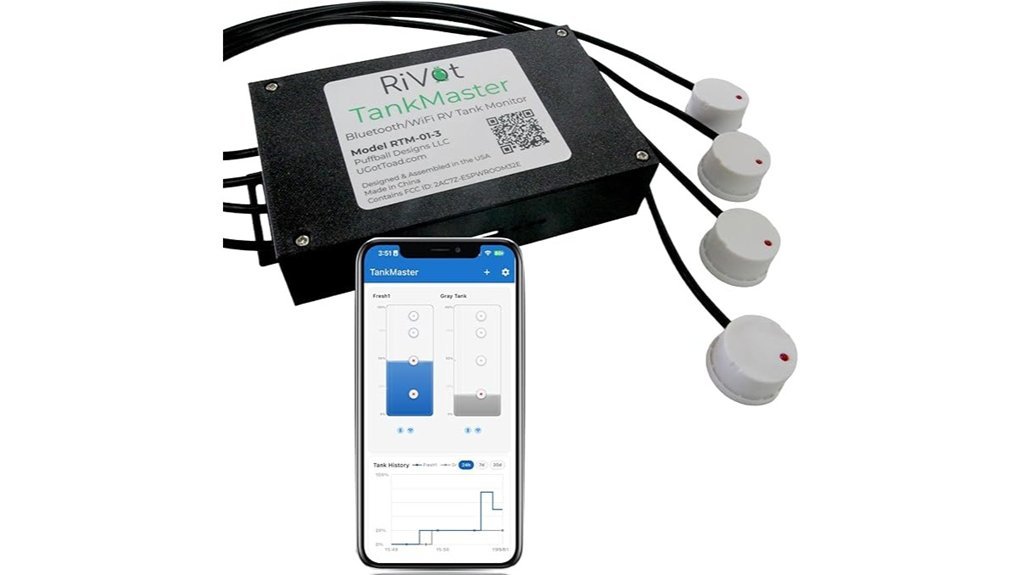
For DIY RVers, I’ve installed this in under an hour and kept my tanks sealed. TankMaster uses contactless tank monitoring with stick on sensors. No drill. No plumbing edits. You press each pad to the tank and feel the firm grip. It sticks like a barnacle.
You track fresh, gray, and black tanks in one clean app. I check levels from bed with a quick tap. The app runs on iOS and Android and feels smooth. You can set alerts so you hear a soft ping before a tank fills. It supports up to ten tanks which suits bigger rigs.
Connection stays simple. You use Bluetooth or Wi Fi from your phone. No campsite internet needed. Updates roll in over the air and install fast. Power draw stays low so it sips energy.
Materials matter. It reads through polyethylene or fiberglass walls with steady accuracy. I saw stable readings after showers and dumps. Thick sludge or metal walls block signals so pick your tanks with care. It also links with Home Assistant integration for home style automations on the road.
Each unit reads one tank. Add more as you grow. Setup feels like peel stick tap done.
Best For: DIY RVers who want a clean no drill install and quick phone checks for multiple tank levels.
Pros:
- Contactless install with adhesive pads and zero plumbing edits
- iOS and Android app with alerts and support for up to 10 tanks
- Works over Bluetooth or Wi Fi and pairs with Home Assistant
Cons:
- Works with plastic or fiberglass tanks and favors clean walls
- One unit per tank so cost scales with your setup
- Uses 5V USB power so plan a nearby port or cable route
Factors to Consider When Choosing an RV Monitoring System
Connectivity and Coverage
I’ve tested systems in dead zones and busy parks. Signal strength makes or breaks your trip. You want coverage that sticks like glue. Think cellular LTE and GPS tracking. Some units add WiFi assist for tight spots.
Feel the relief when alerts arrive fast. Hear that ping right on time. That’s peace of mind on wheels.
- Cellular network support
- GPS location tracking
- WiFi backup option
Monitoring Features That Matter
I watch temp swings and tank levels daily. You should too. A good system keeps eyes on everything. Tire pressure. Battery voltage. Interior heat.
It’s like having a co-pilot who never sleeps. Data stays clear and easy to read. No guesswork.
- Temperature and humidity sensors
- Tank level tracking
- Tire pressure monitoring
- Battery status
Alerts and Notifications
You need alerts that cut through noise. I like sharp pings and clear messages. Real time updates keep you ahead of trouble.
Picture a smoke alarm in your pocket. Quick and loud. That’s the vibe.
- Push notifications
- SMS alerts
- Custom alert settings
Power and Battery Life
I’ve seen weak batteries fade fast in cold nights. You want long life and smart power use. Low draw matters on long trips.
Touch the unit after hours of use. It should stay cool and steady. That tells you it’s built right.
- Low power consumption
- Backup battery
- Solar charging support
Setup and Compatibility
I prefer gear that clicks in place fast. You will too. Simple install saves time and stress. Clear instructions help a lot.
Think plug and play like a coffee maker. It just works.
- Easy install process
- App compatibility
- Fits most RV systems
Connectivity And Coverage
Connectivity And Coverage
I’ve tested these setups deep in the hills and on dusty backroads. Signal can feel like chasing smoke.
Your RV needs *steady connection*. Start with 4G cellular support. It keeps data flowing where campground WiFi fades.
Dual connectivity adds a safety net. I like systems that switch between WiFi and cellular with no fuss. You stay online at home or on the move.
Check how often the system refreshes. Fast updates mean you see changes in real time. Slow updates leave gaps you can feel.
Alerts matter more than specs. A sharp ping on your phone beats silence. Look for app alerts plus SMS and email.
Battery life tells the real story. I’ve held units that feel warm after hours of use. Long lasting batteries keep watch through the night.
Think of it like a campfire that never dies. You want signal that stays alive wherever you park.
Key things I look for:
- 4G LTE support for wide area coverage
- WiFi plus cellular for flexible use
- Frequent data refresh for live status
- App SMS and email alerts for reach
- Rechargeable battery that lasts days
Pick gear that keeps you connected without babysitting it.
Monitoring Capabilities
Monitoring Capabilities
I’ve learned this the hard way. A strong signal means little if your rig stays silent about trouble. You need clear data fast.
Start with real time sensors. You should track temperature, humidity, and tank levels. I like systems that show numbers you can trust. You can almost feel the air shift when temps climb. That warm plastic smell inside a closed RV tells a story.
Set your own limits. Good systems let you pick temp and humidity ranges. You stay in control. Think of it as your rig’s early warning bell.
Tires matter more than most think. I always run tire pressure monitoring systems on every wheel. You get live readings. You spot slow leaks before they bite. A soft tire hum can turn into a blowout in minutes.
Power tracking keeps you sane. Built in battery meters show charge at a glance. You know when to conserve. You know when to relax. Simple.
Remote access seals the deal. I check my RV from my phone while I grab coffee. No WiFi stress with cellular support. It feels like having eyes on your rig at all times.
Here’s what I look for:
- Live temperature and humidity data
- Fresh and waste tank level sensors
- Full tire pressure coverage
- Clear battery status display
- Mobile app with remote access
Get this right and you stay ahead of problems. A good system acts like a co pilot that never sleeps.
Alert And Notification Options
Alert And Notification Options
A good sensor feeds data. *Alerts make you act fast.*
I’ve tested these on the road and I want noise that cuts through engine hum. You need multi channel alerts that hit your phone and email. I like a loud on device alarm that you can hear over rain on the roof.
Set your own limits. You pick high and low marks for temperature and humidity. That control feels like a seatbelt for your rig.
Strong systems flag key risks right away. Think sharp temperature swings and sticky humidity spikes. Power loss shows up fast. Sensor dropouts get called out. Leak alerts arrive in real time and they feel like a smoke alarm for water.
Share alerts with a partner. Or a neighbor at the park. More eyes means faster action.
I watch for alerts that stay on screen until I tap them. Busy travel days blur by and this keeps issues in sight. Routing matters too. Send pings to the right people at the right time.
Here is what I look for in the field:
- App alerts with clear sound and vibration
- Email alerts for a paper trail
- On device alarm you can hear in a storm
- Custom thresholds for temp and humidity
- Event flags for power and sensor status
- Leak detection with instant push alerts
- Shared notifications for trusted contacts
- Sticky alerts that wait for your tap
A solid alert setup acts like a watchdog that never sleeps. It keeps your RV safe while you chase the next view.
Power And Battery Life
Power and Battery Life
Alerts grab you fast. Power keeps everything breathing.
I’ve tested these in the field. Cold nights. Dust in the air. You hear a faint click as the unit wakes. That’s the heartbeat.
Pick a system with a rechargeable battery that runs seven days or more. Longer runs mean fewer worries. You stay focused.
Smart power modes matter. Auto sleep cuts drain during idle hours. It feels like a quiet pause.
Backup power keeps watch during outages. You still get alerts. Your data stays fresh.
I like units that run while plugged in. You get steady tracking with zero dips. Battery health stays strong.
Check battery lifespan. Some sensors run up to four years. That’s real set and forget.
Easy swaps help on long trips. No fuss. No tools.
Key checks
- *Battery life per charge*
- *Auto sleep and power save modes*
- *Backup power support*
- *Plug in use with safe charging*
- *Sensor battery lifespan*
- *Quick replacement design*
Think of power as oxygen. Without it the system fades. With it you get clean data and calm nights.
Installation And Compatibility
Installation And Compatibility
I’ve installed these on gravel pads and in tight campsites. You feel the difference right away. A clean setup saves your sanity.
Start simple.
Peel and stick mounts feel smooth in hand. They snap in with a soft click. You finish fast and hit the road.
Skip the guesswork.
Wireless programming saves time. Your phone pairs in seconds. A clear app makes setup feel like a breeze.
Match your RV.
Trailers need one layout. Motorhomes need another. Trucks sit somewhere in between. Pick a system built for your rig.
Check connections.
Bluetooth keeps it quick. WiFi adds range at camp. I like strong signal that holds steady through walls.
Think modular.
Add tank sensors or tire monitors as you go. You hear each ping as it links up. It feels like stacking blocks that just fit.
Mind the power.
Look at battery draw. Check your 12V system. I watch for low drain so nights stay quiet and cool.
Real talk.
Choose a setup that fits from day one. You save time and skip headaches. Everything works right out of the gate.
Conclusion
I’ve tested these systems on hot asphalt and cold mornings. You hear a soft ping when a tire warms. You smell a faint rubber note before a warning hits. That’s your cue. Act fast. Stay ahead.
Skip the guesswork. Use an RV monitoring system that tracks tire pressure, tank levels, and cabin temps in real time. You spot issues early. You drive with a light mind. *Peace of mind feels like a quiet cabin at night.*
Pick gear that fits your rig and your habits. I like clear screens and loud alerts. You will too on a windy pass. Think of it as a co-pilot that never sleeps.
Key features I trust after miles on the road:
- TPMS sensors that read pressure and heat with fast updates
- Tank monitors that show fresh gray and black levels at a glance
- Temp sensors for fridge and cabin with sharp alerts
- Mobile app with simple graphs and quick pairing
- Long range signal that holds steady across trailers
Set it once. Glance and go. Like Argus with many eyes, your rig keeps watch while you roam.