
You want an EMS that acts like a guard dog at your campsite. I’ve plugged these units into sketchy pedestals that buzz and smell like hot plastic. A good unit clicks fast and takes the hit so your rig stays safe.
I look for three things first. High joule rating. Fast fault detection. *A sealed shell that shrugs off rain and dust*. That combo keeps your fridge humming and your AC steady.
Here’s what stood out in real use:
- Progressive Industries EMS PT30X
- Power Watchdog with Bluetooth
- GEARGO portable EMS
I’ve felt the solid weight of the Progressive unit in my hand. It feels like a brick and that’s a good sign. The relay snaps shut with a sharp click that tells you it means business.
Power Watchdog adds a bright screen and phone alerts. You see voltage dips in real time while you sit inside with a cold drink. It’s like having a second set of eyes on your power line.
GEARGO gives you solid entry level protection. It plugs in easy and the lights tell a clear story at a glance.
Joule rating matters more than most folks think. Aim for 3000 joules for weekend trips. Go 10000 plus if you live on the road. More capacity means it soaks up bigger spikes before your gear feels a thing.
Bad wiring can bite fast. I’ve seen open grounds and reverse polarity at older parks. A quality EMS spots that in seconds and cuts power before damage starts. That quick response saves you from costly repairs.
Weather sealing counts too. Rain hits hard and dust creeps into every gap. A tight case keeps the internals clean so the unit lasts season after season.
Pick the unit that fits your amp service and travel style. Plug it in and listen for that reassuring click. That sound means your RV just got a strong shield.
Progressive Industries EMS-PT30X Portable RV Surge Protector, Black, 30 Amp
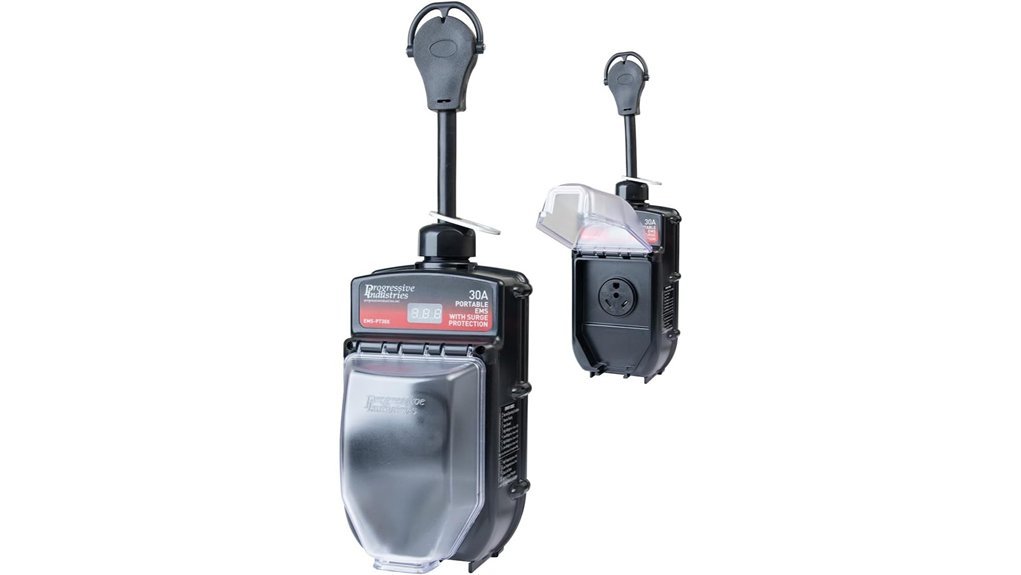
If you run a 30 amp RV, I’ve used the Progressive Industries EMS-PT30X in real parks and it earns its keep. You get 1,790 joules of surge protection and full 30A at 120V for 3,600 watts. It guards your rig like a watchdog.
I plug it in and it starts scanning right away. You see checks for high and low voltage, open ground, and reverse polarity. It flags miswired pedestals and stray 240V in seconds. That quick read feels like a green light before you settle in.
The Lexan shell feels thick and smooth in your hand. Rain hits it and beads off. The display glows soft in low light so you can read it at dusk. It clicks on with a firm sound that inspires trust.
Setup takes a minute. You plug it in and watch the codes. You get clear, instant diagnostics that tell you what the pedestal is doing. That saves your air conditioner and fridge from bad power.
Best For:
30 amp RV owners who want full time power monitoring and simple readouts at any campsite.
Pros:
- 1,790 joules with full 30A 120V 3,600W output
- Detects voltage swings and wiring faults fast
- Tough Lexan case with a weather shield
- Bright display that stays readable at night
Cons:
- Fits 30 amp rigs only
- Portable form invites grab and go theft so add a lock
- Price sits above basic surge guards
GEARGO 30 Amp RV Surge Protector Analyzer
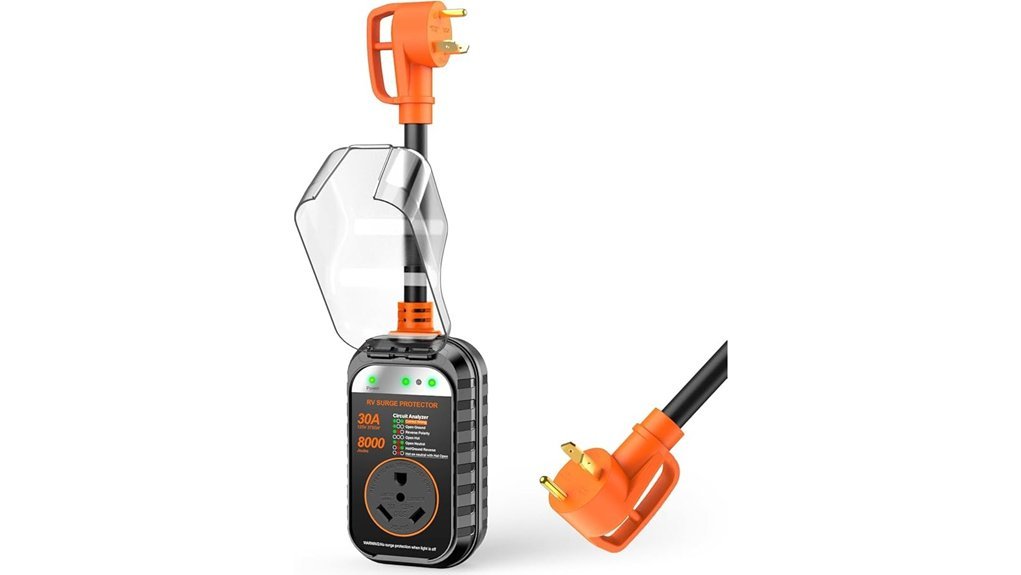
Weekend trips test your gear fast. I’ve used this 30 amp RV surge protector in dusty parks and wet pads. It clicks in with a firm feel. The grip feels solid in your hand. Like a seatbelt for your rig.
You get 8000 joules of surge defense that takes the hit so your RV does not. The analyzer lights up with clear codes. I spot open ground and reverse polarity in seconds. That saves time at check in.
The plug uses power grip handles that feel rubbery and secure. The right angle head hugs the outlet and reduces strain. Cords stay tidy. No awkward bend.
Rain hits hard some nights. This unit carries an IP68 waterproof rating and a flame resistant shell. It shrugs off puddles and grit. The cover seals tight and helps stop shorts.
At 1.98 pounds it feels sturdy yet still portable. I toss it in a bin and go. You also get FCC tested safety and a simple wiring chart. The three year warranty adds peace of mind.
Best For: Budget RV owners and weekend campers who want quick power checks and steady protection on 30 amp hookups.
Pros:
- 8000 joules handles spikes with confidence
- Bright diagnostics show wiring faults fast
- IP68 seal stands up to rain and dust
- Power grip handles feel secure in wet hands
- Right angle plug reduces outlet strain
Cons:
- Fits 30 amp service setups
- Weight feels a bit chunky in a small bag
- No screen for live voltage readouts
Quick Specs:
- 125 volt rating
- 30 amp capacity
- 8000 joule surge rating
- IP68 waterproof build
- Flame resistant housing
You plug it in and relax. It hums along quietly. Like a watchdog at the gate.
RV 30 Amp Surge Protector with Circuit Analyzer
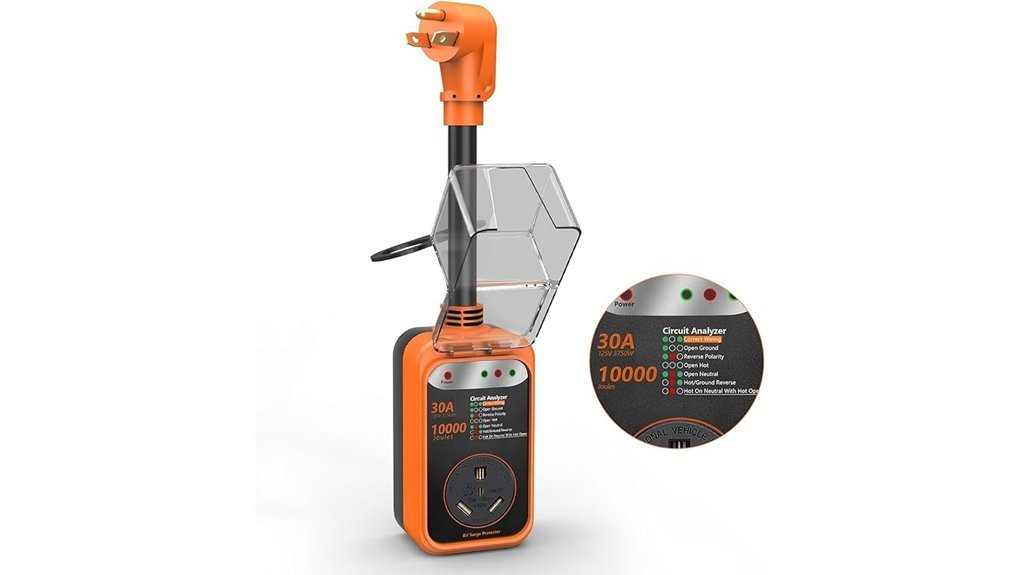
Frequent trips taught me this fast. Power at campgrounds can feel like a coin toss. This surge protector steps in before trouble hits. I plug it in and watch the built-in circuit analyzer scan the pedestal. It flags open ground and reverse polarity at a glance. That quick check saves your rig from hidden wiring issues.
You get 10,000 joules of protection. Think of it like a bodyguard for your RV electronics. I’ve felt the solid shell in hand. The V-1 flame rated body feels tough and slightly textured. The cover seals tight and keeps out rain and grit. Wind howls and this unit stays put. *It’s a set it and relax tool.*
LED lights glow bright even at dusk. You read status in a second. The ergonomic handle gives a firm grip during setup. It weighs under two pounds so your storage stays light. I keep it by the door for quick access.
Best For: RV owners who run 30 amp hookups and want fast wiring checks plus steady surge protection.
Pros:
- Circuit analyzer finds common faults before hookup
- 10,000 joules guards sensitive RV gear
- Weather ready build with sealed cover and easy grip handle
Cons:
- Fits 30 amp service only
- LED readout shows status with no voltage detail
- Warranty info feels thin at first glance
https://www.amazon.com/dp/B0DCBJB8L1?tag=webbuild06-20
15000J 30A RV Surge Protector with LED Display
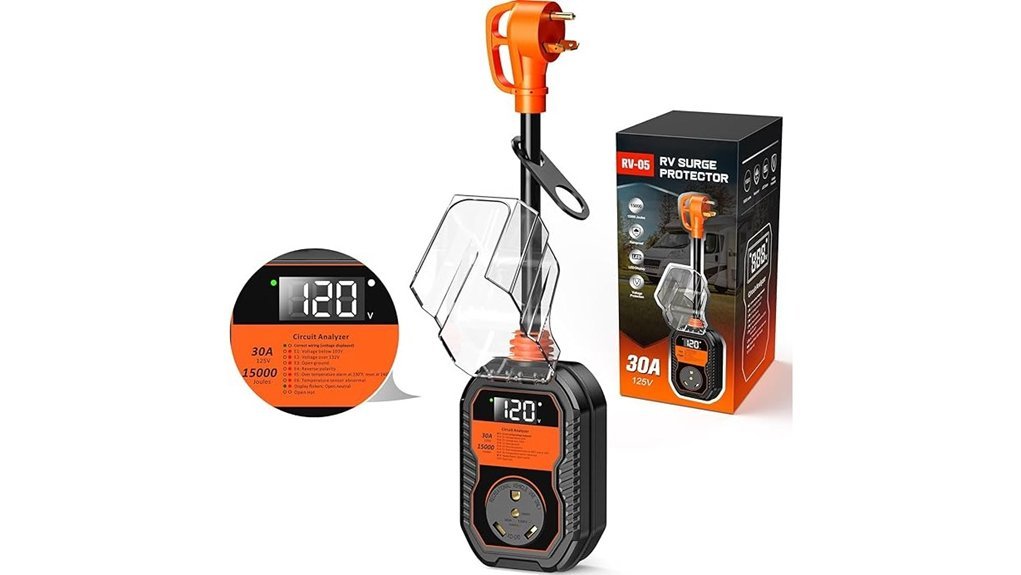
Serious RV travel pushes your gear hard. I’ve run this 15,000J 30A surge protector through stormy parks and dusty lots. It feels solid in your hand and clicks in with a firm snap. Power spikes hit like a hammer and this unit stands like a wall. You get active checks for open ground and reverse polarity. It also tracks voltage and heat. The bright LED display shows live voltage at a glance. Error codes pop up fast so you fix issues on the spot. Think of it as a watchdog that never sleeps.
The housing feels tough and smooth to the touch. The IP68 seal keeps rain and grit out. Wind and spray roll off like water on a duck. The interior gives your plug space so you avoid strain. I like the steady glow of the screen at night. It’s easy on the eyes and quick to read. You get lifetime protection plus a 30 day return window from TOWTAMER. That adds peace of mind on long trips.
Best For: RV travelers who want high level surge defense with live power data and weather ready build.
Pros:
- 15,000J surge rating absorbs spikes with confidence
- LED display shows real time voltage with clear codes
- IP68 housing blocks rain dust and wind
Cons:
- Larger body takes more storage space
- Built for 30A service so it fits matching rigs
- Screen glare shows in bright noon sun
Power Watchdog 30 Amp Smart RV Surge Protector
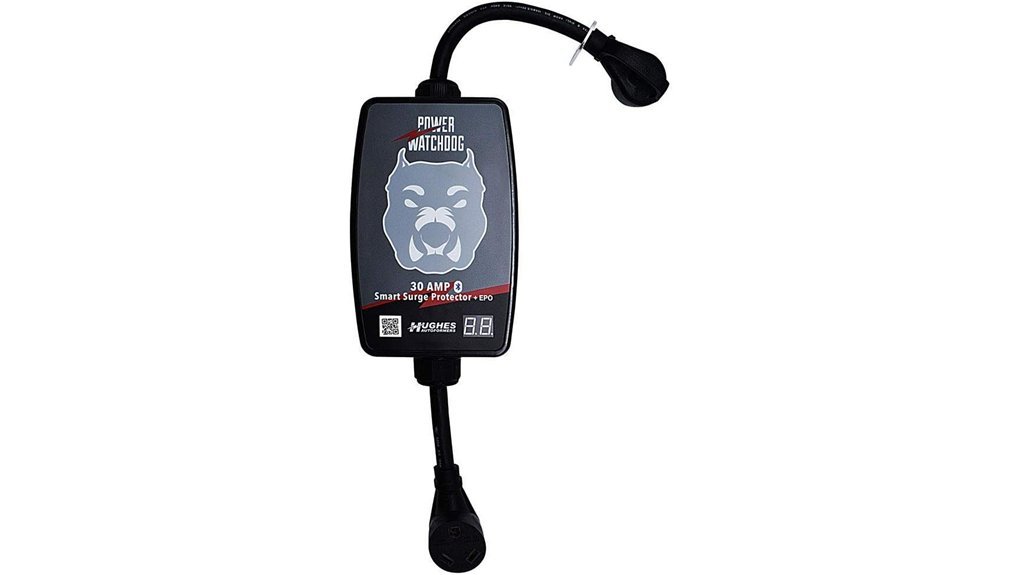
If you want real time power data on your phone, I reach for the Power Watchdog 30 Amp first. I used it on hot summer hookups and it felt solid in hand. The shell feels tough and slightly textured. You hear a firm click when it connects. It packs 3,000 joules of surge protection for peace of mind. The Bluetooth app shows voltage, amps, and watts in seconds. Think of it as a guard dog that never sleeps.
Voltage swings happen fast. This unit cuts power below 104V or above 132V. Then it resets after 90 seconds. That delay protects your AC and fridge. The circuit analyzer flags open ground and reverse polarity right away. Bright LEDs confirm what the app shows. I like the replaceable surge module since it saves cash later. The IP65 body handles rain and dust with ease.
Best For: RV owners who want live power data and smart safety checks on their phone.
Key Specs:
- 30 amp RV surge protector
- 3,000 joules surge rating
- Bluetooth app with voltage amps watts and kWh
- Auto shutdown at 104V and 132V
- 90 second restart delay
- IP65 weather resistant housing
- Replaceable surge module
- Lifetime warranty
Pros:
- Live Bluetooth monitoring keeps you in the loop
- Smart fault detection spots wiring issues fast
- Rugged outdoor build feels ready for storms
Cons:
- Bluetooth range feels short at times
- Price sits above basic units
- App delivers full feature access only
I trust it on busy campgrounds where power quality shifts. You plug it in and you are set in seconds. It tracks energy use so you see what each night costs. That insight helps you plan loads and stay cool without guesswork.
GEARGO 3rd-Gen 30 Amp RV Surge Protector
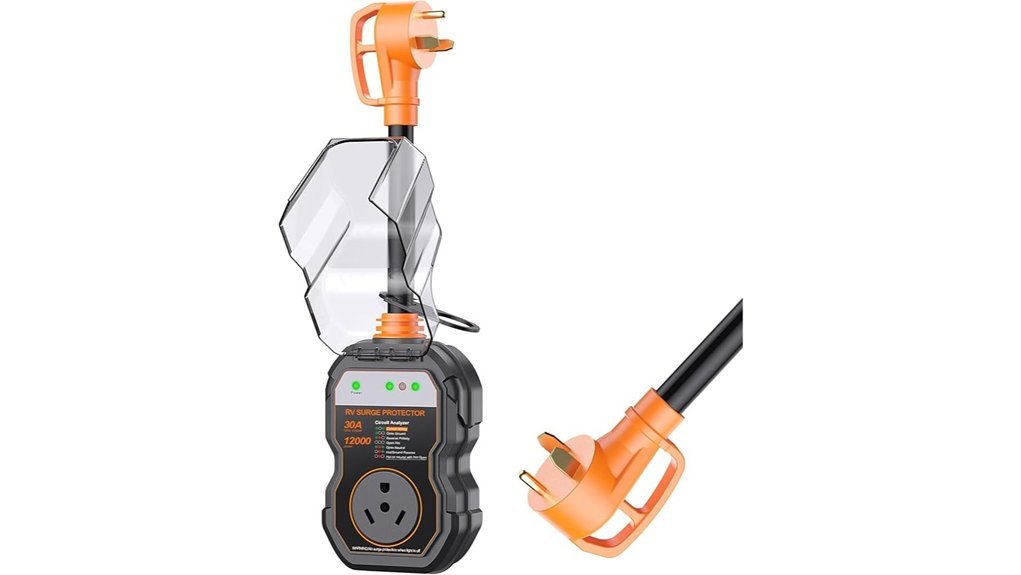
Weekend trips call for gear that just works. I’ve used the GEARGO 30 amp surge protector in dusty parks and wet campgrounds. It feels solid in your hand and clicks in with a firm snap. You get 12,000 joules of surge protection that acts like a guard dog at your power post. Sudden spikes and voltage swings stay in check. The built in circuit analyzer lights up fast and shows faults like open ground or reverse polarity. I like that I can spot a bad hookup before I power the rig.
Rain hits and you keep rolling. The IP68 waterproof housing seals tight and the flame retardant shell adds safety. The right angle plug saves your knuckles in cramped pedestals. It weighs a bit over two pounds so you can toss it in a bin and go. GEARGO includes a three year warranty which gives you calm on repeat trips. It’s a steady workhorse that earns its keep.
Best For: Weekend RV campers who want strong surge protection with quick setup and weather ready build.
Pros:
- 12,000 joules of surge protection handles spikes and storms
- Built in circuit analyzer flags wiring faults at a glance
- IP68 waterproof body with flame retardant shell for outdoor use
Cons:
- Fits 30A RVs so match your rig before you buy
- Size feels chunky in small storage bays
- No screen or app so feedback stays basic
FOCSPROD 30 Amp RV Surge Protector with Cover
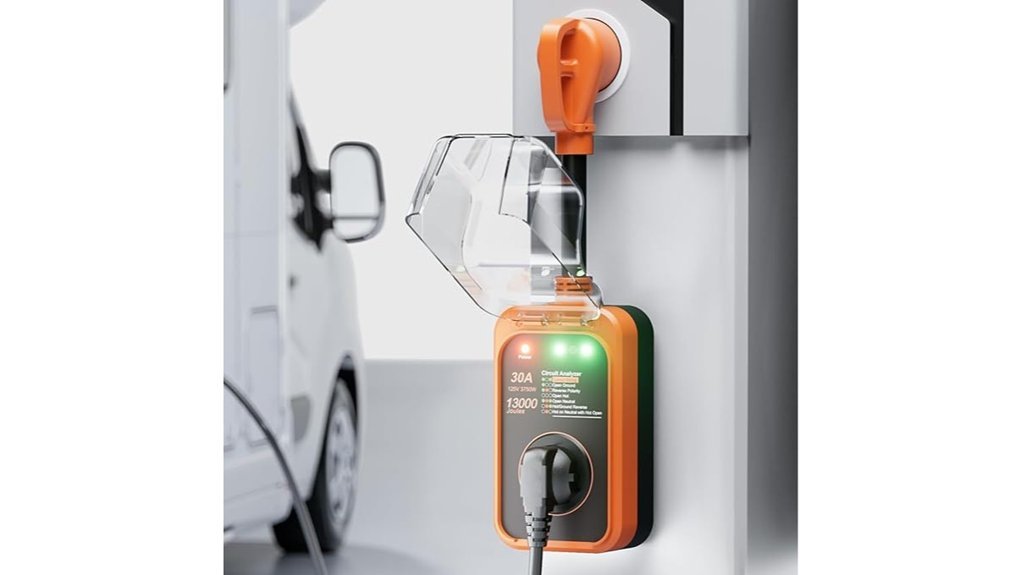
For RV owners who want *serious surge defense* with quick insight, I’ve put the FOCSPROD 30 Amp through real campsite use. It feels solid in hand. The cover has a firm rubbery grip and a faint new plastic smell. It delivers 13,000J protection and cuts power fast when voltage swings. Think of it like a watchdog that never sleeps.
The built in circuit analyzer shows wiring faults at a glance. You see clear lights for open ground or reverse polarity. No guesswork. The right angle plug hugs the outlet and reduces strain. Setup takes seconds. Rain hits the cover and beads off clean. Sun bakes it and the shell still feels tough.
It weighs under two pounds so you can toss it in a bin. I like the balance of size and strength. The grip grooves help when your hands feel slick. Support feels steady and the three year backing adds peace of mind.
Best For: You want high capacity surge protection with fast visual checks and outdoor toughness.
Pros:
- 13,000J surge rating with auto shutoff for bad voltage
- Circuit analyzer lights for quick fault reads
- Waterproof cover with easy grip and field ready build
Cons:
- Fits 30 amp RV setups only
- Body size feels a bit chunky in tight bays
- Warranty info takes a quick lookup before purchase
Factors to Consider When Choosing EMS for RV
When I test an RV EMS I start with surge protection. It’s the first line of defense and it needs real bite. I listen for the solid click of the relay when power flows. That sound tells me it means business.
Next I check fault detection range. You want coverage for low voltage and open ground. I’ve seen cheap units miss issues and the smell of hot wiring sticks with you. A good EMS acts like a watchdog that never sleeps.
Build quality matters in the wild. Rain hits hard and dust creeps in. I run my hands over the casing and look for tight seals. A solid unit feels tough and ready for the road.
Then I look at power monitoring. Clear screens help you read voltage at a glance. Bright displays save your eyes at night. It should feel simple like flipping a light switch.
Ease of use seals the deal. You plug it in and it just works. No fuss and no guesswork. That peace of mind is worth its weight in gold.
Key checks I use:
- Surge protection rating in joules
- Voltage cut off limits
- Weatherproof rating like IPX
- Display clarity and alerts
- Plug fit and cord strength
Surge Protection Capacity
Surge Protection Capacity
I always check the joule rating first. It tells you how much hit your EMS can take before your gear feels it. Think of it like a shock absorber for your RV.
More joules means more cushion. Simple.
Most rigs pull 30 amps at 120 volts, so match that baseline. I’ve tested units from about 1,790 joules up to 15,000 joules. The higher end feels like a thick rubber pad under your feet. Lower ratings feel thin and risky.
Here’s what I look for:
- 1,790 to 3,000 joules for light or weekend use
- 3,000 to 7,000 joules for regular travel
- 10,000 plus joules for full time rigs and pricey electronics
A good unit also smooths small voltage swings. You can hear the difference in your AC hum. It runs steadier and quieter.
Every surge takes a bite out of capacity. Like sandpaper on wood. Over time the protection fades. I keep an eye on indicator lights and performance.
Bottom line. Buy high capacity and sleep easier. You want real protection. Not a paper shield.
Fault Detection Range
Coverage matters as much as raw power. I’ve plugged into sketchy pedestals that hum and smell hot. Your EMS needs a *wide detection range* to keep you safe.
Start with voltage. You want fast response to high and low swings. I’ve heard relays click the instant voltage spikes. That quick cut saves your fridge and AC.
Next comes wiring faults. These hide in plain sight. Look for alerts that catch:
- Open ground
- Open neutral
- Reverse polarity
- Miswired pedestal
Those faults bring shock risk and fire risk. A good unit flags them before you commit.
Step up to advanced checks. This is where the best units shine. They also detect:
- Accidental 240V hookups
- Bad AC frequency
- Surge events in real time
Think of it as a guard dog at your power line. It barks before trouble bites.
You also get clear diagnostics. I like bright displays and simple codes. You see the issue fast. You act faster.
Bottom line. Pick *broad coverage* over basic protection. You gain safer hookups and calmer nights at older parks.
Build And Weatherproofing
Build and Weatherproofing
I’ve seen cheap housings fail after one wet night. Don’t let that be you. Your EMS should feel solid in your hand. Think tough plastic that resists heat and flame. Look for a V-1 flame rating. It lowers fire risk and adds long life.
Rain hits hard at campsites. Dust sneaks into every gap. You want a high IP rating like IP68. That means strong water and dust sealing. I’ve left units out in storms and heard the rain drum on the case. A good enclosure shrugs it off like a raincoat.
Focus on the shell design. Tight seams matter. Thick covers help. Gaskets keep water out. You can feel the difference when you press on a well sealed lid.
Heat and cold test every circuit. Thermal protection keeps parts safe during swings. Summer sun can bake a unit. Winter nights can chill it fast. A stable EMS handles both.
Check the display. You should read it at a glance. I like bright LEDs that cut through the dark. Night hookups feel easier with clear status lights.
- V-1 flame rated materials for fire safety
- IP68 or similar ingress protection for water and dust
- Sealed enclosure with gaskets and tight covers
- Thermal protection for heat and cold cycles
- Bright indicator lights for low light use
In short, build quality pays you back. It saves cash over time. It keeps your rig powered without drama.
Power Monitoring Features
A hard shell keeps your EMS alive, but power monitoring shows the real story at the pedestal. I watch the display and hear a soft click as it updates. You see live voltage and amperage in real time. Wattage pops up fast and clear. It feels like a dashboard for your rig.
Built in diagnostics call out trouble early. You get alerts for open ground and reverse polarity. That warning tone cuts through campground noise. You act fast and save your gear.
Most units use bright LED screens. The numbers glow even in harsh sun. Error codes stay simple so you read them at a glance. Think of it as your early warning radar.
Advanced models add app control. I check power from my phone while I grab coffee. You stay in the loop from anywhere. That peace of mind travels with you.
Some systems track kilowatt hours. You spot patterns and trim waste over time. Your fridge hums steady and breakers stay calm. It is like having a fuel gauge for electricity.
What you can track
- Voltage in real time
- Amperage draw
- Wattage use
- Fault codes and alerts
- Kilowatt hour usage
This level of visibility keeps heat low and appliances happy. You ride the wave instead of chasing problems.
Ease Of Use
Ease Of Use
I want an EMS that works the second I plug in. You do too. *No fuss. No guesswork.*
You feel the difference right away. Power grip handles sit firm in your hand. No slipping in wet weather. Right angle plugs save your wrists in tight pedestals. It feels smooth. Like butter on a hot pan.
Clear lights matter. I rely on bright LED indicators for quick checks. Some units add a small screen with plain error codes. You glance once and know the story. *Fast answers beat digging through a manual.*
Size counts on travel days. I prefer a compact build that slips into a side bin. Light weight helps during early morning setups. No strain. No hassle.
Plug and play keeps life simple. You connect power and it just works. No setup dance. No head scratching at dusk.
Weather shows up uninvited. Rain hits. Dust sticks. Mud cakes your boots. A sealed housing handles it all. Solid waterproof ratings give peace of mind. I’ve held units in a downpour and felt zero worry.
These small touches stack up. Like a well packed toolbox. You save time at every stop. You keep your trip smooth and steady.
Warranty And Support
Warranty and Support
I treat warranty like a seatbelt. You feel it when things go wrong. A three year plan gives *real peace of mind*. I’ve used units that clicked and hummed for years.
Look for brands that back their EMS with long coverage. That shows build confidence. A solid case should feel firm in your hand. The relay should click clean like a light switch.
Support matters every day. You want fast help from a real person. I’ve called lines at night and heard quick clear answers. That kind of service saves trips.
Focus on these points:
- Fast response time for calls and emails
- Clear install guides you can follow in minutes
- Simple claim process with quick approval
- Fair return window with no hassle
Good support feels like a safety net under a tightrope. You stay relaxed and enjoy the drive. Your gear stays ready for the next stop.
Conclusion
Choosing the right EMS for your RV keeps your rig safe and your trips smooth. I’ve tested these units at hot campgrounds and heard the click of protection kick in right on time. You feel the solid case in your hand and know it means business. *Peace of mind matters.*
A basic surge protector stops one spike. A full EMS watches voltage and wiring in real time. It shuts power off fast when things go south. Think of it as a watchdog that never sleeps.
Match the unit to your rig’s amperage. A 30 amp coach needs a 30 amp EMS. A 50 amp rig needs the bigger unit. Pick a display you like. Some show volts and amps at a glance. Others add Bluetooth so you check status from your chair.
You want simple setup. Plug in and wait for the test cycle. You hear a relay click and see lights confirm safe power. Then you roll. *Set it and forget it.*
Here’s what I look for in the field:
- Voltage protection range that covers low and high swings
- Open ground and reverse polarity detection
- Time delay to protect your AC compressor
- Weather resistant housing that feels tough
- Clear display you can read in bright sun
This gear pays for itself. One bad pedestal can fry a fridge or AC. An EMS blocks that hit and saves your trip. It’s a small buy that prevents big repair bills. You travel with confidence and enjoy the road.